


Russian investors seek opportunities in Vietnam’s real estate market
Vietnam’s real estate market is attracting growing interest from Russian investors, spanning residential, commercial and resort property. The trend reflects a broader search for new opportunities in Southeast Asia as international capital seeks to diversify beyond traditional markets.

▲Table of Contents
According to Russia’s financial, trade and economic news outlet RBC, enquiries from Russian investors about developing projects in Vietnam increased in 2026. Interest now extends beyond residential property to commercial assets, including offices and logistics centres.
From portfolio diversification to exploring new markets
Experts cited by RBC suggest that growing interest from Russian investors may be linked to the need to diversify investments, as capital from Russia begins exploring new markets in Southeast Asia alongside traditional destinations in the Middle East.
Vietnam is considered to have significant development potential in real estate, particularly commercial property. Vietnam–Russia relations, together with the possibility of establishing foreign-invested enterprises, are also seen as factors supporting investment activities.
However, turning capital flows into real estate projects requires foreign investors to consider legal and financial requirements, equity capital requirements, as well as factors related to cultural and language differences, capital transfers and local partnerships.
Resort property remains a focus
In the residential segment, data from international property brokerage Tranio shows that enquiries from Russian clients about purchasing property in Vietnam fell by 39% in the first eight months of 2026 compared with the same period in 2025. However, this decline should be viewed in the context of a significant increase in demand recorded the previous year. A representative of NF Group also noted that more Russians are showing interest in purchasing property in Vietnam.
Notably, Vietnam has several advantages in attracting demand for resort real estate in the region. According to Tranio, these include relatively low barriers to entry, the recovery of the tourism and aviation sectors, and the development of coastal markets such as Da Nang and Khanh Hoa.
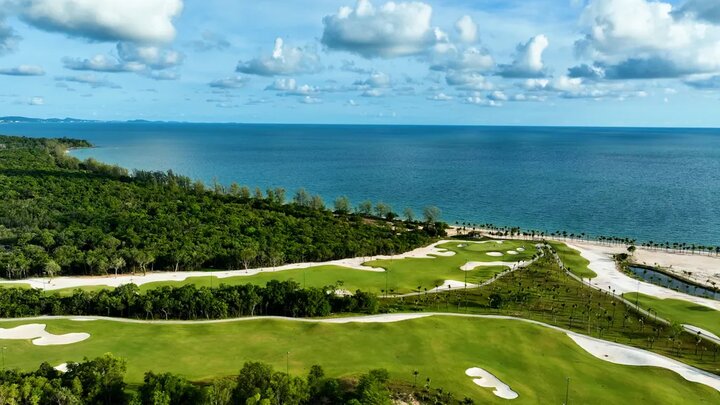
Eschuri Vung Bau Golf, located next to Vung Bau Beach (Source: Sun Group)
In addition, the growing Russian community living long-term and working remotely in Vietnam could generate further demand for apartments for residential or rental purposes.
Two key demand segments in the market
According to experts cited by RBC, Vietnam’s real estate market can broadly be viewed through two main segments: major urban centres and resort destinations.
In major cities, investors tend to show interest in projects from their early development stages, with expectations of potential value growth as projects are completed.
Meanwhile, in resort markets, tourism growth prospects may provide additional momentum for property demand. However, the performance of each project depends on multiple factors, and lower-priced products do not necessarily translate into higher rental yields.
This highlights that, alongside the growth in international visitors and investors, destination quality, operational capabilities and the broader service ecosystem are becoming increasingly important factors in creating long-term value for resort real estate.
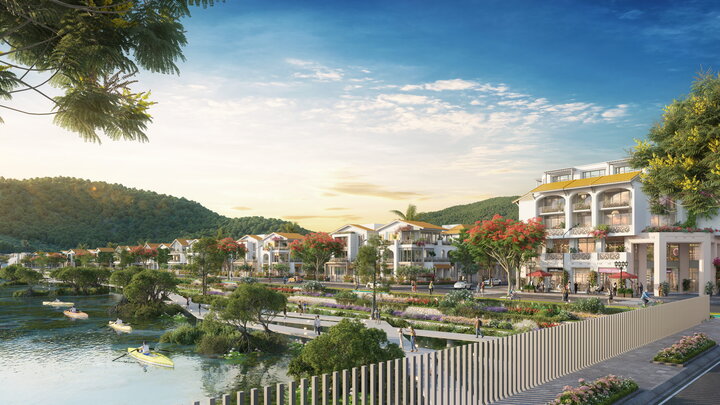
Charmora City in Southern Nha Trang, Khanh Hoa (Source: Sun Group)
Opportunities come with legal considerations
For foreign investors, property ownership rights are another important consideration. According to Tranio, foreigners may only purchase residential properties in eligible commercial housing projects permitted for sale to foreign buyers. Property ownership also does not automatically grant the right to long-term residency in Vietnam.
As Vietnam’s real estate market attracts growing interest from international capital, this shift is not only broadening opportunities for investors but also creating higher expectations for developers to deliver high-quality products, compelling destinations and integrated ecosystems capable of supporting long-term value.