


Southern Hanoi real estate boosted by transport infrastructure development
The southern gateway of Hanoi is entering a phase of significant transformation as multiple major transport infrastructure projects are being implemented simultaneously. These infrastructure upgrades are not only reducing travel time to the capital’s central districts but are also providing a strong boost to socio-economic development, positioning Southern Hanoi as one of the city’s most notable emerging real estate markets. Experience across markets shows that areas benefiting from systematic and sustained investment in transport infrastructure tend to see stronger real estate growth. Southern Hanoi reflects this pattern, with a series of large-scale infrastructure projects playing a critical role in unlocking the region’s broader development potential.

▲Table of Contents
Modern transport infrastructure drives economic growth
One of the most significant infrastructure highlights in southern Hanoi is the Phu Thu interchange, a modern three-level junction. The project directly connects two major transport arteries—Ring Road 5 and the Phap Van–Cau Gie–Ninh Binh Expressway—facilitating smoother traffic flows between Hanoi and the southern provinces as well as the Red River Delta.
Beyond easing congestion on existing routes, the Phu Thu interchange opens up a strategic connectivity gateway, supporting trade, logistics and inter-regional economic activities. It is widely regarded as a key piece of infrastructure enabling southern Hanoi to move closer to the capital’s core, both in terms of travel time and urban development capacity.
In parallel, on March 10, Hanoi officially broke ground on two transport projects worth more than VND 1.4 trillion in Ung Hoa District. These include the upgrading and expansion of National Highway 21B and the construction of a bypass section along the same route. Once completed, the projects are expected to reduce traffic pressure in residential areas while strengthening the city’s external transport network and improving connectivity across southern Hanoi.
Earlier, in February 2025, construction also began on the parallel roadway of Ring Road 5 within the Capital Region, adding another important element to the area’s infrastructure landscape. The rollout of multiple major transport projects from the very start of the year reflects a clear development approach: transport infrastructure first, real estate development follows.
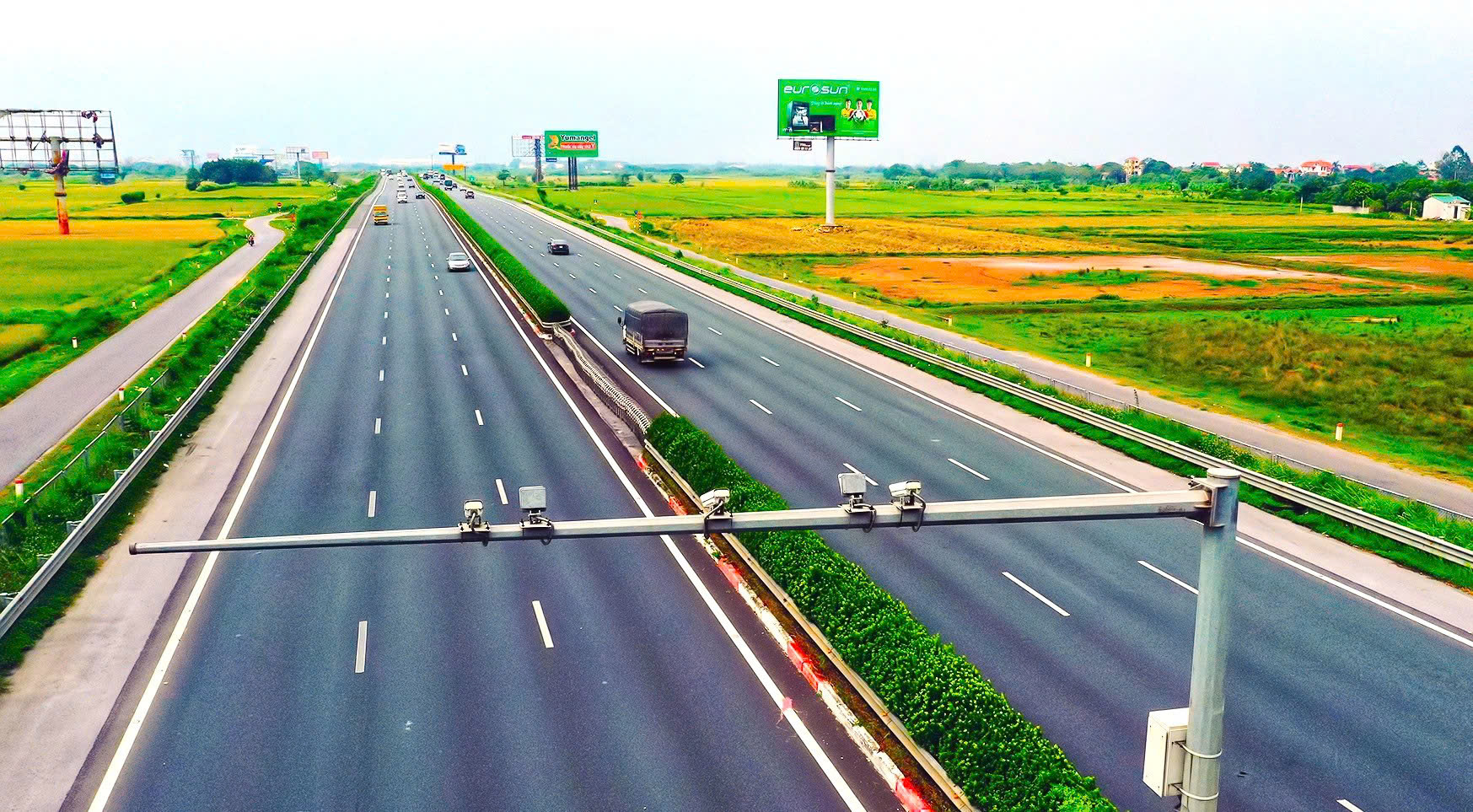
Phap Van–Cau Gie–Ninh Binh Expressway
Southern Hanoi emerges as a new connectivity hub of the Capital Region
From a broader perspective, transport infrastructure in southern Hanoi is being developed with a strong focus on inter-regional and inter-provincial connectivity. Existing corridors such as National Highway 1A and the Phap Van–Cau Gie–Ninh Binh Expressway have provided a solid foundation, while new projects—including Ring Roads 3.5, 4 and 5, along with the Phu Thu interchange—are being fast-tracked.
Infrastructure planning is not limited to road transport alone. Rail, inland waterways and aviation are also part of the long-term vision. Notably, on the North–South high-speed railway, Phu Ly Station has been designated as a key stop. According to current plans, construction could begin as early as 2027. Once operational, the line is expected to reduce travel time from Hanoi to the southern area to just around eight minutes, delivering a major boost to logistics, tourism, trade and, in particular, the real estate market.
Modern transport infrastructure is turning southern Hanoi into an area where “all roads lead,” positioning it as a new connectivity hub of the Red River Delta. This serves as a critical foundation for accelerated local economic growth.
Statistics show that in 2024, the southern Hanoi area ranked fourth nationwide in terms of economic growth. In 2025, growth targets have been set at over 10%, creating significant room for medium- and long-term real estate development.
Sun Urban City positions itself ahead of the growth curve
Against the backdrop of large-scale infrastructure upgrades, Sun Urban City—a 420-hectare resort-style mega urban development by Sun Group—has emerged as a notable highlight on southern Hanoi’s real estate map. The project enjoys a strategic location adjacent to the Phu Thu interchange and the Phap Van–Cau Gie–Ninh Binh Expressway, enabling fast connections to central Hanoi and neighboring provinces.
Rather than developing a conventional urban area, Sun Group aims to create a vibrant hub for commerce, economy and tourism at the southern gateway of the capital. Spanning 420 hectares, Sun Urban City is designed as a “suburban resort city,” offering nearly 40,000 diverse products ranging from shophouses and villas to high-end apartments.
The project stands out for its large-scale amenity ecosystem, including a Sun World complex, a 150-metre-wide festival boulevard, an international-standard music fountain show, thousands of supporting amenities and five major parks. Once completed, Sun Urban City is expected to reshape the area’s urban landscape and inject new momentum into southern Hanoi’s real estate market.
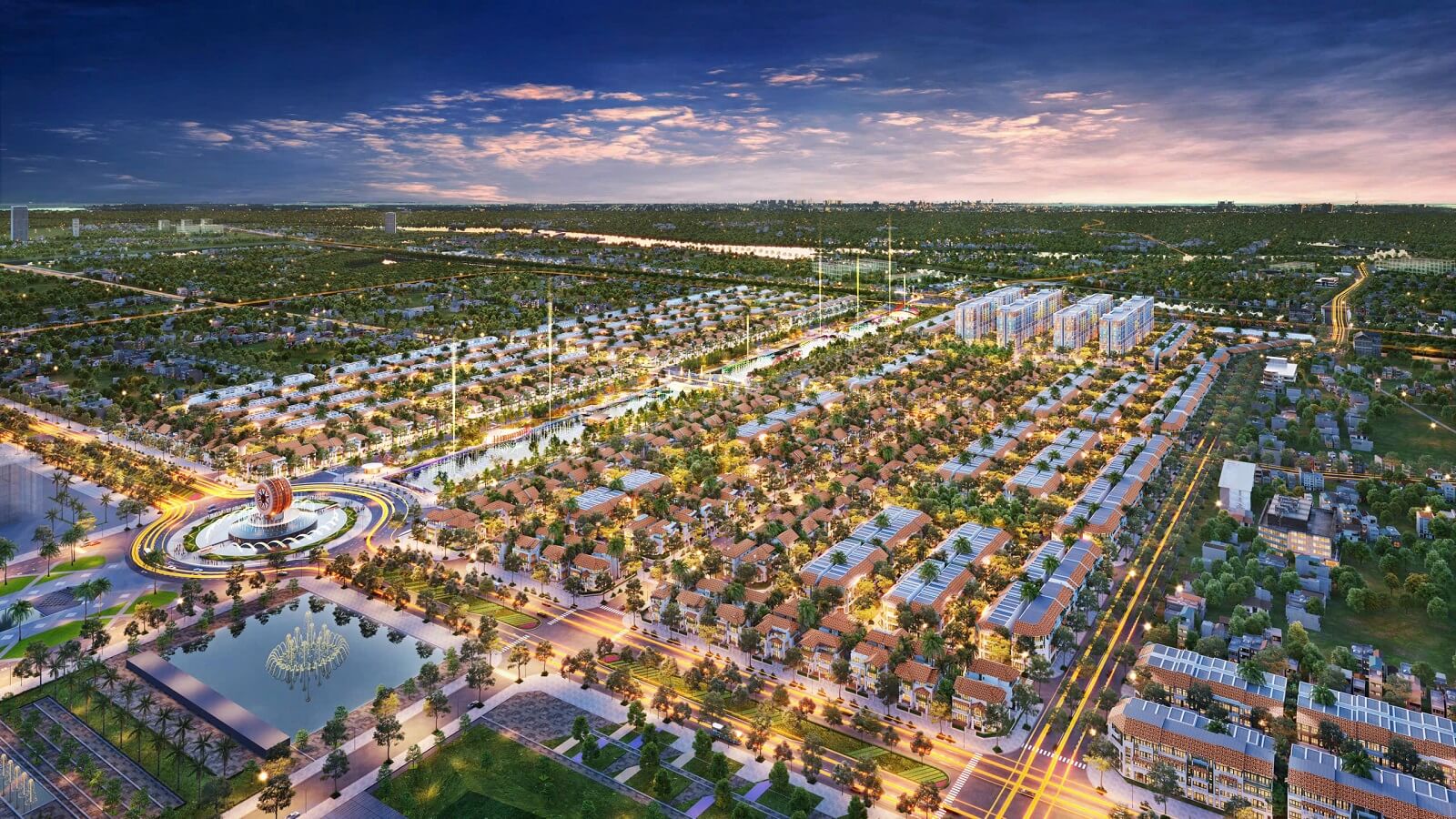
Sun Urban City
Long-term investment outlook for southern Hanoi real estate
According to investors and market observers, Sun Urban City’s strongest advantages lie in its location, scale and integrated ecosystem, particularly as inner-city land in Hanoi becomes increasingly scarce and property prices remain elevated. Nguyen Van Dinh, Vice Chairman of the Vietnam Real Estate Association, notes that capital flows shifting toward peripheral areas are inevitable—especially toward southern Hanoi, where infrastructure investment is being strongly prioritized.
Mr. Dinh also points out that as travel time between southern Hanoi and the city center continues to shorten, the decisive factor will be the quality of urban development and living services. With Sun Group’s proven track record at major destinations such as Phu Quoc, Sa Pa and Quang Ninh, Sun Urban City is well positioned to create new value for the area.
Market response has already reflected the project’s appeal. During its second sales phase, Sun Urban City reportedly achieved a nearly 80% absorption rate within just two hours, underscoring strong investor confidence in the long-term potential of southern Hanoi’s real estate market.
With synchronized transport infrastructure, robust economic growth and the emergence of large-scale developments, southern Hanoi’s real estate sector is poised for a clear breakthrough. Experts believe this is an opportune timeival time for investors to move early, capturing growth potential in a high-upside area where price levels still leave room for appreciation.
Over the medium to long term, the combined impact of infrastructure development, urbanization and flagship projects such as Sun Urban City is expected to position southern Hanoi as a new growth pole of the capital—both as an attractive place to live and a promising real estate investment destination.