


Vung Tau Fast-Tracks Infrastructure Development Toward Strategic Seaport City Status
The development landscape of Southern Vietnam is undergoing a profound transformation as the reorganization and expansion of urban space open up new growth potential for Ho Chi Minh City and the wider region. Within the emerging multi-centric urban structure, Vung Tau is standing out as a strategic “coastal piece” - a city where two key pillars converge: logistics and seaport infrastructure, alongside high-end tourism and resort development. At the core of this shift is Vung Tau’s accelerating infrastructure build-out, driven by a series of major transportation, port, and urban development projects now being actively advanced. No longer merely a weekend tourism destination, Vung Tau is poised for a strategic repositioning within the Southern urban network, with the potential to evolve into a regional hub for cargo flows, capital investment, and visitor traffic.

▲Table of Contents
From Regional Strategy to the “Maritime Gateway” Role of an Expanding Metropolis
As development space expands through stronger regional linkages, the multi-centric urban model has become an inevitable choice. Within this framework, each area assumes a distinct role: financial and technology hubs, industrial and manufacturing centers, and coastal nodes for logistics and tourism. Thanks to its rare geographic advantages, Vung Tau is being positioned as the maritime gateway of Southern Vietnam’s expanding urban region.
This role is driven not only by its coastal location, but more importantly by its infrastructure capacity. A strategic port city must meet several key conditions: deep-water ports, high-speed transport networks, connectivity to international airports, and the ability to develop supporting services and tourism. Vung Tau is steadily assembling these elements, laying the foundation to become a critical link in Southeast Asia’s logistics and tourism value chains.
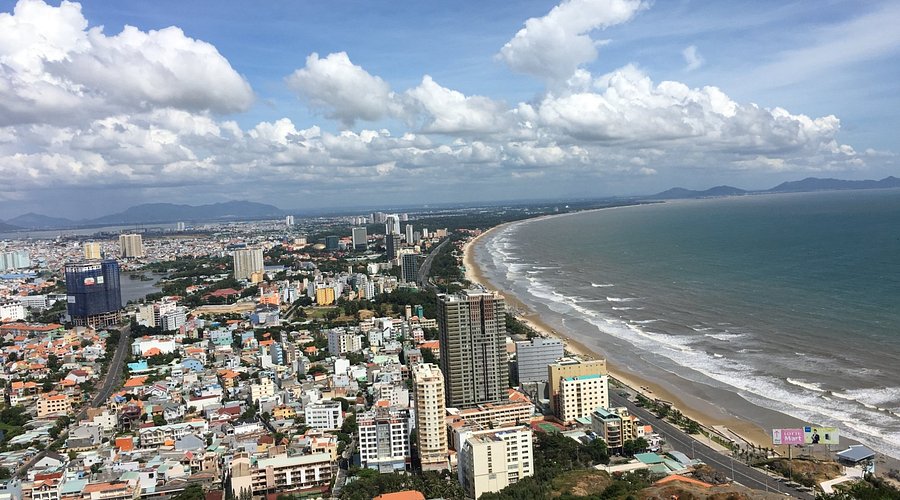
Vung Tau is being positioned as the maritime gateway of Southern Vietnam’s expanding urban region.
Accelerating Transport Infrastructure Shortens Development Distances
Within Vung Tau’s infrastructure landscape, inter-regional transport corridors serve as direct growth catalysts. The accelerated rollout of expressways is significantly reducing travel time between Vung Tau, Ho Chi Minh City, major industrial hubs, and international airports.
Most notably, once completed, the Bien Hoa – Vung Tau Expressway will form a high-speed corridor across the region, freeing the city from its long-standing reliance on existing national highways. As travel time shortens, geographic distance is effectively “compressed,” greatly expanding labor markets, tourism flows, and real estate demand.
Beyond road transport, the push toward multimodal logistics is opening new horizons for Vung Tau’s infrastructure development. Proposed rail links connecting directly to seaports would not only enhance logistics capacity but also improve sustainability by easing long-term pressure on road networks. This is a crucial step if Vung Tau is to emerge as a regional cargo transshipment hub.
Deep-Water Ports as the Backbone of the Maritime Economy
One of Vung Tau’s most strategic assets is the Cai Mep – Thi Vai deep-water port complex, widely regarded as the backbone of the region’s maritime economy. Serving as an international transshipment hub, the port system connects Vietnam directly to global shipping routes.
Unlike many domestic ports, Vung Tau’s deep-water ports can accommodate large-capacity vessels, enabling direct shipping to distant markets such as Europe and the Americas without third-country transshipment. This advantage significantly boosts export competitiveness while attracting logistics operators, supply-chain enterprises, and supporting services.
As port capacity expands, the spillover effects extend well beyond cargo handling. Urban areas for experts, along with service, commercial, financial, and supporting industrial zones, are gradually taking shape around the port ecosystem. This transformation is paving the way for Vung Tau to evolve from a tourism-focused city into a multifunctional port metropolis.
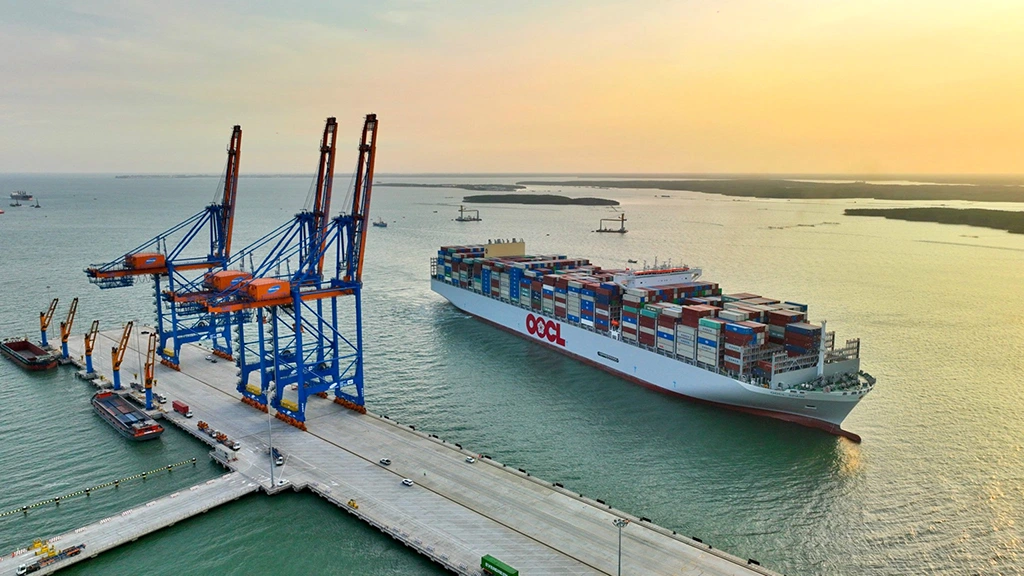
Vung Tau Deep-Water Port.
High-End Tourism Needs a Push from Large-Scale Integrated Developments
Alongside logistics, tourism forms the second pillar underpinning Vung Tau’s strategic urban role. Proximity to Ho Chi Minh City ensures a steady visitor base, but moving up the value chain and attracting longer-stay, high-spending travelers requires more than scenic beaches.
Experience from successful destinations shows that large-scale integrated resorts - combining accommodation, entertainment, retail, and public spaces - are essential. These complexes act as “experience infrastructure,” encouraging visitors to stay longer, spend more, and return more frequently.
In this context, the emergence of major urban-tourism developments in Vung Tau signals the beginning of a new growth cycle. Integrated projects featuring luxury hotels, beachfront retail, entertainment parks, event venues, and public plazas are not only raising service standards but also redefining the city’s tourism experience.
Toward a Southern Hub for Logistics and Premium Tourism
Viewed as a whole, Vung Tau’s infrastructure upgrade is both systematic and deep-rooted. Transport infrastructure expands development space; deep-water ports anchor the maritime economy; and large-scale urban-tourism projects elevate growth quality.
The convergence of these factors is bringing Vung Tau closer to becoming a southern hub for logistics and high-end tourism within the expanded metropolitan region. More importantly, this transformation serves not only local development but also broader regional strategy - helping redistribute population, capital, and economic activity in a more balanced manner.
Over the medium and long term, as infrastructure projects reach completion and the urban ecosystem matures, Vung Tau will no longer be viewed merely as a leisure destination. Instead, it is set to become a strategic node within Southern Vietnam’s urban, economic, and logistics network - a foundation for a more sustainable and competitive phase of development on the regional map.