


Neoclassical Architectural Style – Timeless Beauty
Amid countless trending architectural styles, neoclassical architecture continues to captivate with its enduring appeal over decades. Less ornate than pure classical, yet far from the stark minimalism of modernism, neoclassicism offers the perfect balance for those who cherish refined luxury, sophistication, and elegance—while prioritizing functionality and practicality in today's fast-paced life.

▲Table of Contents
1. What is Neoclassical architectural style?
Neoclassical architecture emerged around the 18th century in Europe, in a context where society desired to return to the standard values of classical Greek and Roman architecture, but in a more restrained and rational way. This was a period when architecture moved away from the ornate and elaborate styles of Baroque and Rococo towards elegance, clarity, and scientific principles.
The biggest difference of neoclassical architecture lies in its refinement of classical elements. Elements such as columns, moldings, and the golden ratio are retained, but simplified to suit modern living needs. As a result, neoclassical architecture doesn't feel "heavy," but remains elegant, approachable, and easy to implement.
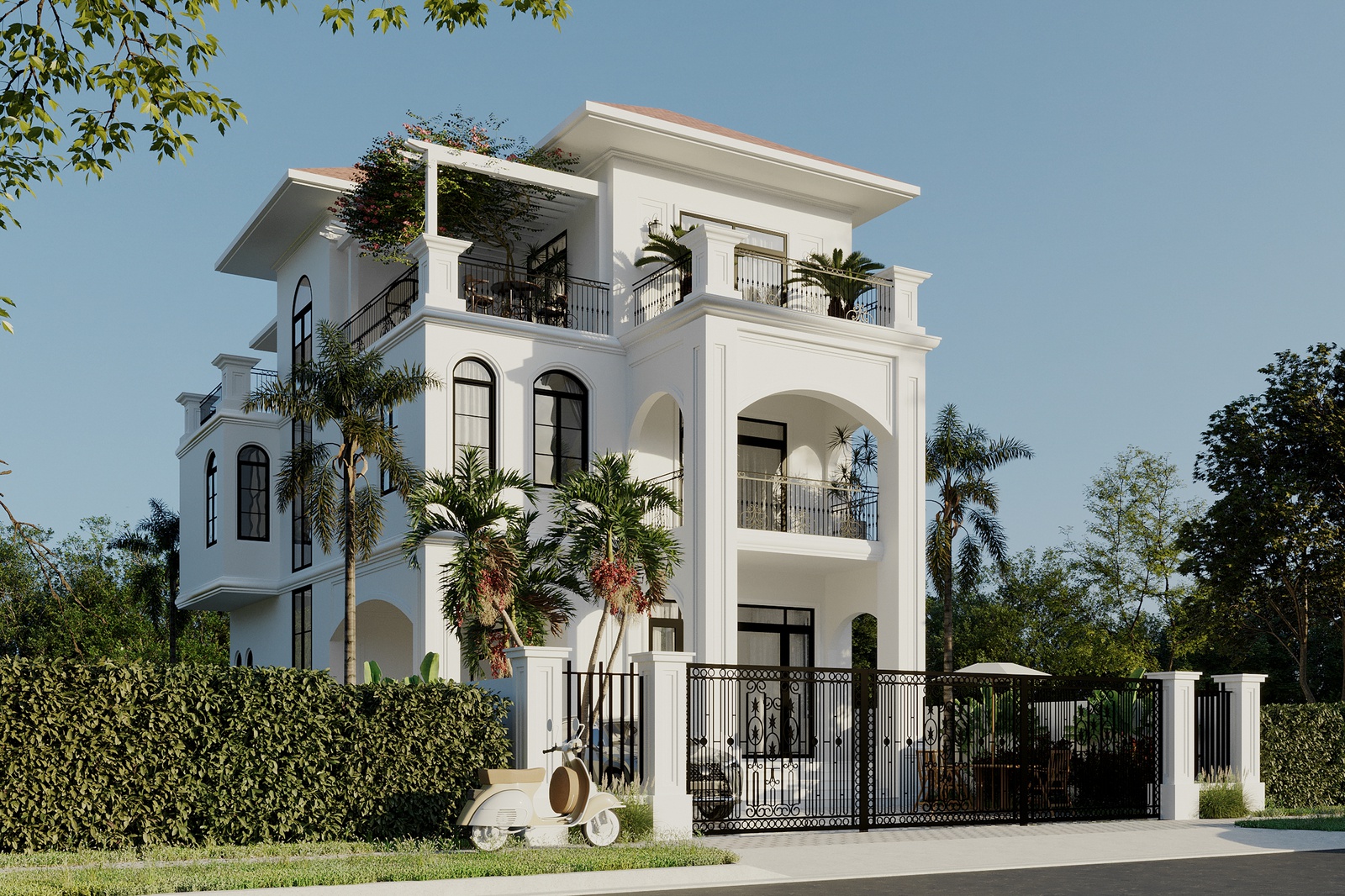
Neoclassical design style (Source: Collected.)
Today, this style is widely used in many types of buildings: from villas and high-end townhouses to hotels, resorts, and shopping malls. For homeowners who appreciate meticulousness and lasting beauty, neoclassical style is an investment choice in terms of both aesthetics and usability.
2. Design Philosophy and Core Characteristics
Neoclassical architecture is built on a philosophy that emphasizes order, proportion, and visual balance. Each building adheres to clear principles, resulting in a harmonious and easily appreciated overall effect.
Balanced and symmetrical layout
One of the most recognizable hallmarks of neoclassical architecture is its symmetrical layout. The spatial axes are clearly organized, from the facade to the interior. This symmetry creates a sense of solidity, solemnity, and an impression of luxury from the very first glance.
Coherent shapes, perfect proportions
Instead of using many complex shapes, neoclassical architecture prioritizes clear, square architectural forms combined with standard proportions. This helps the building retain its beauty over time and avoid becoming outdated.
The decorative details are restrained.
Moldings, decorative patterns, and reliefs are characteristic elements, but they are not overused. In neoclassical architecture, these details only serve to accentuate and highlight the overall structure rather than monopolizing attention. This restraint is what creates the characteristic elegance of neoclassical style.
Luxurious colors and materials
The dominant color palette typically consists of neutral tones such as white, cream, beige, and light gray, combined with high-end materials like natural stone, wood, plated metal, or glass. This combination creates a luxurious, clean feel and is easy to coordinate with other interior design elements.
3. Popular trends in neoclassical architectural style
Over time, neoclassical architecture has also been adapted to better suit a variety of needs and contexts.
Traditional neoclassical style retains many classical elements, with large columns, distinct moldings, and a strict layout. This style is often found in large villas or iconic buildings.
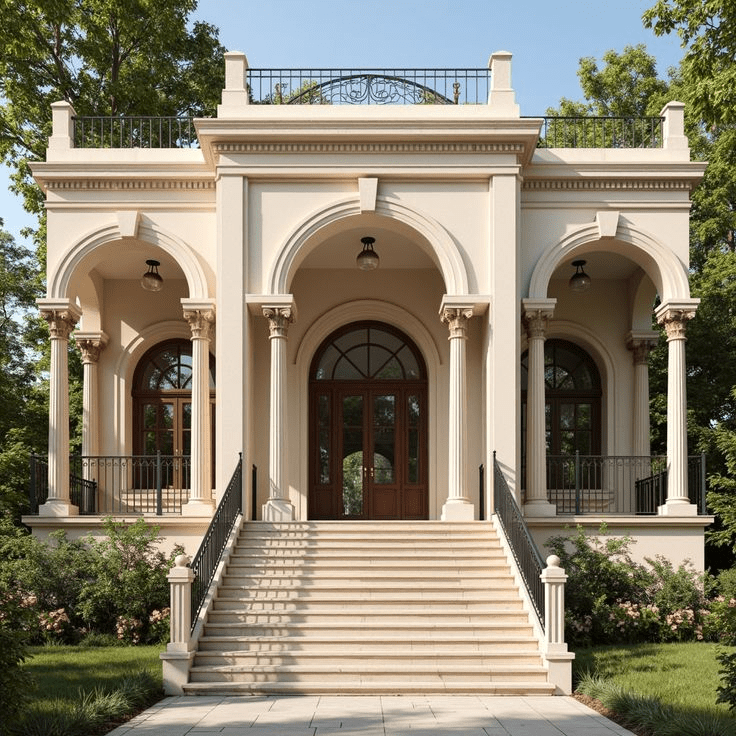
Neoclassical design trends (Source: Compiled.)
Modern neoclassical style is a popular trend today. Decorative details are simplified, focusing on form and proportion. This is a suitable choice if you love elegance but still want a spacious and comfortable environment.
Minimalist neoclassical style is a blend of neoclassical and modern styles. Classical elements appear only in moderation, enough to create accents without compromising the space's neatness.
4. Applying neoclassical architectural style in residential homes.
In Vietnam, neoclassical architectural style is highly valued for its ability to adapt well to many types of housing.
For townhouses, neoclassical style helps the facade stand out thanks to its balanced layout and refined details. The interior space is organized scientifically, meeting family needs while ensuring aesthetic appeal.
For villas, this style fully exploits the advantages of scale and form. Architectural details are more clearly expressed, creating a sense of grandeur that is both elegant and profound.
Applying neoclassical design style (Source: Collected.)
In apartment buildings, the neoclassical spirit is often expressed through interior design: subtle moldings, furniture with soft lines, and elegant colors. This approach helps the apartment maintain a luxurious feel without being heavy or cluttered.
It's crucial that when applying neoclassical architectural style, you carefully consider the balance between aesthetics and functionality, avoiding excessive "classicization" that could make the space feel cramped or less practical.
5. Advantages and important considerations when designing
Neoclassical architectural style offers lasting aesthetic value and is less affected by trends. This style is suitable for those seeking stability, elegance, and sophistication.
Furthermore, neoclassical style creates a sense of order, sophistication, and depth, contributing to the enhancement of the building's value. However, this style requires serious investment from design to construction. Proportions, details, and materials need to be precisely calculated to avoid shoddy construction that leads to imbalance.
Neoclassical architecture is a harmonious blend of classical beauty and modern spirit, creating a luxurious yet approachable living space. In the context of the increasing demand for homes that are both beautiful and durable, neoclassical architecture continues to assert its position as a timeless style, suitable for homeowners with refined tastes and a long-term vision.