


Fast and legal procedure for splitting household land use right certificates
The procedure for separating household land use rights certificates is a matter of great interest to many people when dividing land use rights or transferring assets. Understanding the conditions, dossiers, and implementation process will help limit legal risks and save processing time.

▲Table of Contents
1. Overview of Household Land Use Certificate Separation
1.1. What is a Household Land Use Certificate?
“Sổ đỏ” is a common term used by people, actually referring to the Certificate of Land Use Rights, Ownership of Houses and Other Assets Attached to Land as stipulated by land law. This is an important legal basis for the State to recognize the lawful rights of use and ownership of real estate by individuals or organizations.
According to the Civil Code 2015, Land Law 2013, and Circular 23/2014/TT-BTNMT, a household red book is understood as a certificate issued to a household with marital, blood, or adoptive relationships as stipulated by marriage and family law. These individuals are living together and jointly possess land use rights, ownership rights of houses, and assets attached to the land on the same plot of land. The determination of a "household" in the red book is of significant importance in transactions related to transfer, gift, or procedures for splitting household red books later on.
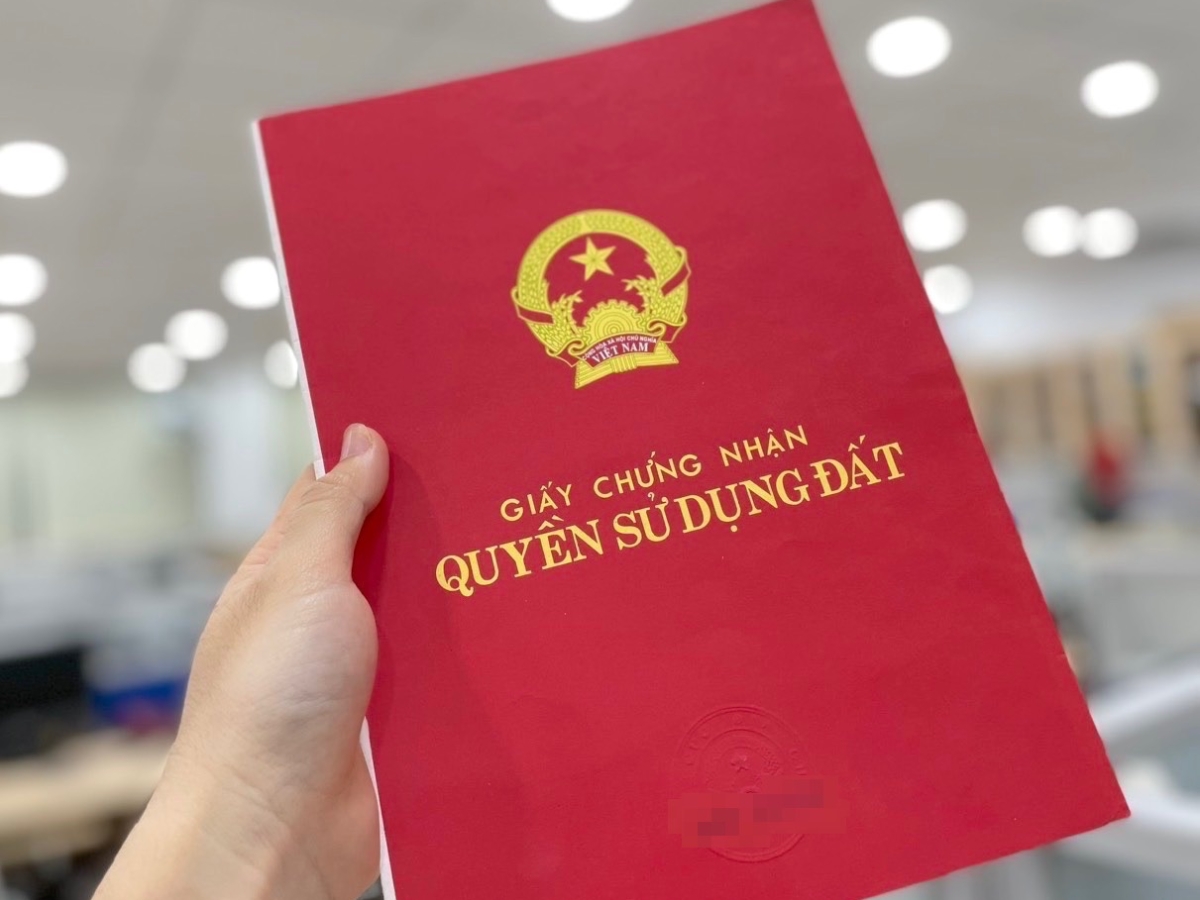
Household Land Use Rights Certificate (So do ho gia dinh) is a certificate of land use rights issued to members of the same household. (Source: Compilation)
1.2. Understanding the separation of household land use rights certificates
In practice, splitting a household's land use certificate is often simply understood as the division of a common land plot into smaller parts so that each person in the household can be registered individually or have independent usage rights. However, from a legal perspective, this is not an act of self-division of land by internal agreement but a mandatory administrative procedure that must be confirmed by the competent state authority and re-issued with certificates for each new land plot.
An important point to understand is that land use rights within a household are co-owned, therefore, any decisions regarding transfer, gifting, or division must be based on the consensus of the members with land use rights. When performing land subdivision, the land registration agency will review all legal conditions of the original land parcel such as the minimum area allowed for subdivision, dispute status, land use planning, and related financial obligations before deciding whether to permit the subdivision.
After completing the procedures, each new land parcel will be issued its own certificate, thereby forming independent land use rights for each part. This allows household members to easily exercise rights such as transfer, mortgage, or lease separately, instead of having to depend on the common rights of the entire household as before.
1.3. Can a household's land use rights certificate be separated if one of the members disagrees?
The implementation of the procedure for splitting the household land use right certificate in cases where land belongs to the common ownership of a household must be based on the consensus of the members with land use rights. According to civil law regulations, common assets of a household include land use rights, assets contributed, created, or jointly gifted, inherited by the members, or other assets that the members jointly agree to be common assets.
For this common property, the disposal of assets of great value or production materials must be agreed upon by members aged 15 and over. For other common assets, the consent of the majority of eligible members as stipulated is also required. Therefore, if one of the members with land use rights in the household disagrees with the subdivision, then, in principle, legally, the procedure for separating the land use right certificate (so do) cannot be carried out for that portion of land. This is to ensure the rights and the unity in managing the common property of the household.
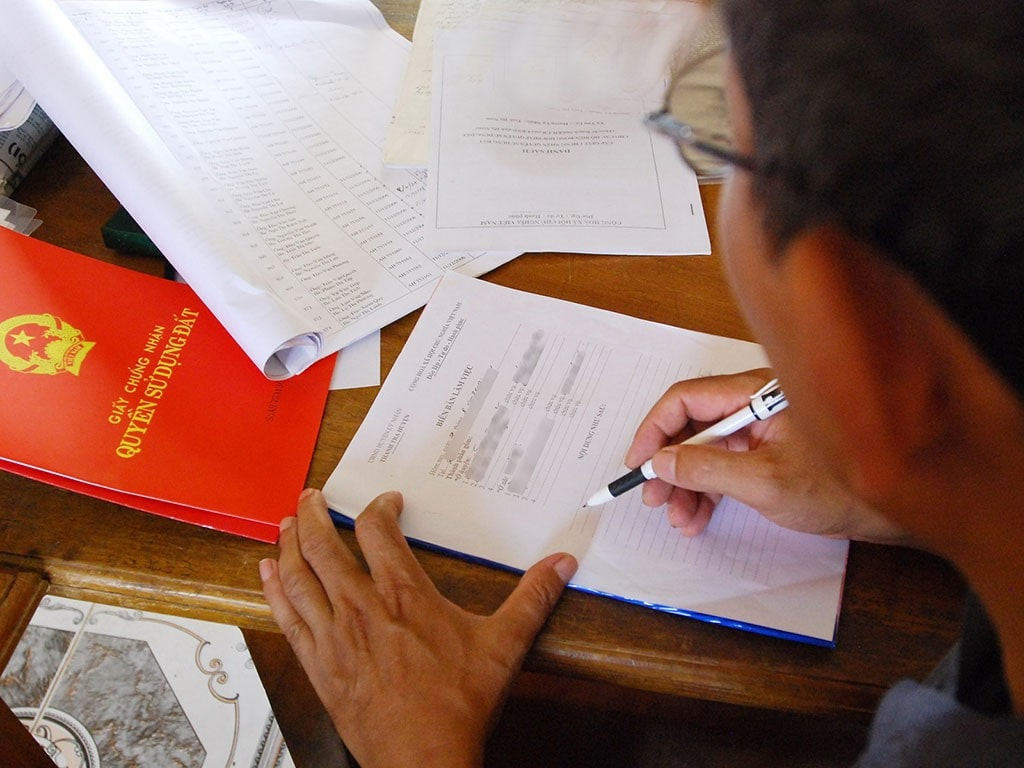
To separate a household land use right certificate, the consent of all members is required. (Source: Collected)
2. Latest regulations on carrying out the separation of household land use right certificates
2.1. Preparation of documents
Pursuant to Clause 11, Article 9 of Circular 24/2014/TT-BTNMT, amended and supplemented by Clause 1, Article 2 of Circular 09/2021/TT-BTNMT, when performing the household land use rights certificate splitting procedure, the land user needs to prepare a complete dossier according to regulations to submit to the competent authority. Preparing the correct and sufficient documents from the outset will help the application processing proceed quickly, limiting the need for multiple additions or amendments.
The application dossier for land splitting includes the following basic components:
Application for Land Subdivision according to Form No. 11/DK : Land users must fill in complete information according to the form prescribed by the Ministry of Natural Resources and Environment. This form can be downloaded online or requested directly at the one-stop shop department or local land official.
Original Certificate of Land Use Rights (Red Book/Pink Book) : This is the most important legal document, proving the household's legal land use rights for the land parcel to be subdivided.
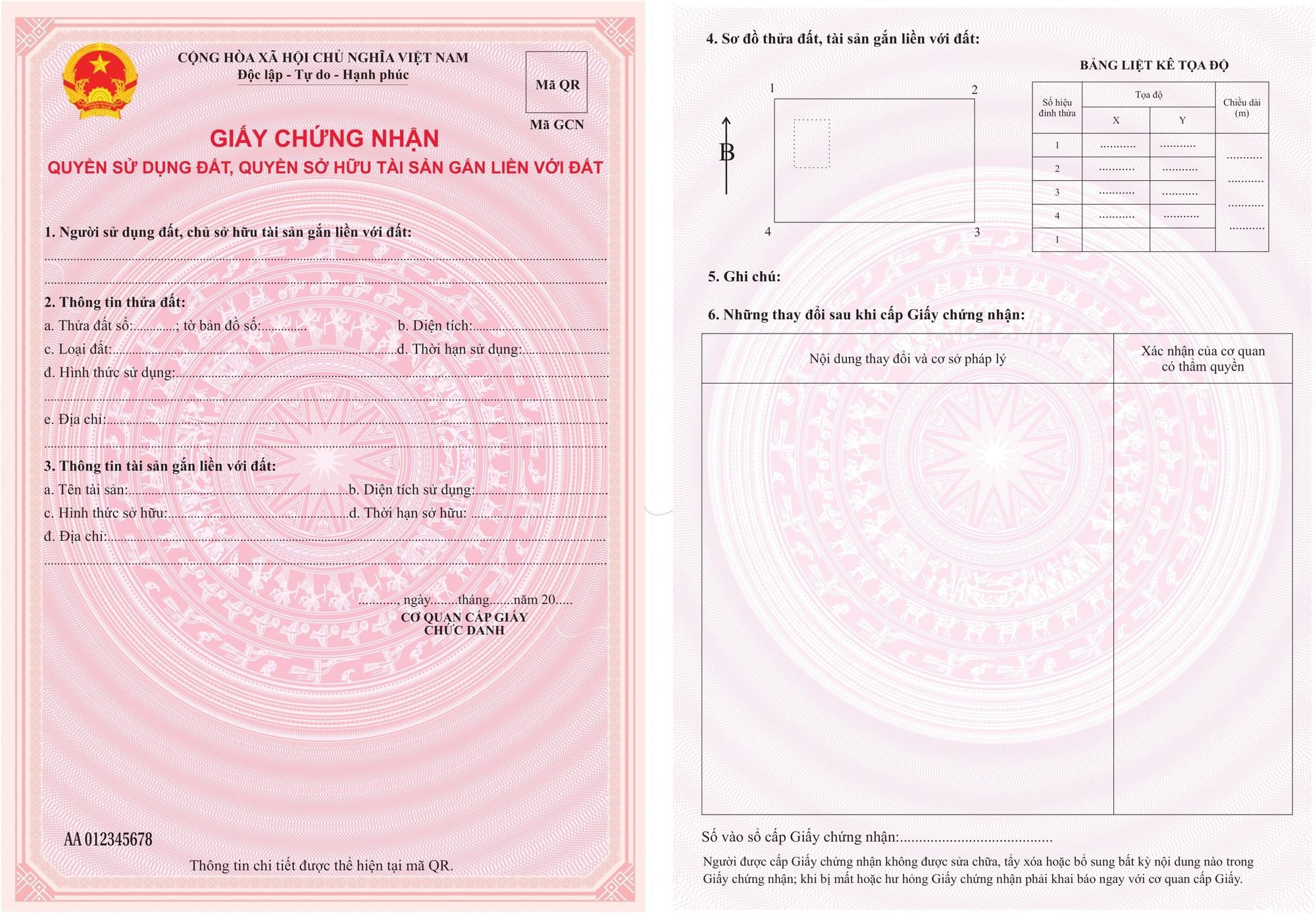
Original Certificate of Land Use Rights. (Source: Collected)
Proper preparation of documents is the first step and plays a decisive role in the progress of implementing the procedure for separating household land titles in the subsequent steps.
Implementation Procedure
Submit Documents
Households and individuals shall submit an application to separate the household land use right certificate according to one of the following methods. Applications can be submitted directly at the Commune/Ward/Town People's Committee (Uy Ban Nhan Dan Xa/Phuong/Thi Tran) where the land is located, if the locality receives applications at the commune level. In other cases, citizens can submit at the district-level One-Stop Shop (Bo Phan Mot Cua Cap Huyen) (or the Public Administrative Center (Trung Tam Hanh Chinh Cong) depending on the locality) if it has been established, to ensure a centralized and more convenient reception process.
Additionally, if the locality has not yet organized a One-Stop Shop, citizens can submit applications directly at the District Land Registration Office Branch where the land is located. In case there is no branch yet, applications will be submitted at the District Land Use Registration Office as regulated.
2.2.2. Application Receipt and Verification
After submitting the application, the receiving officer will conduct a preliminary check of the completeness and validity of the documents. If the application meets the requirements, the applicant will be issued an application receipt form along with an appointment slip for the result. This serves as an important basis for tracking the progress of the procedure.
In case the receiving officer does not issue a receipt, the applicant should proactively request it to ensure their rights and to track the application processing transparently.
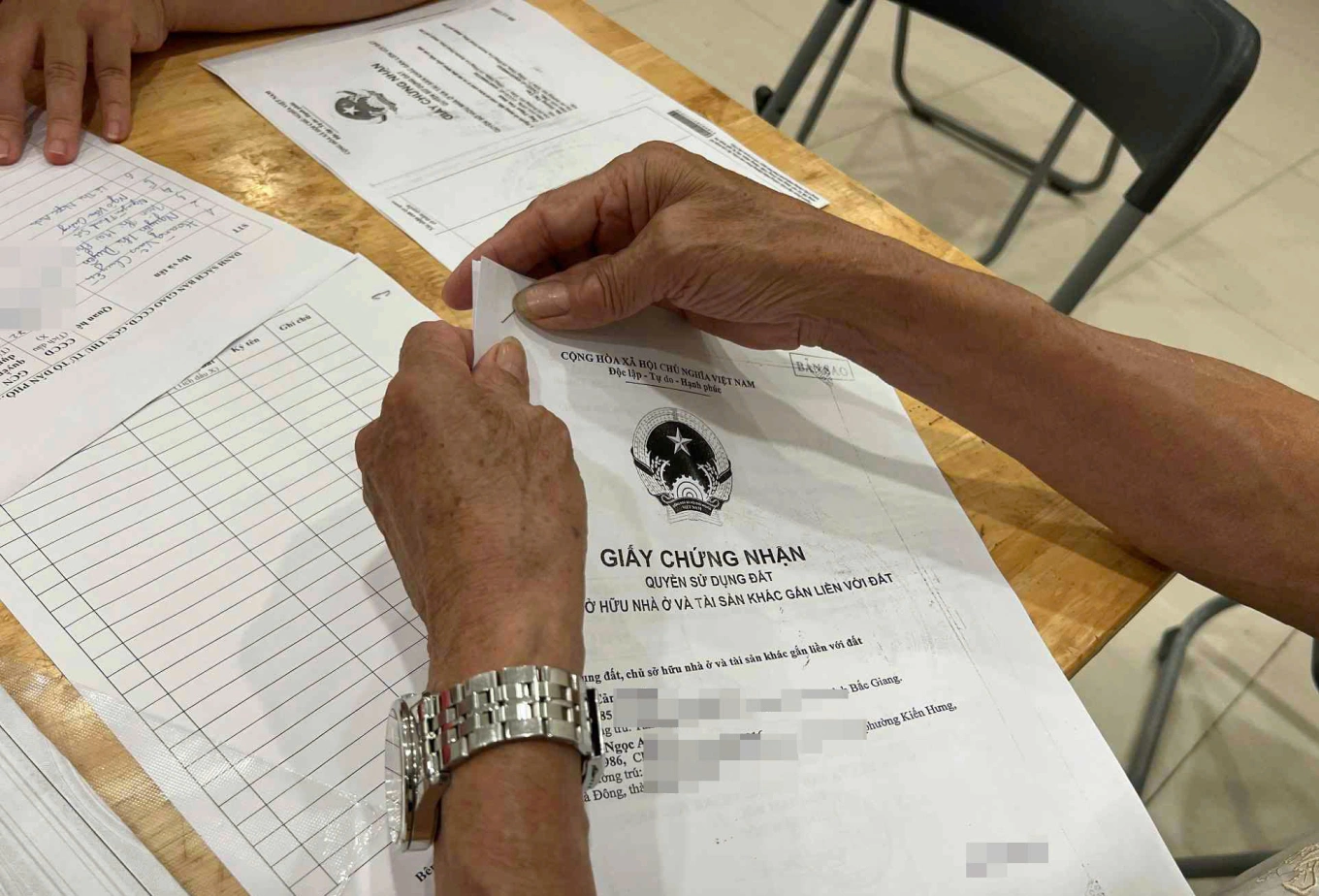
The officer receives the application to split the household's red book (land use rights certificate) and performs the necessary procedures. (Source: Collected)
2.2.3. Confirmation and Financial Obligations
When the application is valid, the competent authority will record it and schedule the result issuance date for the land user. At this stage, the person performing the procedure for separating the household land use right certificate needs to note to fully fulfill financial obligations as prescribed, including fees, charges, or related obligations (if any).
Completing financial obligations on time is a mandatory condition for the application to be further processed and not be interrupted during the new certificate issuance process.
2.2.4. Receiving Results
After completing the entire process, citizens will receive a new land use rights certificate for the separated land plots. The processing time is no more than 15 working days from the date of receiving a valid application; for mountainous areas, islands, remote areas, or difficult areas, it is no more than 25 working days.
This period does not include the time for reception at the commune level, the time for fulfilling financial obligations, or the time for processing special cases such as land law violations or expert appraisal requests.
2.3. Fees for splitting the household red book
When performing the household land use certificate splitting procedure, the land user needs to prepare some costs related to the surveying process and the issuance of new certificates. These fees are not only mandatory but also depend on the specific regulations of each locality, so the collection amount may have certain differences between provinces and cities.
Survey fee for land subdivision : This is the cost of hiring a surveying unit to re-measure the area and boundaries of the land parcel after subdivision. This fee is not a state revenue but is paid directly by the people to the surveying service provider. Typically, the fee ranges from VND 1,800,000 to VND 2,500,000, depending on the area and location of the land parcel.
Certificate Issuance Fee : This is a fee stipulated by the Provincial People's Council, so the collection rate will vary between localities. People will pay according to the specific fee schedule issued by the province or city where the land is located at the time of the procedure.
In addition to the above fees, when performing a land title split, households are not required to pay registration fees according to Clause 5, Article 5, Circular 13/2022/TT-BTC. The reason is that the land use rights have been granted and registration fees have been paid from the initial certificate issuance, therefore, splitting the land parcel within the household is only considered a re-registration of the right of use, and does not incur new registration fee obligations.
In summary, the procedure for splitting household land use right certificates is an important legal process aimed at dividing common land use rights into separate land plots for each individual or group of members within the household. When conditions are met correctly, sufficient documents are prepared, and the prescribed order is followed, the splitting process will proceed smoothly, ensuring legal rights for all parties involved and helping land management and use become clearer and more transparent in the future.