


How to Place Mirrors in the House Without Violating Feng Shui Taboos
Avoiding major taboos indoors not only optimizes aesthetics but also directly impacts the homeowner's feng shui, fortune, and health. Incorrect placement of mirrors can lead to financial loss and unease. The article below will guide you to understand and effectively apply these principles in your living space.

▲Table of Contents
1. Learn about how to place mirrors in the house without violating major taboos
1.1. The role of reflection and amplification of energy by mirrors
Mirrors in living spaces are considered materials capable of reflecting and amplifying airflow, directly affecting visual perception. Ensuring natural lighting for functional rooms is mandatory. Utilizing mirrors near light-receiving areas helps "double" natural light, supporting the improvement of illumination for hidden corners in apartments. This helps the space become airy and meets the standards for modern living environment quality.
Besides the visual element, mirrors also affect the mental state and daily routines of the family. Proper placement of mirrors can contribute to a sense of balance, while incorrect placement can easily cause unease or spatial disorder. This is also why many families are interested in how to place mirrors in the house without violating major taboos as part of interior design related to feng shui.
1.2. Principles for arranging mirrors in positive directions
A common principle when applying is to place mirrors in positions that reflect positive elements such as light, greenery, or open spaces. This helps enhance the feeling of spaciousness and supports the smooth flow of air within the home. Mirrors placed in the right position also help utilize natural light, reducing the need for artificial lighting during the day.
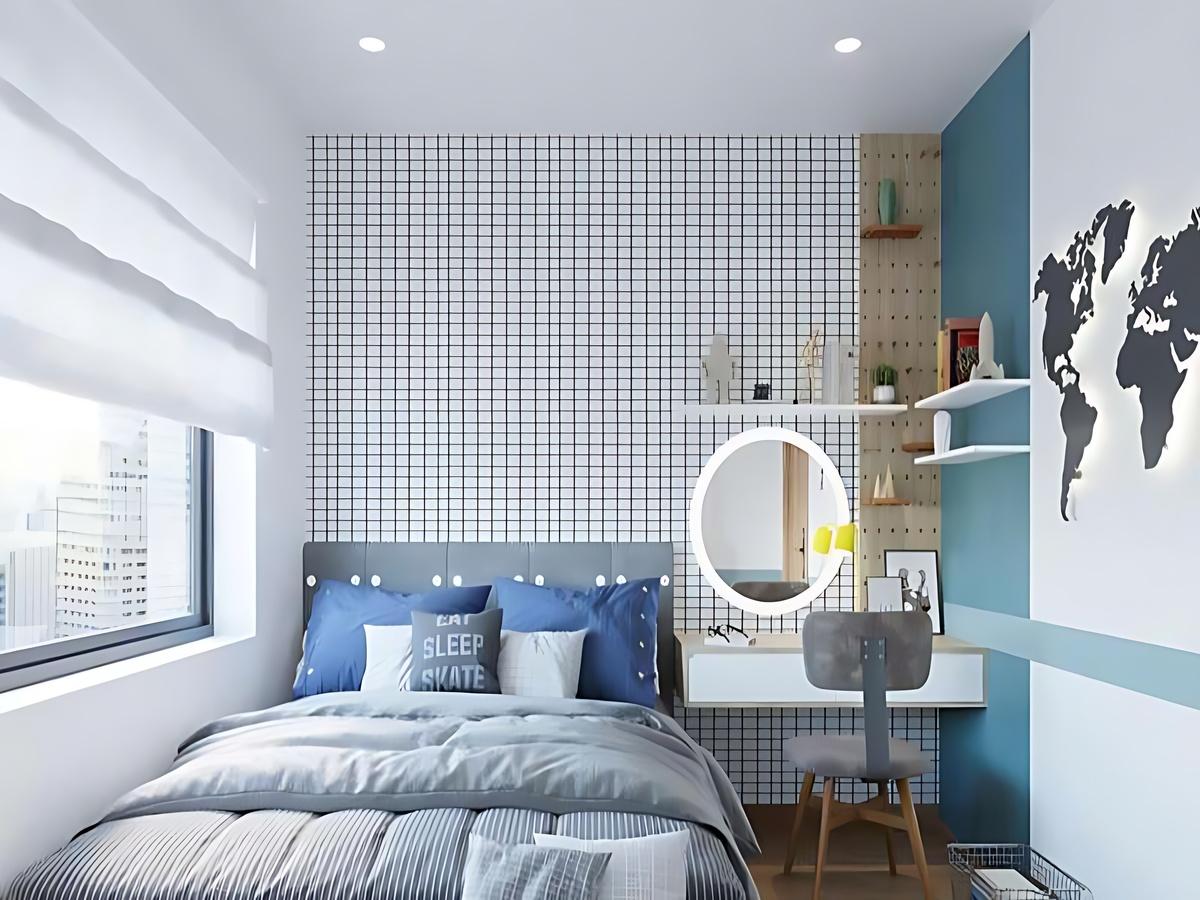
Place mirrors in positions that reflect positive images and natural light. (Source: Compilation)
Conversely, avoid placing mirrors where they reflect negative elements such as cluttered areas or dimly lit spaces. These positions can make the reflected image appear heavy, affecting the overall feeling of the house. When understanding this principle, applying how to place mirrors in the house without violating major taboos will become easier to control in practice.
1.3. Misconceptions when using mirrors in the house
Many people tend to overuse mirrors to expand space, especially in small apartments. However, using too many reflective surfaces can be visually distracting and create visual imbalance, especially in enclosed spaces. This leads to a feeling of stress during long-term living.
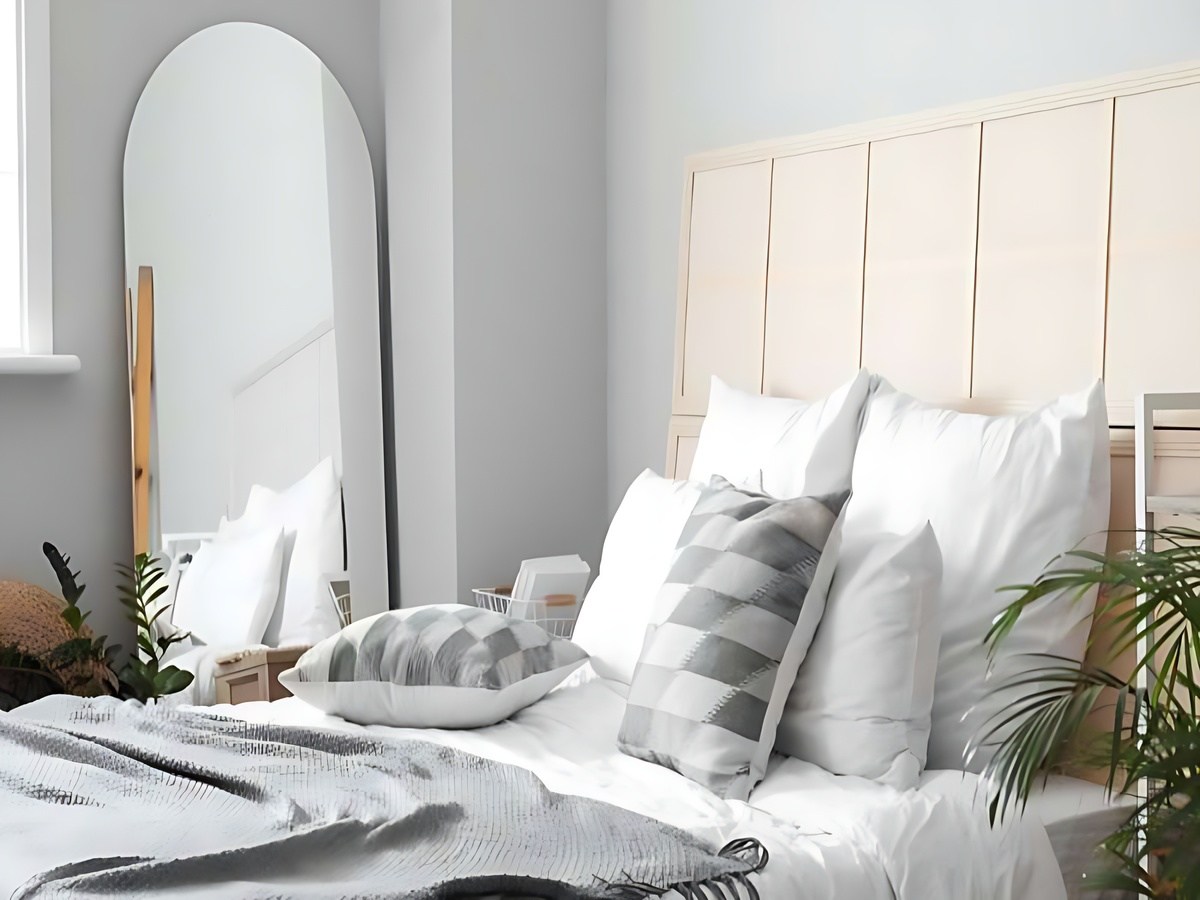
Avoid overuse and incorrect placement of mirrors, which can cause spatial imbalance. (Source: Collected)
Besides, placing mirrors subjectively without considering specific directions or positions is also a common mistake. In some cases, placing mirrors directly facing resting areas or doorways makes the space feel unstable. These misunderstandings cause many families to not fully utilize the value of mirrors in interior design.
2. Recommended mirror placement positions in the house to avoid taboos
2.1. Arranging living room mirrors to enhance the sense of spaciousness
In the living room, mirrors are often placed in positions that can reflect natural light or greenery from outside. When a mirror reflects a window or balcony, the space will feel noticeably expanded, especially for houses with an area under 80 m². This is a common arrangement in many modern designs.
However, you should avoid placing a mirror directly facing the main door, as it can cause a feeling of lack of privacy when entering the house. Instead, placing it slightly to the side helps maintain the expanding effect while ensuring harmony. Applying the correct way to place mirrors in the house without violating taboos in the living room helps make the common living space more pleasant.
2.2. Dining Room Mirrors Create a Sense of Abundance
The dining room is an area often prioritized for placing mirrors due to their ability to create a sense of fullness and coziness. When a mirror reflects the dining table, the image of the meal is "doubled," thereby symbolizing prosperity in the family. At the same time, the lighting in the dining room is also significantly enhanced.
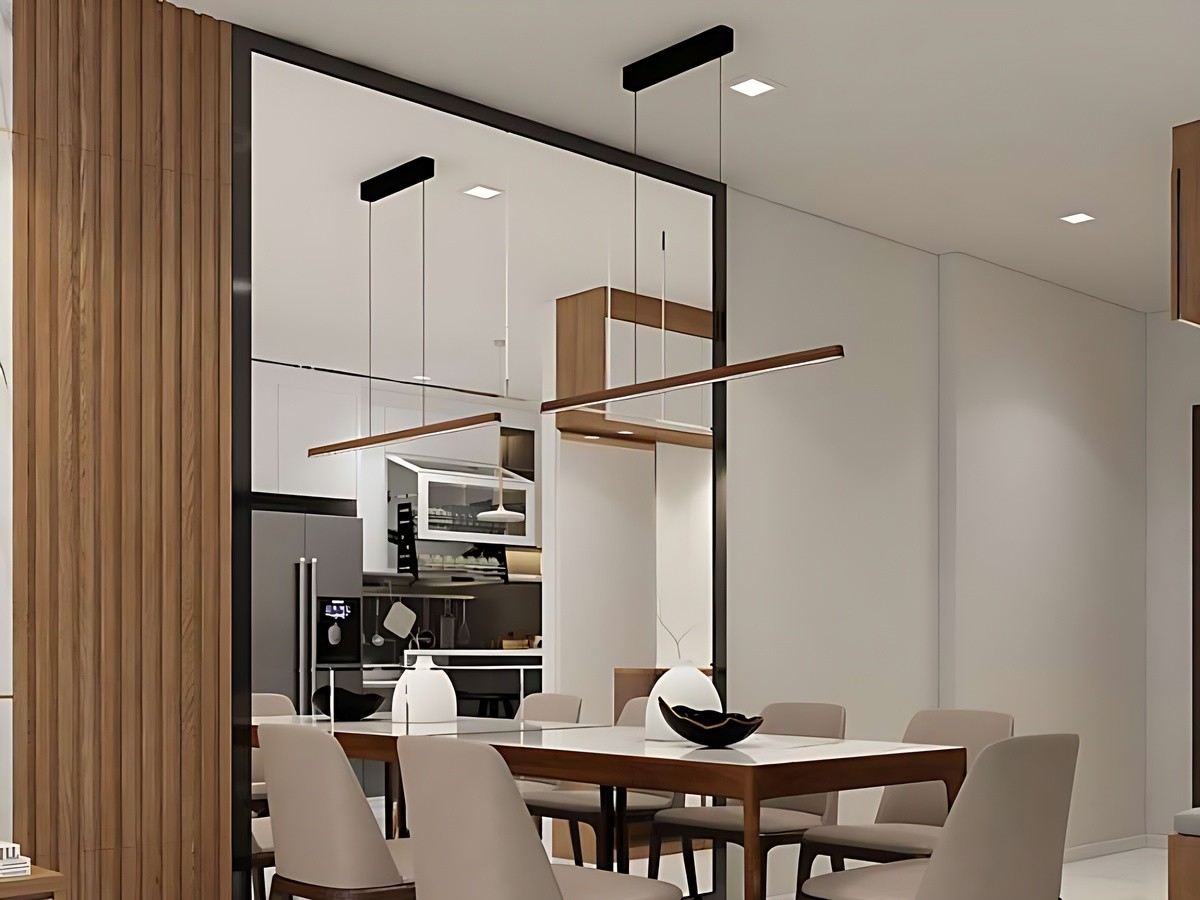
Arranging dining room mirrors helps enhance light and prosperity. (Source: Collected)
Besides symbolic meaning, using large mirrors in the dining room also helps improve the visual space, especially in small apartments. However, it is necessary to choose a reasonable position to avoid direct light reflection causing glare. This helps maintain balance in daily life.
2.3. Bedroom mirrors placed discreetly and reasonably
In the bedroom, mirrors should be placed in a discreet location to avoid affecting sleep. If a mirror directly faces the bed, users may feel uneasy when waking up at night. This is particularly disturbing for those sensitive to light or reflections. Therefore, proper mirror placement will help the resting space be more harmonious and comfortable.
A commonly applied solution is to place mirrors inside wardrobes or in areas out of sight. This arrangement ensures practicality while helping the resting space remain stable. This is an important factor when applying feng shui mirror placement rules for the bedroom.
2.4. Corridor mirrors enhance spatial flow
Corridors are often narrow and dimly lit areas, so placing mirrors can help expand the space horizontally. Mirrors reflecting light from adjacent rooms will help make the corridor brighter and reduce the cramped feeling in townhouses or apartments. However, avoid placing mirrors directly opposite room doors as it can disrupt the flow of movement and cause spatial perception disorder. Placing mirrors along the wall is a more reasonable choice in many cases.
3. Taboos to avoid when learning how to place mirrors in the house without violating taboos
3.1. Avoid placing mirrors opposite the main door
Mirrors placed opposite the main door are often considered to reflect and push airflow outside. This can make the space feel unstable when entering the house. Many studies also indicate that seeing a reflection immediately upon opening the door can cause discomfort. Besides feng shui factors, this arrangement also affects family privacy. Therefore, instead of placing them directly opposite, choose an offset position to ensure visual effectiveness without negatively impacting the living space.
3.2. Avoid mirrors facing the bed
A mirror directly facing the bed often creates a sense of unease when resting, especially in dimly lit spaces at night. Upon waking, a sudden reflection can cause a startle, affecting psychological state and sleep quality in the long term. This is one of the common layout mistakes when not applying correctly how to place mirrors in the house without violating taboos.
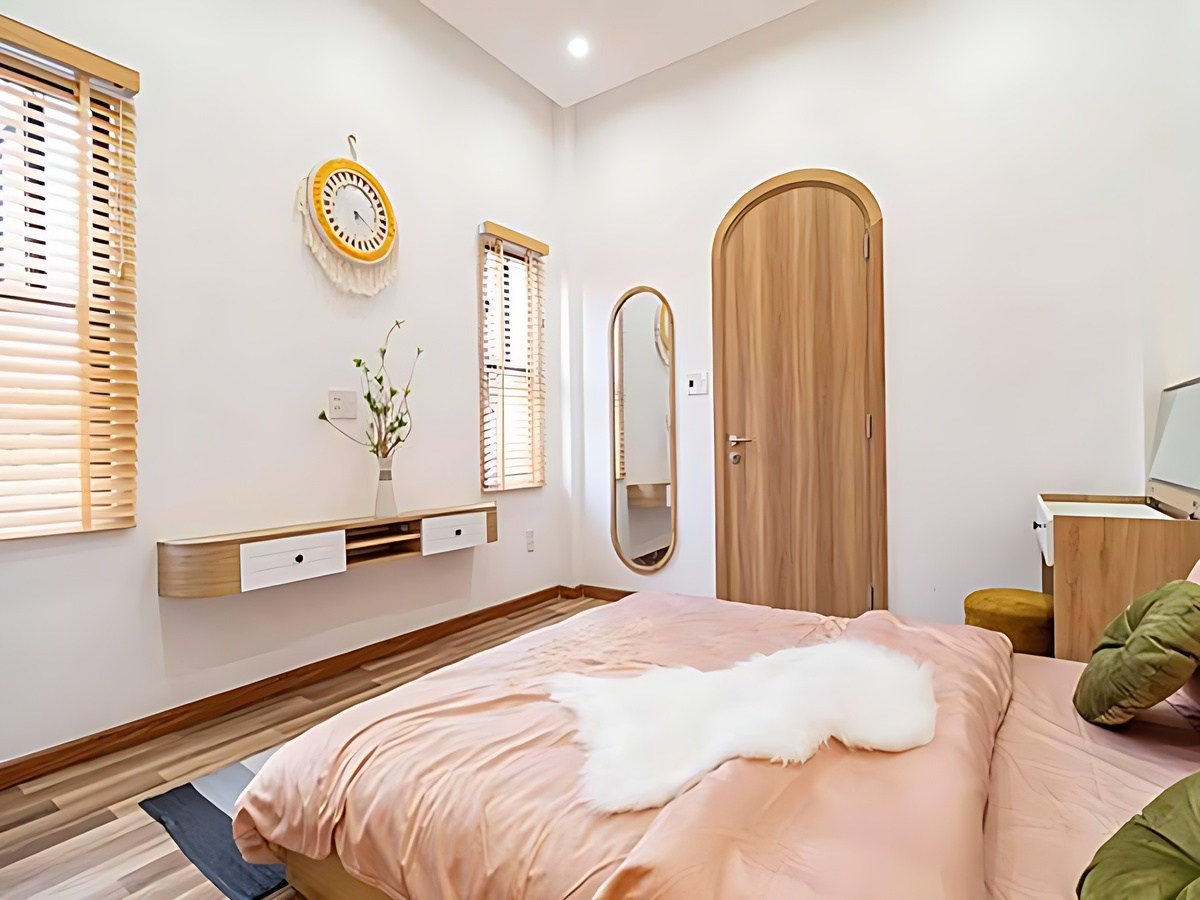
Avoid placing mirrors directly facing the bed to ensure peaceful sleep. (Source: Collected)
Besides psychological factors, mirrors reflecting the bed can make the private space feel less stable. To mitigate this impact, many families choose to place mirrors inside cabinet doors or in positions hidden from direct view from the bed. This arrangement helps maintain tranquility in the bedroom while still ensuring the mirror's functionality in daily life.
3.3. Avoid placing mirrors opposite the kitchen
The kitchen represents the heat element in the living space, while mirrors have the ability to reflect and amplify images. When a mirror is placed opposite the kitchen, the reflection effect can increase the feeling of heat and cause visual imbalance in the cooking area. Additionally, light reflected from the stove can cause glare and affect the usage process. Therefore, a more suitable alternative location should be chosen to ensure harmony between the functional areas in the house.
3.4. Avoid using damaged mirrors
Broken or distorted mirrors can distort the reflected image, thus creating an uncomfortable feeling when used. In living spaces, clear visual elements play an important role in maintaining psychological stability. Furthermore, small mirror pieces or mismatched pieces are also not recommended for use. Choosing a whole piece mirror with a flat surface helps ensure aesthetic effectiveness and safety for long-term use.
3.5. Avoid overusing mirrors in the same space
Placing too many mirrors in an area can cause visual disturbance, especially in small spaces under 50 m². Continuous reflective surfaces make users find it difficult to concentrate and easily get tired during daily activities. Therefore, it is necessary to consider the number and placement of mirrors suitable for the actual area. Proper arrangement will help the space be more balanced and avoid unnecessary excessive reflection.
4. Optimizing experience for placing mirrors at home without violating major taboos
4.1. Choosing the right mirror size
Mirror size should correspond to the space area to ensure effective use. Large mirrors are often suitable for living rooms over 20 m², while small mirrors are suitable for hallways or bedrooms with limited space. Choosing the right size helps avoid a sense of imbalance and ensures the mirror functions properly. This is an important factor in modern interior design.
4.2. Choosing a harmonious mirror shape
Mirror shape also affects the overall perception of the space. Round mirrors often create a feeling of softness and harmony, while square or rectangular mirrors bring stability and clarity to the composition. Choosing a shape that suits the interior style helps enhance aesthetics and consistency in the design. This is a factor to consider when placing mirrors in the home.
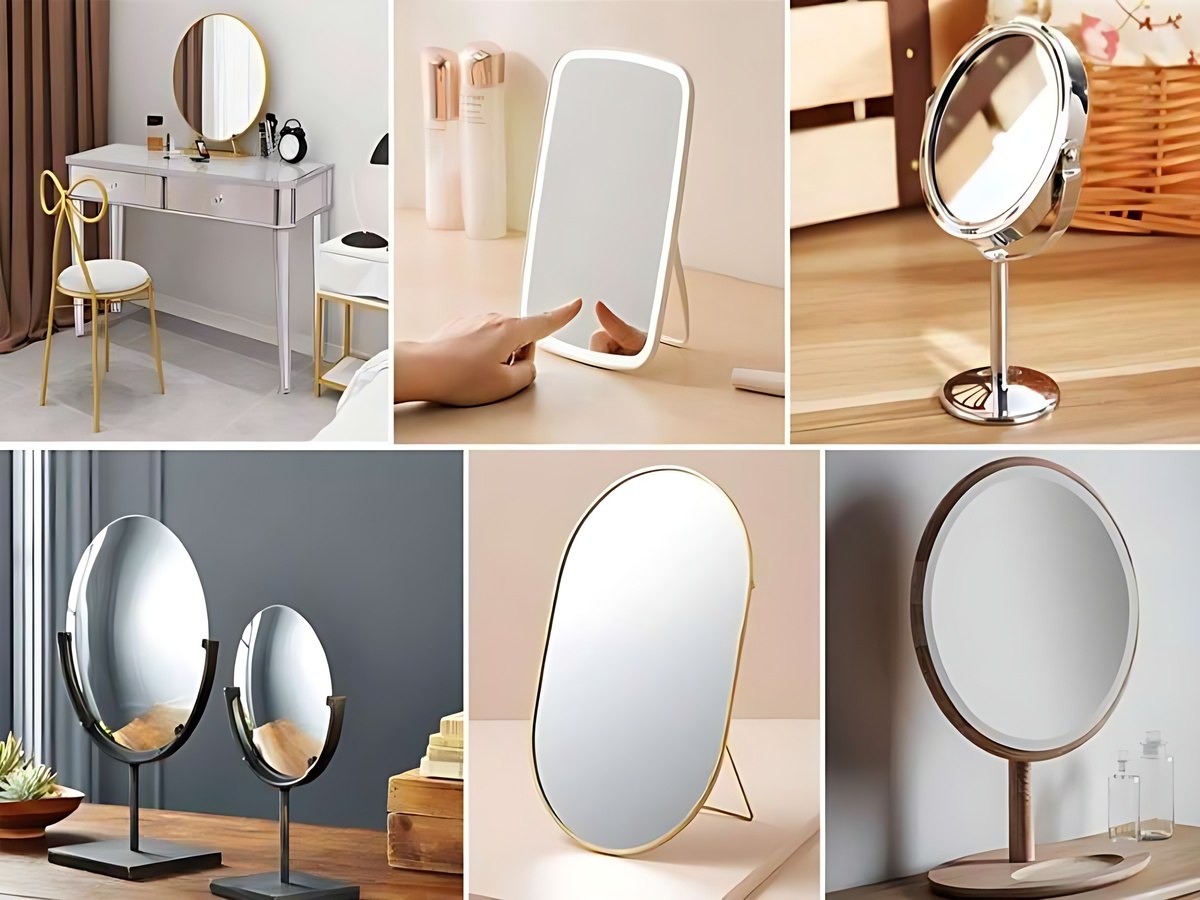
Choosing the right mirror shape to create an aesthetic accent for the space. (Source: Collected)
4.3. Effective Combination of Natural Light
Placing mirrors near natural light sources helps enhance indoor brightness, especially in spaces lacking windows. Reflected light helps reduce electricity consumption during the day and improves the quality of living space. Additionally, light combined with mirrors creates a sense of depth, making the room appear larger than its actual area. This is a solution adopted by many apartment designs.
4.4. Keep Mirrors Clean and Clear
Clean mirrors help reflect clearly and ensure effective use in daily life. Dusty or smudged mirror surfaces can reduce light quality and cause discomfort during use. Regular cleaning helps maintain brightness and prolong the product's lifespan. This is a small factor but directly affects the living space experience.
4.5. Application for modern apartments
In modern apartments of currently popular sizes, mirrors are used as a technical solution to expand visual space. According to apartment design standards for 2026, the installation of large mirrors in hallways or living rooms must comply with material safety regulations (using tempered glass or safety laminated glass) to avoid the risk of injury in case of an incident. The combination of mirrors and smart lighting systems helps optimize usable space, ensuring aesthetics and absolute safety for residents in accordance with current construction standards.
Understanding and applying the correct way to place mirrors in the house to avoid major taboos will help you not only own a beautiful living space but also improve feng shui, attract wealth, and maintain energy balance in the family. Consider each position carefully to turn mirrors into positive supporting elements instead of causing negative impacts.