


Latest procedure for authorizing the signing of a real estate deposit contract.
The procedure for authorizing the signing of a deposit contract is usually applied when the buyer or the seller cannot directly participate in the real estate transaction. Clearly understanding the legal regulations and the authorization procedure will help limit disputes and ensure the validity of the deposit contract.

▲Table of Contents
1 . What is a Power of Attorney to sign a real estate deposit contract?
A Power of Attorney to sign a real estate deposit contract is when an individual or organization authorizes another person to sign a deposit contract on their behalf, related to the transaction of buying, selling, or transferring real estate, in accordance with the content agreed upon in the power of attorney document.
In practice, authorization often arises when the buyer or seller cannot directly participate in the transaction due to being far away, busy with work, or for other personal reasons. In such cases, the authorized person can sign the deposit contract, receive or hand over the deposit money, or perform related tasks within the permitted scope on behalf of the authorizing party.
According to legal regulations, authorization must be made in writing to define the scope, duration, and powers of the authorized person. This is also an important content in the thu tuc uy quyen ky hop dong dat coc procedure to ensure the transaction is carried out in accordance with regulations and to limit future disputes.

Authorization to sign a deposit contract is the act of allowing another person to sign a real estate deposit contract on one's behalf. (Source: Collected)
2. Is it permissible to authorize the signing of a house and land deposit contract?
Depending on each party participating in the transaction, the regulations on authorizing the signing of a house and land deposit contract will differ. Therefore, when carrying out the procedure for authorizing the signing of a deposit contract, the parties need to clearly determine whether they fall under the case of an individual in a normal civil transaction or a transaction related to a real estate project to apply the correct legal provisions.
2.2.1. For individuals (owner/buyer)
For transactions between individuals, the law allows the buyer or the seller to authorize another person to sign a land deposit contract on their behalf. The authorized person can perform tasks such as signing the contract, receiving the deposit, or handing over the deposit within the scope permitted by the authorizing party.
To ensure legal validity and limit disputes, the contract or power of attorney should be notarized or certified according to regulations. At the same time, the content of the power of attorney document needs to clearly state the scope of work to be performed, such as signing the deposit contract, receiving money, making payments, or performing procedures related to real estate transactions.
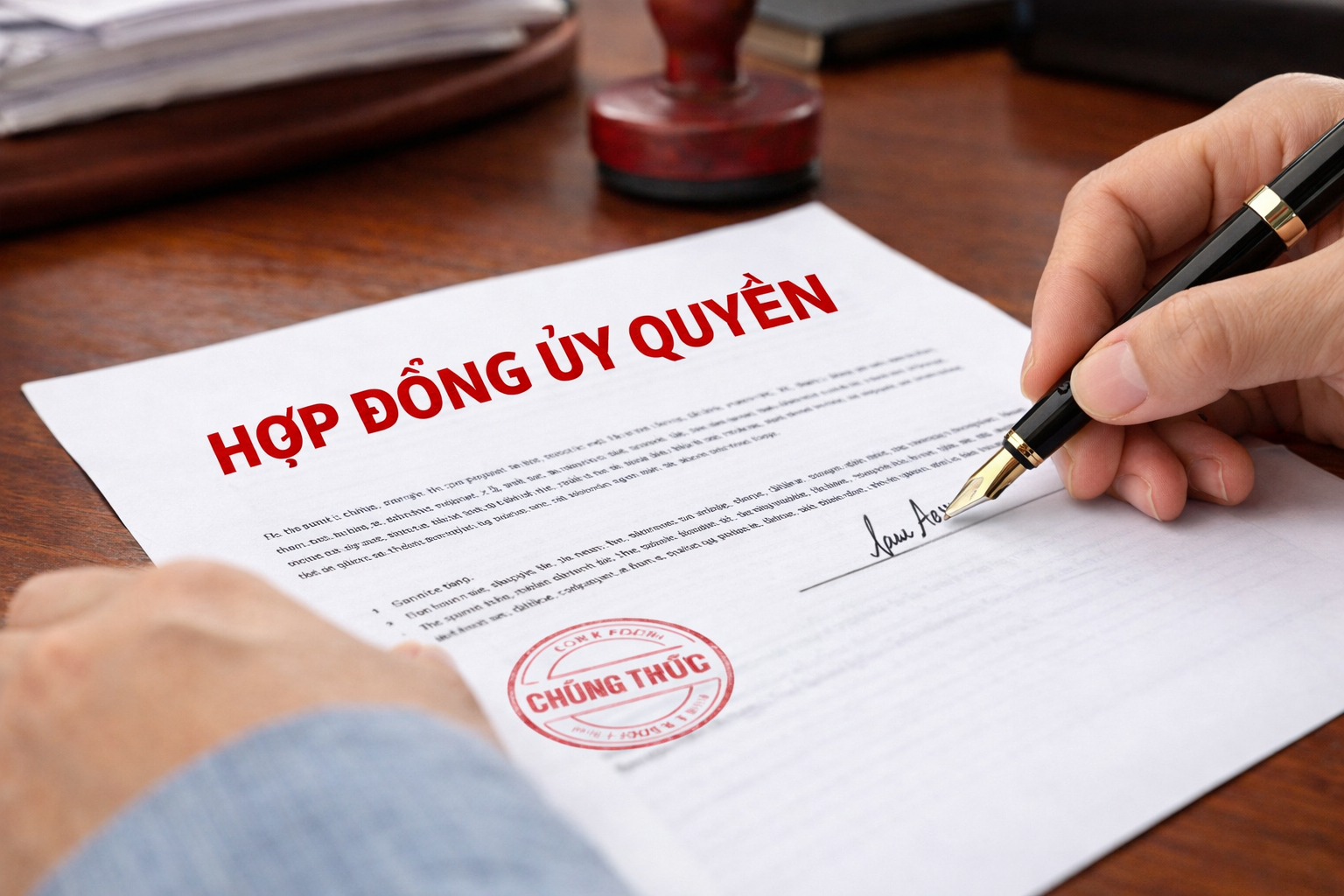
An individual can authorize signing a real estate deposit contract. (Source: Compiled)
2.2.2. Regarding Real Estate Projects (Developer)
For real estate projects, especially future-formed housing, current law has stricter regulations regarding deposit receiving activities and transaction signing with customers.
According to the new Real Estate Business Law, investors are not allowed to authorize other organizations or individuals to sign deposit contracts or future-formed housing purchase agreements on their behalf. This regulation aims to ensure transparency, limit risks for customers, and prevent intermediaries from conducting transactions without proper authority.
3. Procedure for authorizing deposit contract signing
For the authorization to sign a land deposit contract to have legal validity and limit dispute risks, parties must follow the correct procedure as stipulated. During the process of the procedure for authorizing the signing of a deposit contract, thorough preparation of documents and clearly defining the scope of authorization are very important factors.
3.1. Step: Prepare Documents
Before notarizing or authenticating a power of attorney, parties need to prepare complete documents according to regulations. For the authorizing party who is the owner of land and house or the buyer, the documents usually include a citizen identity card or passport, a marriage registration certificate or a marital status confirmation certificate, and a land use rights, housing ownership certificate related to the transacted real estate.
For the authorized party, valid identification documents such as citizen ID card or passport need to be prepared. In addition, the parties also need to prepare a draft contract or power of attorney, which clearly states the scope of authorized work such as signing a deposit contract, receiving the deposit, or performing tasks related to real estate transactions.
3.2. Step 2: Notarization/Authentication
After preparing all necessary documents, the principal and the authorized party will go together to a notary office or a Commune-level People's Committee to perform notarization or authentication of the power of attorney document according to legal regulations.
Here, the notary or authorized official will check documents, verify information, and certify the signature of the principal on the power of attorney agreement. The notarization or authentication helps ensure the legal validity of the document and is an important basis when carrying out real estate transactions.

The two parties involved perform notarization at the competent authority. (Source: Collected)
3.3. Step 3: Sign the deposit contract
After completing notarization or certification, the authorized person can sign the real estate deposit contract on behalf of the principal with the buyer or seller within the permitted scope.
When participating in the transaction, the authorized person needs to bring the notarized contract or power of attorney along with personal identification documents to prove their legal representative rights. This is the final step in the procedure for authorizing the signing of a deposit contract to ensure the transaction is carried out in accordance with legal regulations.
4. Common risks when authorizing real estate deposit signing
Although authorization makes the real estate transaction process more convenient, if the legal content is not carefully checked, many risks can still arise during the process. Therefore, when performing the procedure for authorizing the signing of a deposit contract, parties need to be particularly cautious about the scope of authorization and the legality of related documents.
One of the common risks is that the authorization letter does not clearly state the scope of work or does not specifically define the powers of the authorized person. This can lead to the authorized person exceeding their authority or disputes arising regarding payment responsibilities, receiving the deposit, or signing the contract.
Additionally, many cases where the power of attorney document is expired, forged, or not notarized/certified according to regulations also cause transactions to be at risk of invalidity. Therefore, before signing a real estate deposit contract, parties should carefully check the content of the power of attorney document, verify owner information, and ensure the authorization document is still legally valid to limit future risks.
5. Experience for safe authorization
To limit risks during real estate transactions, parties should carry out the authorization carefully and in accordance with the law. Understanding the important notes in the procedure for authorizing the signing of a deposit contract will help ensure the legality of the transaction and protect the rights of the parties involved.
5.1. Full notarization of the authorization document
When authorizing the signing of a real estate deposit contract, parties should establish a clear written authorization document and have it notarized or certified according to regulations. Notarization helps confirm the legality of the authorization letter and limit disputes arising during the transaction.
Furthermore, a notarized document also serves as a crucial basis for third parties, such as notary offices, banks, or competent authorities, to determine the legal representation rights of the authorized person in real estate transactions.

Parties should establish a clear written power of attorney and have it fully notarized. (Source: Collected)
5.2. Carefully check the scope and duration of the authorization
The power of attorney document must clearly state the scope of work that the authorized person is permitted to perform, such as signing a deposit contract, receiving the deposit, or carrying out procedures related to real estate transactions. This helps prevent cases where the authorized person acts beyond their granted authority.
In addition, the parties must also carefully check the validity period of the power of attorney document to ensure it is still legally valid at the time of performing the deposit transaction.
5.3. Verify real estate legal status before making a deposit
Whether the transaction is made directly or through an authorized person, the buyer should carefully check the legal status of the property before making a deposit. Information to be reviewed includes the land use rights certificate, mortgage status, planning, or disputes related to the house and land.
Thorough legal verification will help limit risks such as transactions with disputed assets, assets being seized, or assets not eligible for transfer according to legal regulations.
5.4. Seek assistance from a lawyer or legal expert when needed
For large value transactions or complex legal documentation, parties should seek advice from a lawyer or legal expert before signing the deposit contract and the power of attorney document.
Assistance from a professional will help review the content of the power of attorney, scrutinize contract terms, and advise on potential legal risks that may arise during the real estate transaction process.
Understanding the procedure for authorizing the signing of a deposit agreement will help parties conduct real estate transactions in accordance with legal regulations and limit many risks arising in the process of buying and selling real estate. Preparing complete documents, clearly defining the scope of authorization, and performing valid notarization or certification are important factors that help ensure the legal validity of the transaction. Therefore, before signing a deposit agreement through an authorized person, parties should carefully check the content of the authorization letter and related legal information to protect their rights and interests.