


The most accurate way to calculate usable area and wall center line area
The calculation methods for usable area (dien tich thong thuy) and area including walls (tim tuong) are issues that many apartment buyers are concerned about to avoid area discrepancies and contract disputes. Clearly understanding these two calculation methods will help buyers accurately assess the actual value of the apartment.

▲Table of Contents
1. What are usable area and wall-to-wall area?
When researching apartment purchases, buyers often encounter two common concepts: usable area (dien tich thong thuy) and wall-to-wall area (dien tich tim tuong). These are two different methods of calculating area, directly affecting the selling price, actual living space, and the buyer's rights during the transaction process.
1.1. Concept of usable area
Usable area is the actual living space inside the apartment that occupants can directly use. This calculation includes the area of the interior rooms, the balcony area, and the area of the partition walls between rooms inside the apartment.
However, the usable area will not include the walls surrounding the apartment, load-bearing columns, or technical shafts located inside. This is also a common calculation method currently in many apartment projects to ensure transparency for buyers.
1.2. Concept of wall center area
Wall center area is calculated from the center of the walls surrounding the apartment. In addition to the actual usable area, this calculation also includes outer walls, partition walls between apartments, and some load-bearing columns located within the apartment.
Because the area of walls and structural elements is added, the wall center area is usually larger than the usable area. Previously, many projects applied this calculation method to determine apartment sale prices.
1.3. Why is it necessary to distinguish between the two area calculation methods?
Understanding clearly the calculation methods for usable area and wall center area will help buyers easily check the actual area of the apartment before signing the contract. This is also an important basis for comparing sale prices between projects and evaluating the actual utility value of the apartment.
Furthermore, if the two methods of calculating area are not clearly distinguished, buyers may be confused about the usable space or the costs to be paid. Therefore, thoroughly understanding the area information will help the transaction process be transparent and limit future disputes.
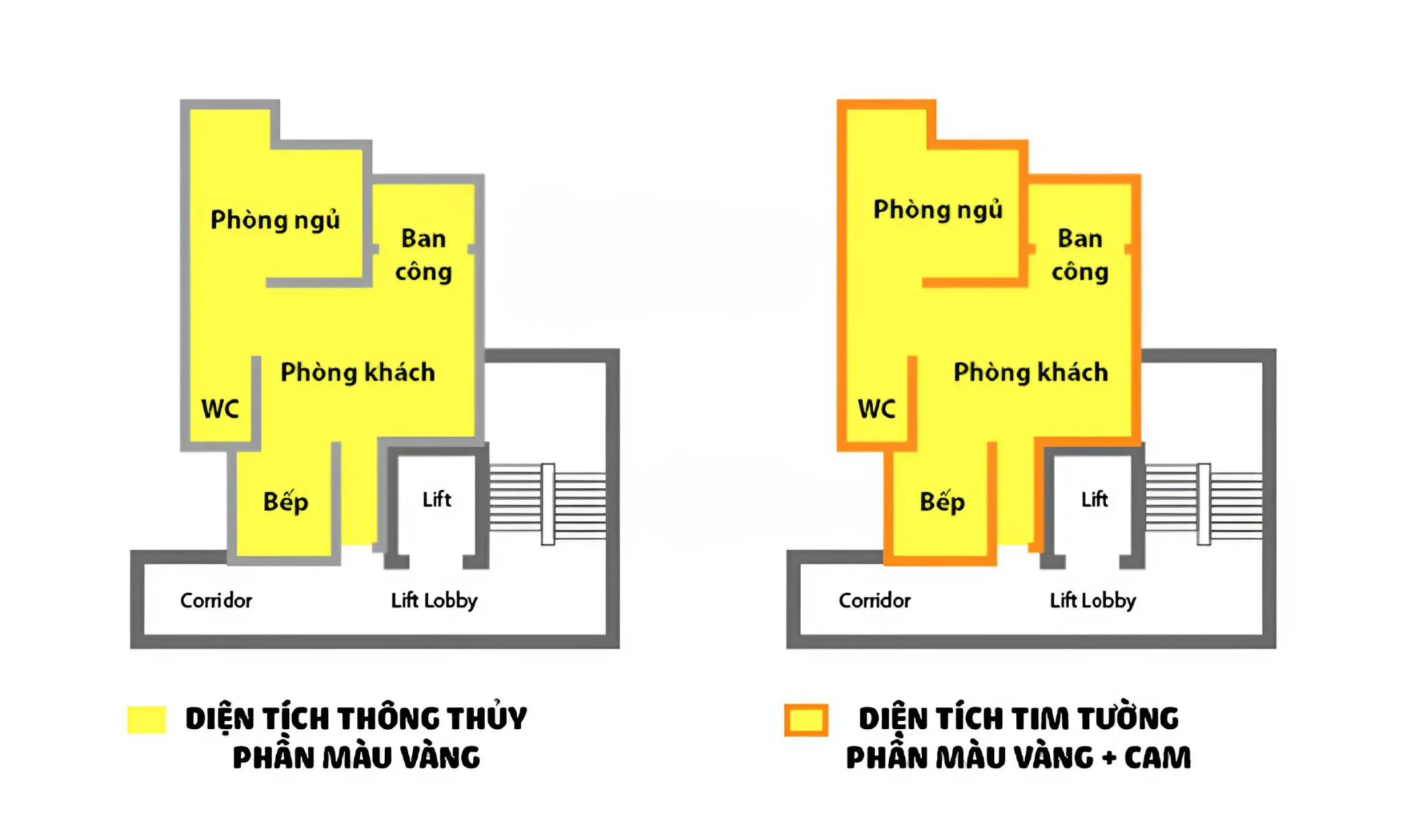
Net usable area and wall-to-wall area are two completely different calculation formulas. (Source: Collected)
2. How to calculate net usable area
Usable area is a common calculation method in many apartment projects today as it quite accurately reflects the actual living space of the apartment. Understanding the calculation method will help buyers easily check the area information in the contract and limit confusion during transactions.
2.1. Calculation Formula
In the calculation of usable area and wall centerline area , usable area is calculated based on the actual usable area inside the apartment. This area includes the living room, bedroom, kitchen area, bathroom, balcony, and the partition walls between rooms inside the apartment.
The formula commonly applied is as follows:
Usable area = Actual usable floor area + balcony/loggia area if any - area of walls, columns, technical shafts within the apartment not included in the area
According to this calculation method, the area of walls surrounding the apartment, load-bearing columns, or technical shafts will not be added to the actual usable area of the apartment.
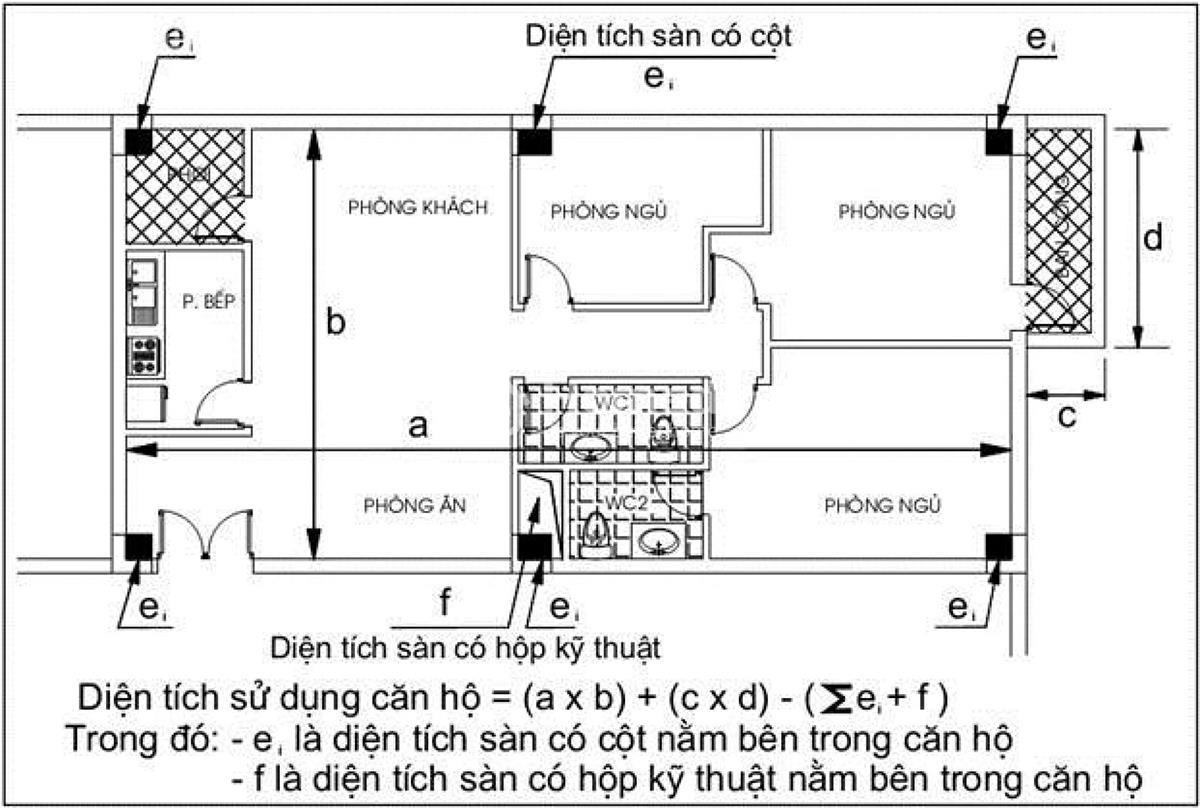
Illustrative image of net area calculation. (Source: Collected)
2.2. Practical Illustration Example
For example, an apartment has an actual usable floor area of 72 m², with a balcony area of 4 m². Within the apartment, load-bearing columns and technical shafts occupy a total of 2 m² which are not included in the usable area.
In this case, the clear floor area of the apartment will be calculated as follows:
Clear floor area = 72 m² + 4 m² − 2 m² = 74 m²
Through this example, buyers can see that the usable area closely reflects the actual space that can be used for daily living. Therefore, when checking the apartment purchase contract, buyers should carefully compare the floor plan and area specifications to avoid confusion during the transaction process.
3. How to calculate wall center area
Wall center area is a calculation method that was quite popular in many apartment projects before. Compared to the usable area, this calculation method includes the wall and some internal structures of the apartment, so the area is usually larger than the actual usable area.
3.1. Calculation formula
In the calculation of net usable area and gross area based on wall centerlines, the gross area based on wall centerlines is calculated from the center of the walls surrounding the apartment. Besides the actual usable area, this calculation also includes the area of external walls, walls between apartments, and load-bearing columns located inside the apartment.
The formula for calculating gross area based on wall centerlines is as follows:
Gross area based on wall centerlines = Construction floor area of the apartment including external walls, walls between apartments, columns, and technical shafts located inside the apartment
According to this calculation method, the structural construction area will also be added to the total apartment area when calculating the selling price.
3.2. Practical illustrative example
For example, an apartment has a usable floor area of 72 sqm, a balcony area of 4 sqm. The walls surrounding the apartment, load-bearing columns, and internal technical shafts account for a total of 6 sqm.
Then, the wall-to-wall area of the apartment will be calculated as follows:
Wall-to-wall area = 72 sqm + 4 sqm + 6 sqm = 82 sqm
From the example above, it can be seen that the wall-to-wall area is usually larger than the usable area (dien tich thong thuy) because it includes the area of walls and structural elements. Therefore, buyers need to read the contract carefully to understand which area is used for pricing before making a transaction.
4. Differences between usable area (dien tich thong thuy) and wall-to-wall area
Usable area and wall-to-wall area are both used to determine the size of an apartment, however, the calculation methods for these two types of areas have quite clear differences. Understanding these differences correctly will help buyers easily check contracts, assess actual usable space, and avoid confusion when comparing prices between projects.
4.1. Differences in area measurement methods
Usable area is calculated based on the actual usable space inside the apartment that residents can directly use for daily living. This calculation method does not include the walls surrounding the apartment, load-bearing columns, and internal technical shafts.
Meanwhile, the core wall area is measured from the center of the apartment's surrounding walls and includes the area of walls, columns, or technical shafts. Therefore, the core wall area is usually larger than the usable area of the same apartment.
4.2. Difference in actual usable area
Because structural elements are not included, the usable area more accurately reflects the actual space that the buyer can use. This is also why many people prioritize considering the usable area when choosing an apartment.
Conversely, the wall core area can be larger by a few m² depending on the apartment design and the density of internal load-bearing columns.
If not thoroughly understood, buyers may confuse the area stated in the contract with the actual usable area after receiving the house.
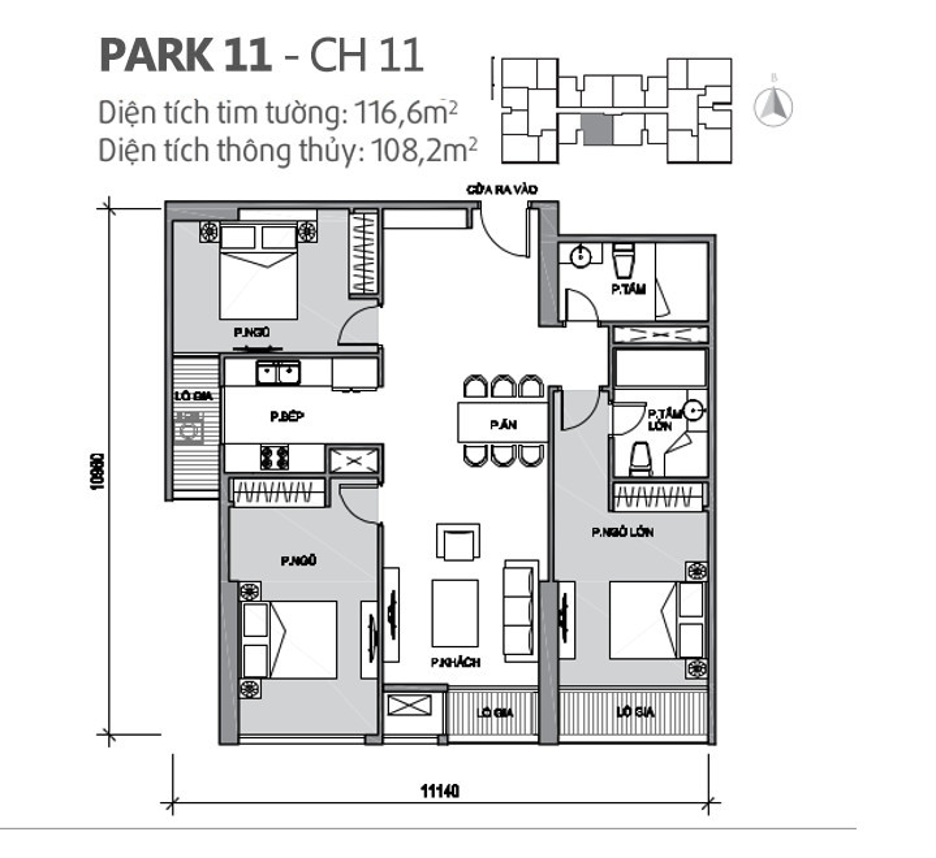
Gross floor area is greater than net floor area. (Source: Collected)
4.3. Impact on Apartment Sale Price
The difference in how usable area and wall-to-wall area are calculated directly affects the total value of the apartment. If the apartment is calculated by wall-to-wall area, the total area calculated for payment will be larger, so the cost the buyer has to pay may also be higher.
Currently, most apartment projects apply the calculation based on usable area to ensure transparency and customer rights. However, buyers should still carefully check the information in the contract to clearly understand the type of area being applied before transacting.
5. Notes when buying an apartment by area
Apartment area directly affects the selling price, usable space, and many related benefits during home ownership. Therefore, buyers need to carefully research the area information before signing the contract to limit confusion and avoid future disputes.
5.1. Carefully check information in the sales contract
Buyers should carefully read the information related to the apartment area recorded in the sales contract, especially the area calculation method being applied. This is an important basis for determining the payment value as well as the buyer's rights when receiving the apartment handover.
Besides the apartment area, buyers should also clearly check the common ownership area, private ownership area, and the terms related to the difference in actual area after handover to avoid future disputes.
5.2. Cross-checking area on the drawing and in reality
The apartment floor plan will help buyers visualize more clearly the space layout and the actual usable area. Before receiving the house, buyers should carefully cross-check between the information on the drawing, the contract, and the actual area of the apartment.
Careful inspection will help detect discrepancies related to area, the location of load-bearing columns, or technical shafts within the apartment. This is also an important step when learning how to calculate usable area and wall-to-wall area to ensure financial benefits.
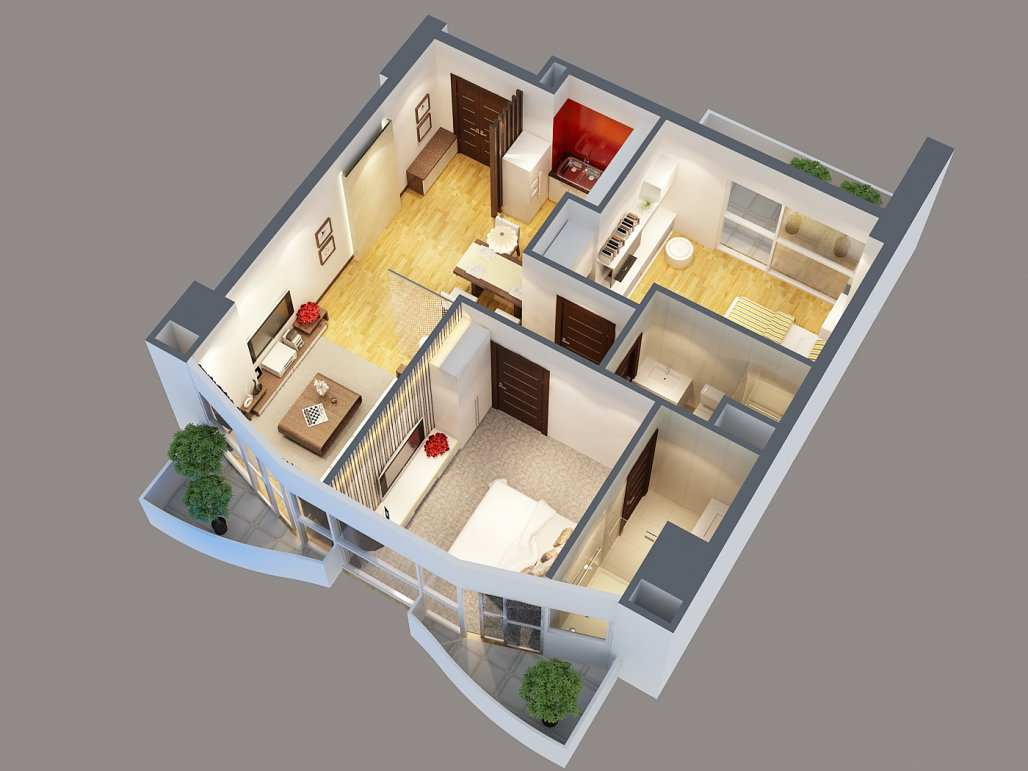
The buyer needs to compare the area on the drawing and the actual floor plan. (Source: Collected)
5.3. Avoid confusion between usable area and construction area
Many buyers easily confuse the actual usable area with the construction area of an apartment because the way information is recorded in some projects may differ. While the usable area reflects the actual living space, the construction area may include additional walls and technical structures.
If not carefully researched, buyers may misjudge the actual usable area or encounter difficulties when comparing prices between apartments. Therefore, a clear understanding of each type of area will help the apartment selection process be more transparent and accurate.
Understanding how to calculate usable area and wall-to-wall area will help apartment buyers easily and accurately assess the actual usable space as well as the real estate value before making a purchase. Understanding the difference between these two calculation methods not only helps in checking contracts and comparing areas upon handover but also helps to limit disputes that may arise during the transaction process. This is important knowledge that any apartment buyer should thoroughly understand to ensure their rights and make a more suitable choice.