


Beautiful modern living room lighting arrangement for optimal living space
Light not only brightens the living room but also influences emotions, aesthetics, and the value of your living space. Understanding how to properly arrange lighting in the living room will help you optimize space, enhance interior design, and create a cozy, modern living environment.

▲Table of Contents
1. Overview of lighting layout in the living room
1.1. Role of lighting in living room design
Lighting plays a crucial role in shaping the aesthetic of the living room space, directly influencing visual perception and daily living experiences. Studies in the construction field show that spaces with appropriate lighting can improve usability and create a more comfortable feeling for users. In modern interior design, lighting is not just a technical element but also an effective tool for shaping space.
Besides aesthetic factors, lighting also impacts real estate value by enhancing living space quality and practical usability. Apartments with well-designed lighting systems are typically valued 5% to 12% higher than the market average. Therefore, focusing on living room lighting arrangement is one of the important criteria in housing design and investment today.
1.2. Classification of lighting in the living room
In interior design, living room lighting is typically divided into three categories: ambient lighting, task lighting, and accent lighting, each serving a distinct role. Ambient lighting provides general brightness for the entire space, task lighting supports specific activities like reading, while accent lighting creates aesthetic focal points. The coordination of these three layers of light enhances usability and elevates the living space's value in living room lighting design.
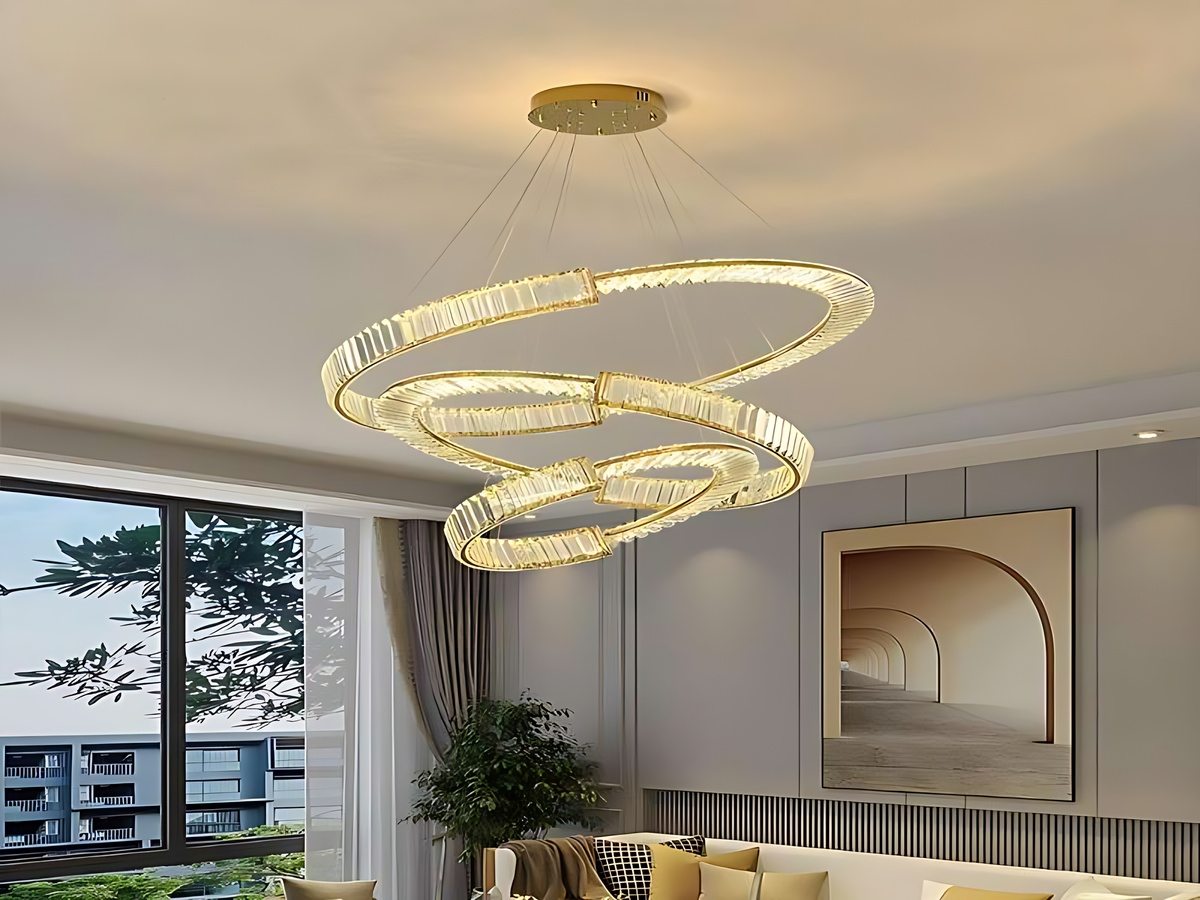
Design a modern three-layer lighting system for living room spaces. (Source: Collected)
1.3. Basic principles when applying lighting layout in the living room
The basic principles of lighting design are to ensure brightness balance, limit glare, and maximize natural light sources. Indoor lighting standards require appropriate illuminance for each living area, while maintaining uniformity to avoid eye strain. Furthermore, the selection of lighting equipment must meet energy-saving criteria according to current construction standards, contributing to improved electricity efficiency in residential buildings.
2. Lighting layout in the living room by area
2.1. Lighting layout for the central area of the living room
The central area typically uses ceiling lights or chandeliers to provide overall lighting, with power calculated based on room area, usually ranging from 10 to 20 W/m². The installation location should be in the center of the ceiling to distribute light evenly, avoiding dark spots. For apartments with an area of 60 m² or more, the use of chandeliers also helps enhance aesthetics and create a prominent focal point for the living room space.
2.2. Lighting arrangement for the living room sofa area
The sofa area requires soft lighting to create a relaxing atmosphere, often using floor lamps or table lamps with a color temperature between 3000K and 4000K. The lighting here not only supports activities like reading but also helps increase spatial depth through indirect lighting effects. Proper arrangement of this area helps complete the overall living room lighting design, while creating a balance between light and dark areas in the room.
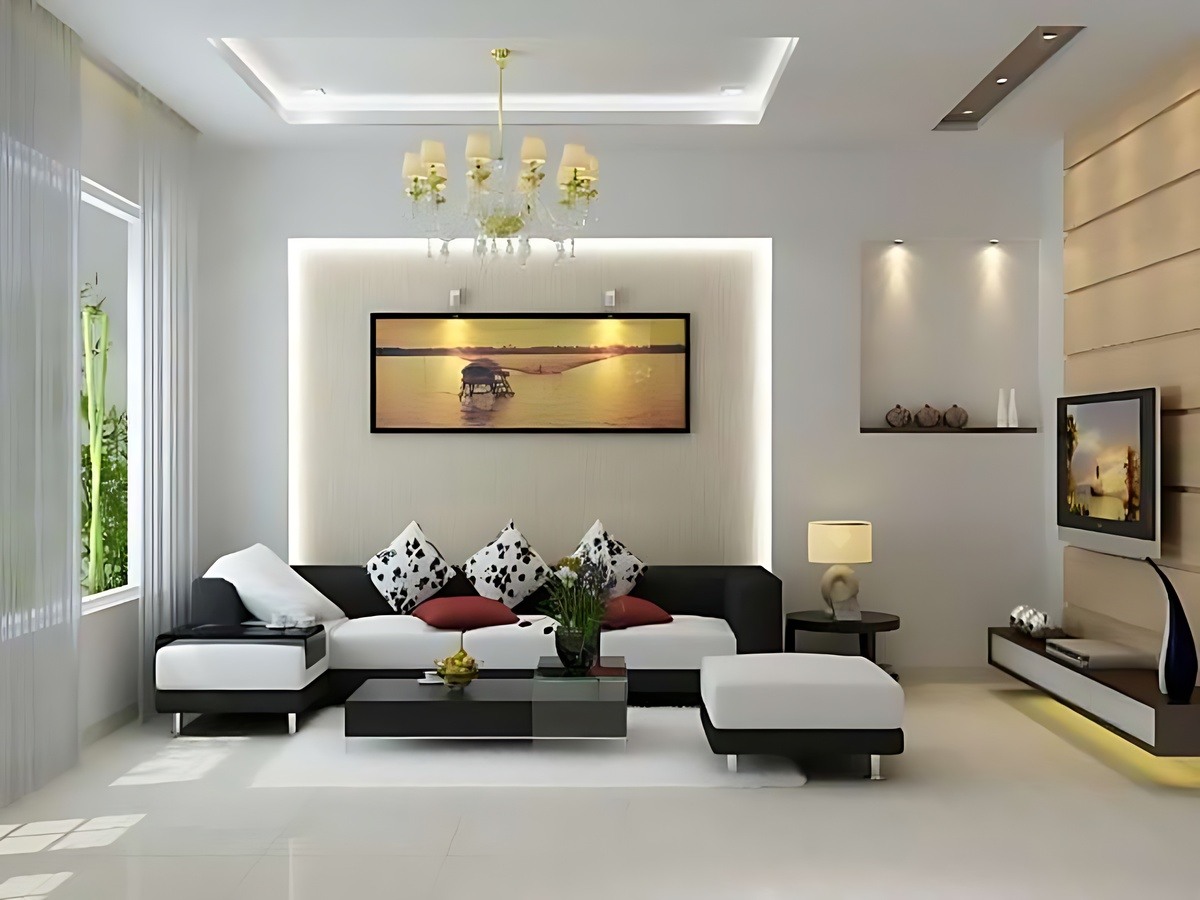
Arrangement of floor lamps and table lamps to create relaxing lighting in the sofa area. (Source: Collected)
Lighting arrangement for the living room TV shelf area
TV shelves are often combined with indirect LED lights or recessed wall lights to create an indirect lighting effect, helping to reduce contrast when viewing the screen. The light cast behind the TV helps limit eye strain when watching for extended periods, while also enhancing the aesthetics of this area. According to lighting standards, the use of indirect lighting also helps maintain light uniformity and reduce glare in the living space.
2.4. Lighting arrangement for the living room's decorative area
The decorative area often uses spotlights or picture lights to highlight decor details such as paintings, statues, or display shelves. Focused lighting helps create depth and enhance the artistic value of the space, especially in apartments with an area of 70 m² or more. Proper use of lighting also helps clearly segment the space, contributing to the overall completion of interior design in line with modern trends.
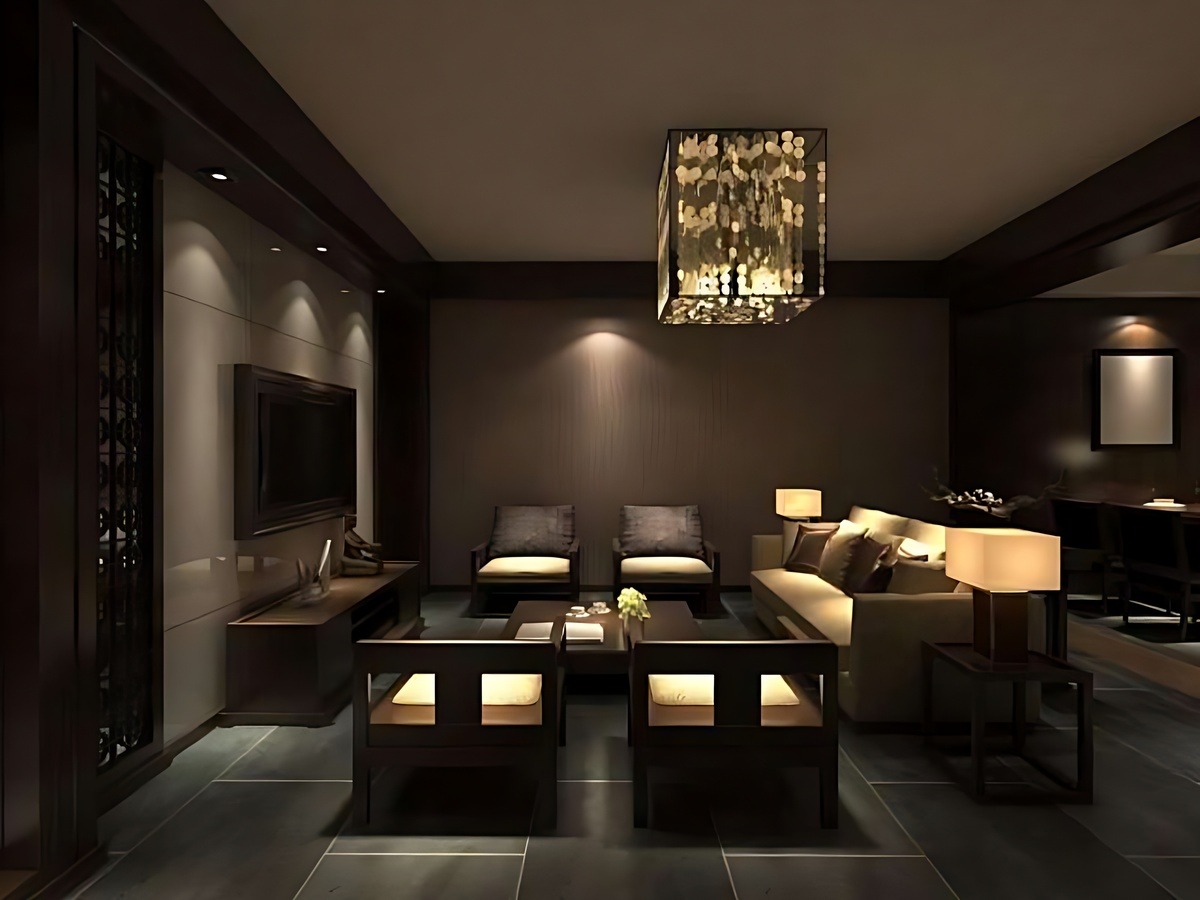
Use spotlights to create artistic accents for the living room decor area. (Source: Collected)
3. Living room lighting arrangement by design style
3.1. Modern living room lighting arrangement
Modern style prioritizes simple, streamlined lighting with recessed ceiling lights or strip LED lights. White or neutral light from 4000K to 5000K is commonly used to create a clear and clean feeling. Lighting design in this style often limits decorative details, focusing on functionality and lighting efficiency, which is suitable for current urban housing trends.
3.2. Lighting arrangement in neoclassical living rooms
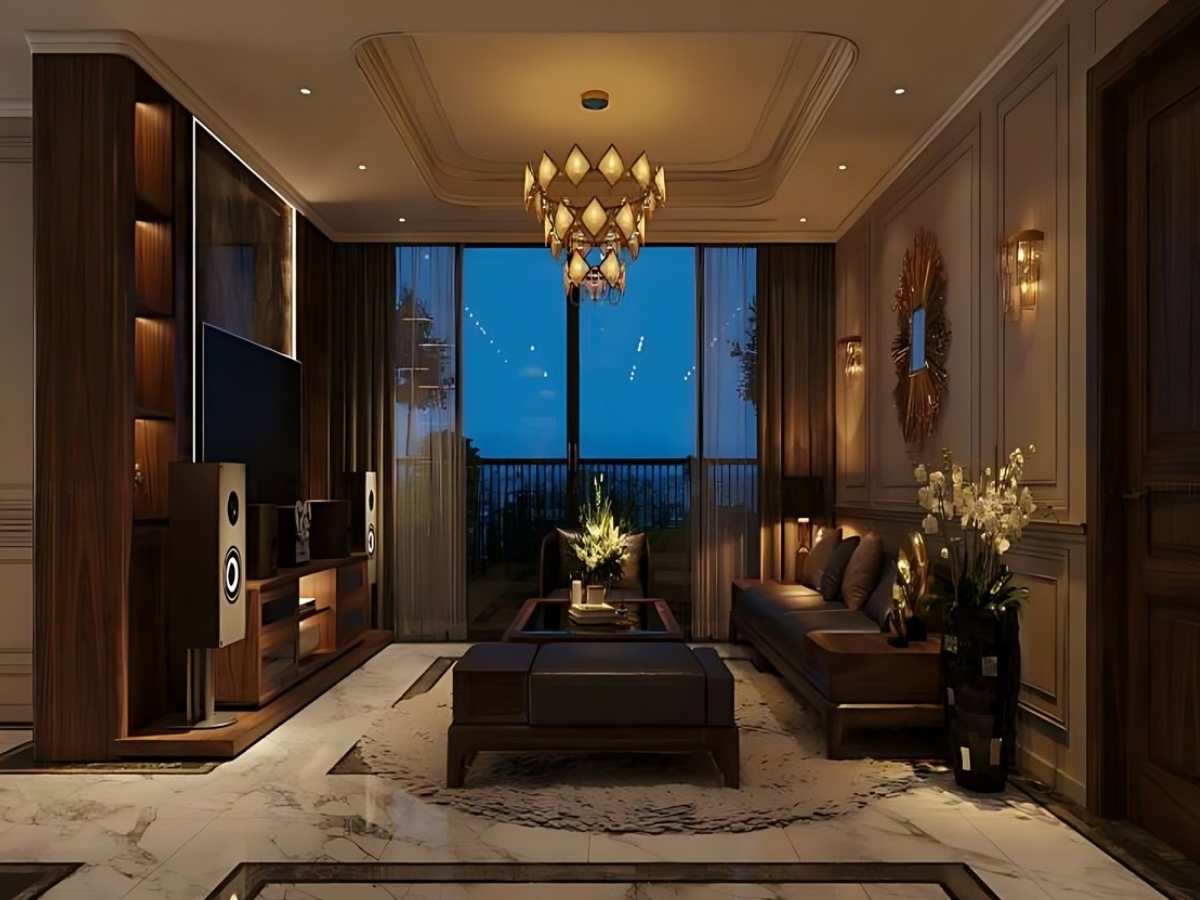
Neoclassical style uses chandeliers and warm light to create a luxurious feel, with a common color temperature of around 3000K. Lighting is arranged according to the principle of symmetry to enhance balance and harmony in the space. In villas or high-end apartments, the use of large chandeliers also contributes to enhancing aesthetic value and creating a focal point for the living room.
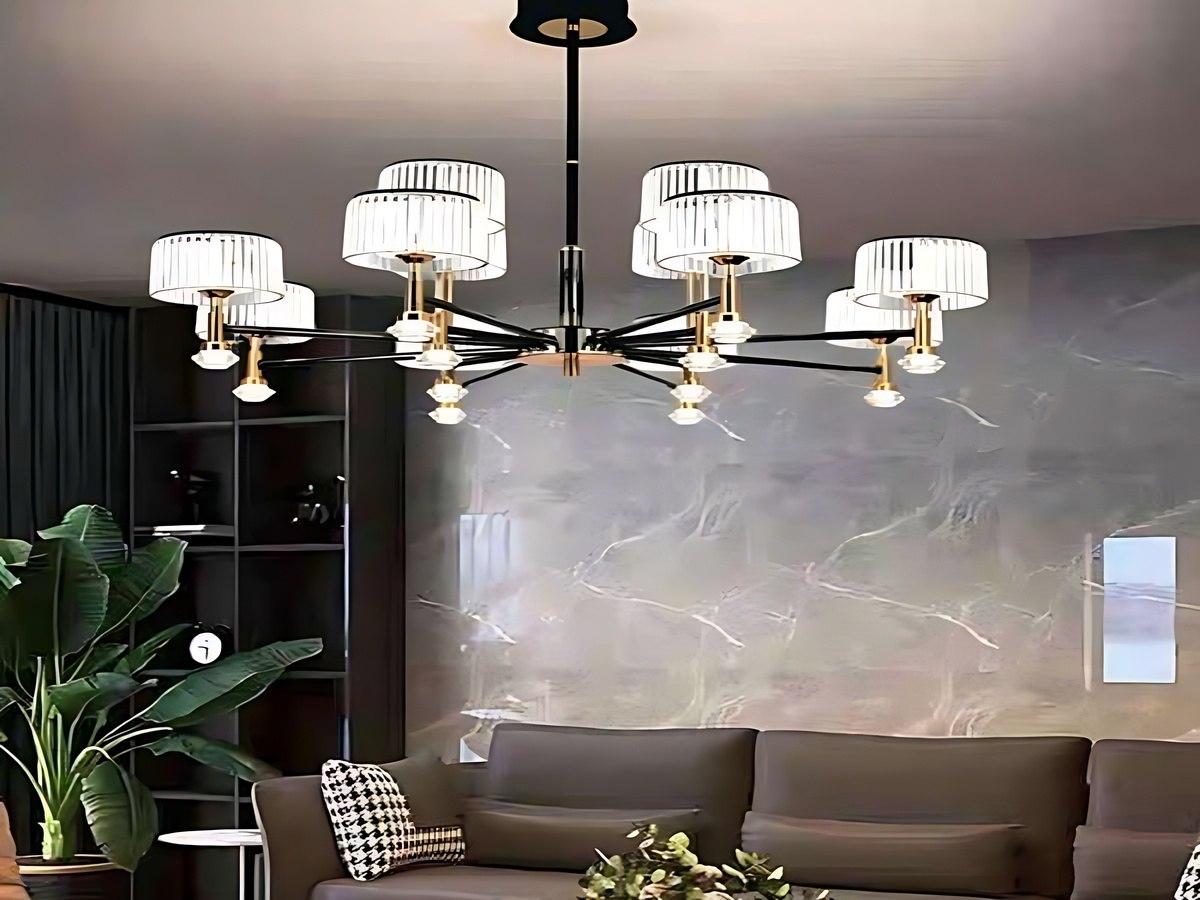
Neo-classical chandelier model creates luxurious lighting for villa living rooms. (Source: Collected)
3.3. Lighting arrangement in small living rooms
For small living rooms under 20 m², lighting solutions should aim to expand the space by using recessed lighting and indirect lighting. Evenly distributed light helps reduce the feeling of crampedness and increase visual effectiveness. In addition, combining mirrors and reflected light is also a common solution in modern interior design to optimize the usable space.
3.4. Lighting arrangement in townhouse living rooms
Townhouses often suffer from a lack of natural light due to limitations in facade and building depth. Therefore, combining multiple layers of light, including ambient, functional, and decorative lighting, is a common solution. Recessed LED lighting systems, accent lighting, and spot lighting are used to ensure uniform brightness, helping to improve the quality of living spaces in densely populated urban areas.
Solution for multi-layer LED lighting system arrangement for townhouse spaces. (Source: Collected)
4. Important notes when applying lighting arrangement methods in the living room
4.1. Choosing suitable light color temperature
Light color temperature is usually divided into three groups: white light (5000K–6500K), neutral light (4000K), and warm light (2700K–3000K). Each type is suitable for different purposes, with neutral light being commonly used in living rooms to balance aesthetics and functionality. Choosing the right color temperature helps optimize lighting efficiency and create a comfortable feeling for users.
4.2. Avoid common mistakes when arranging living room lighting
Some common mistakes in lighting design include using overly strong light causing glare, lack of accent placement, or uneven light distribution. These mistakes can affect vision and reduce the quality of living space. According to lighting standards, controlling glare and ensuring uniform illumination are important factors for maintaining comfort in daily life.
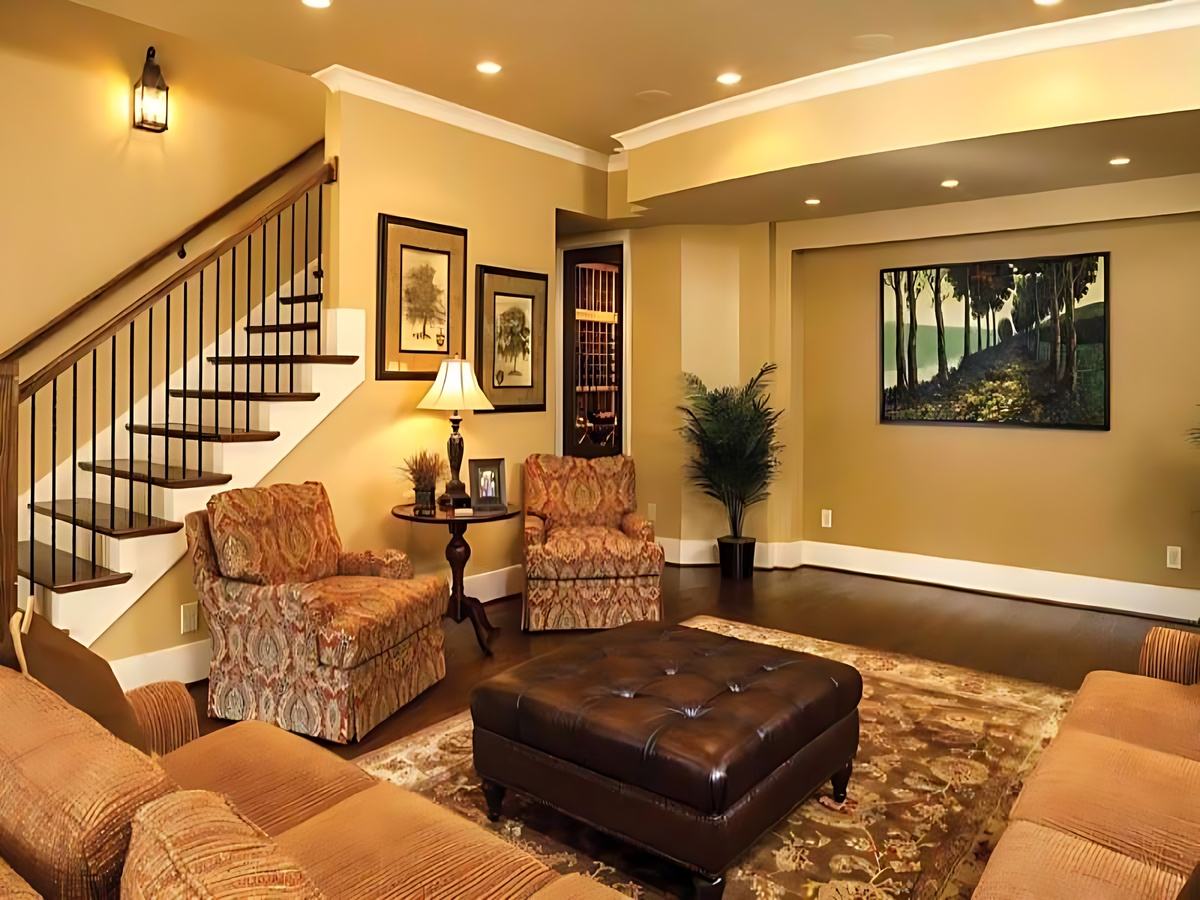
Common mistakes to avoid when designing modern living room lighting. (Source: Collected)
4.3. Lighting standards in housing according to new regulations
The lighting system in the living room must meet the minimum illuminance standard (usually 300 lux for common living areas) according to Vietnam Standard TCVN 7114:2008 on lighting for workplaces and residences. Simultaneously, according to the National Technical Regulation on energy-efficient construction works QCVN 09:2024/BXD, lighting design needs to integrate smart control solutions or sensors to optimize power consumption. Furthermore, the regulations in the Law on Construction 2014 (amended, supplemented in 2020) still play an important legal framework role, requiring interior designs to ensure absolute electrical safety and fire and explosion prevention.
Light is a seemingly simple factor but greatly determines the quality of living space. When applying the correct living room lighting arrangement, you not only enhance the living experience but also contribute to sustainably increasing aesthetic value and real estate value.