


Can a house be built on land located within the electrical safety corridor?
Land located within the electricity safety corridor is an issue that causes many people concern when buying, selling, or building houses. Clearly understanding the legal regulations and land use restrictions will help limit legal risks and ensure safety during the usage process.

▲Table of Contents
1. What is an Electrical Safety Corridor?
An electrical safety corridor is an area surrounding electrical installations such as power lines, substations, or grid systems, established to ensure safety during electrical operation. This area is defined by specific distances depending on the voltage level and the type of electrical installation.
Within the scope of the electrical safety corridor, some activities such as building houses, constructing works, planting tall trees, or storing materials may be restricted to avoid affecting the electrical system and reduce the risk of incidents. The regulation of electrical safety protection corridors also helps protect human lives, limit the risk of electric shock, fire, explosion, or insecurity in the surrounding residential areas.
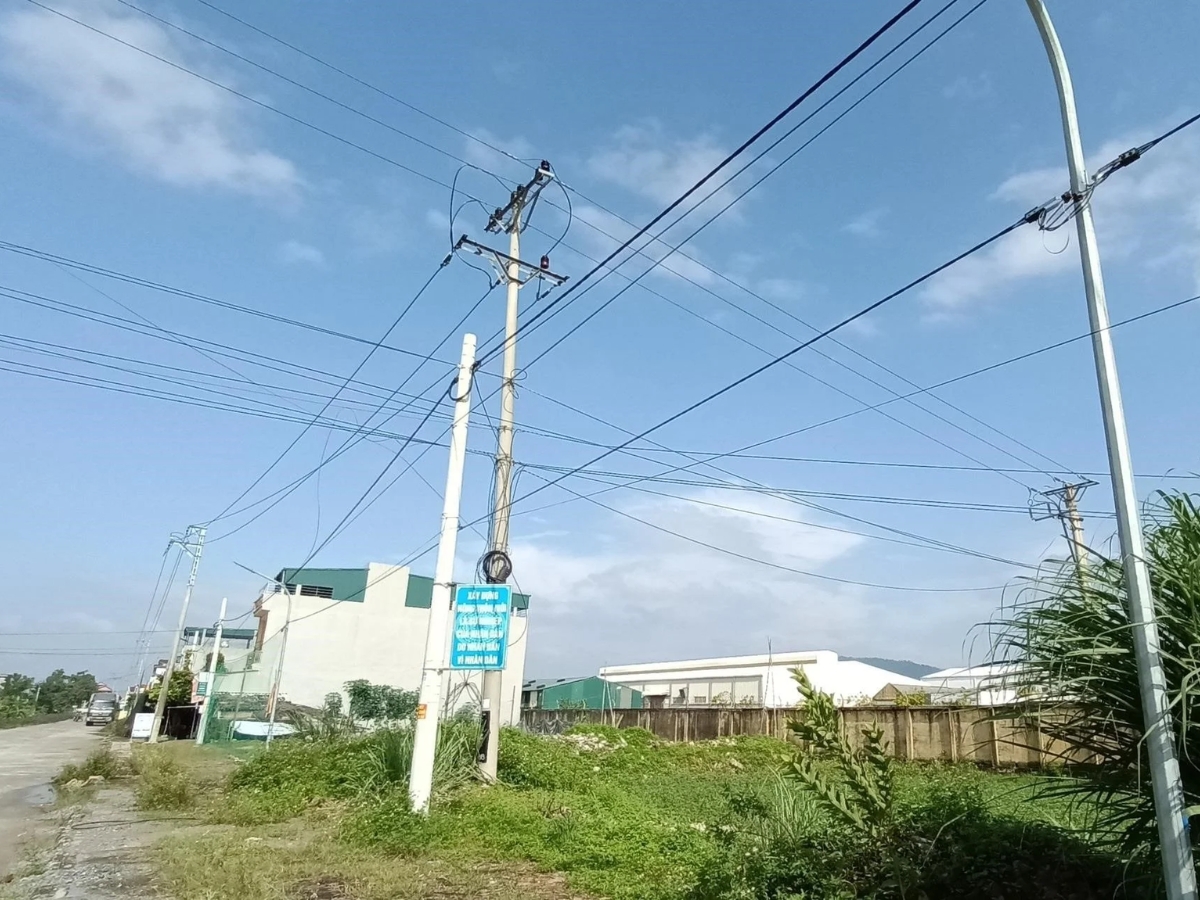
An electrical safety corridor is a safety protection area around electrical works according to regulations. (Source: Collected)
2. Can land within the electrical safety corridor be used?
According to current regulations, land within the electrical safety corridor can still be used or built upon for housing if it fully meets the conditions for power grid safety. However, construction will be tightly controlled to ensure it does not affect the operation of the high-voltage power system.
The conditions that need to be met include:
Roof covering and enclosing walls of housing or structures must use non-combustible materials to limit the risk of fire or electrical short circuits.
Housing or structures must not obstruct the inspection, repair, maintenance, or replacement of equipment of high-voltage power grid facilities.
The distance from the structure to the nearest power line must ensure a minimum of 3 m for voltages up to 35 kV, a minimum of 4 m for 110 kV voltages, and a minimum of 6 m for 220 kV voltages to ensure safety according to current regulations.
The electric field strength in the area outside the house must not exceed 5 kV/m and inside the house must not exceed 1 kV/m at a position 1 m above the ground.
For houses or structures located within the safety protection corridor of 220 kV power lines, metal structures must also be grounded according to technical regulations to ensure safety during use.

Land located within the electricity safety corridor can still build houses if it meets the conditions for power grid safety. (Source: Collected)
3. Regulations on penalties for illegal construction on land within the safe corridor of the power grid
Construction or use of works in violation of regulations within the safe protection corridor of the power grid may be penalized according to current legal regulations. Land users located within the safe corridor of the power grid need to pay special attention to prohibited acts to avoid legal risks and impacts on electrical safety.
According to current regulations, individuals violating these rules may be fined from VND 10,000,000 to VND 20,000,000 for the following acts:
Using any part of the power grid for other purposes without agreement with the power grid operation and management unit.
Dumping, piling, or accumulating materials and equipment under power lines, causing the safe discharge distance to not meet the regulations for each voltage level.
Using houses or structures located within the safe protection corridor of the power grid for the wrong purpose and violating the safe electrical distance.
Constructing or renovating houses, structures within the safe protection corridor of power lines without prior agreement or without complying with safety requirements from the power grid management and operation unit.
The above penalties apply to individuals who violate. In case of violations by organizations, the penalty may be doubled according to current legal regulations.
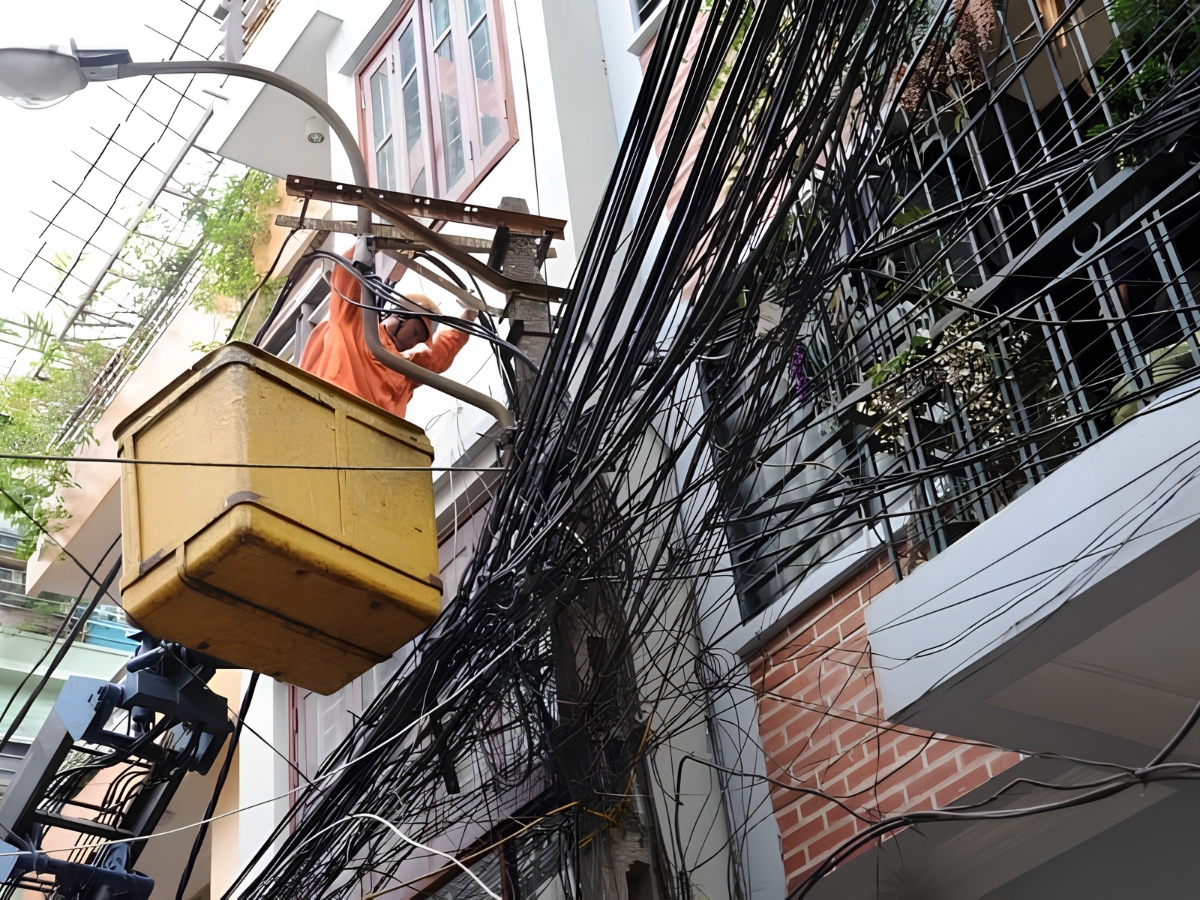
Homeowners can be fined for illegally building a house within the electricity safety corridor according to the law. (Source: Collected)
4. Risks when buying land located within the electricity safety corridor
Before investing in real estate, buyers should thoroughly research the legal status and actual location of the land, especially in cases near high-voltage power lines or electrical substations. In reality, land located within the electrical safety corridor can lead to many restrictions related to construction, exploitation, and usage, and future asset value.
4.1. Restrictions on construction and renovation of structures
Housing or construction works within the safety protection corridor of the power grid must comply with many strict regulations regarding safe distances, construction height, and building materials. This causes landowners to face quite a few restrictions when wanting to build new or renovate housing.
Furthermore, some cases also require obtaining opinions or agreements with the power grid management and operation unit before commencing construction. If safety conditions are not fully met, the construction may not be permitted or be forced to adjust the design.
4.2. Difficulties in obtaining construction permits
One of the common risks when buying land near high-voltage power lines is that obtaining a construction permit can be more complicated than for ordinary plots of land. Authorities often carefully check the safe electrical distance and technical conditions before considering the permit.
In many cases, the construction may be limited in height, building area, or require additional electrical safety measures. This can affect the construction plan and the actual costs for the landowner.

Land located within the electricity safety corridor often encounters difficulties in obtaining construction permits. (Source: Collected)
4.3. Impact on real estate value and liquidity
Land located near the safe corridor of the power grid often makes many buyers hesitant due to concerns about safety, noise, or health impacts. Therefore, real estate values in these areas are usually lower than those not affected by high-voltage power lines.
Besides the selling price factor, the transferability or liquidity of real estate may also be affected in the future. This is why buyers need to carefully check planning information, the current status of power lines, and construction conditions before deciding to transact.
5. How to check if land is within the power corridor
Before buying, selling, or building, people should proactively check whether the land is within the safe corridor of the power grid to limit legal and construction risks. Early verification will help accurately assess land usability as well as avoid issues related to future construction permits.
5.1. Check land use planning information
One common method is to look up land use planning information in the area of the property to be checked. Through planning maps or land registry data, buyers can determine if the land falls within the safe corridor of the power grid.
Currently, many localities have supported online planning lookup via websites or planning map applications on phones. This is a way to help buyers proactively check information before transacting real estate.
5.2. Lookup at the electricity management agency or local authorities
Besides online lookup, people can also directly contact electricity agencies, local People's Committees, or land registration offices to verify information related to the safe corridor for electricity.
This is a highly accurate source of information as it is updated directly from the specialized management agency. In many cases, the authorities will also assist in determining safe construction distances or restrictions related to the actual land plot.
5.3. Actual observation of high-voltage power line systems
When surveying real estate, buyers should carefully observe the surrounding area to identify the presence of high-voltage power poles, substations, or power transmission lines passing through the land.
If the land is located near large power lines or directly under a power transmission corridor, buyers should further check the safe construction distance and related land use conditions. This is an important step to help mitigate risks when purchasing land located within the electricity safety corridor.
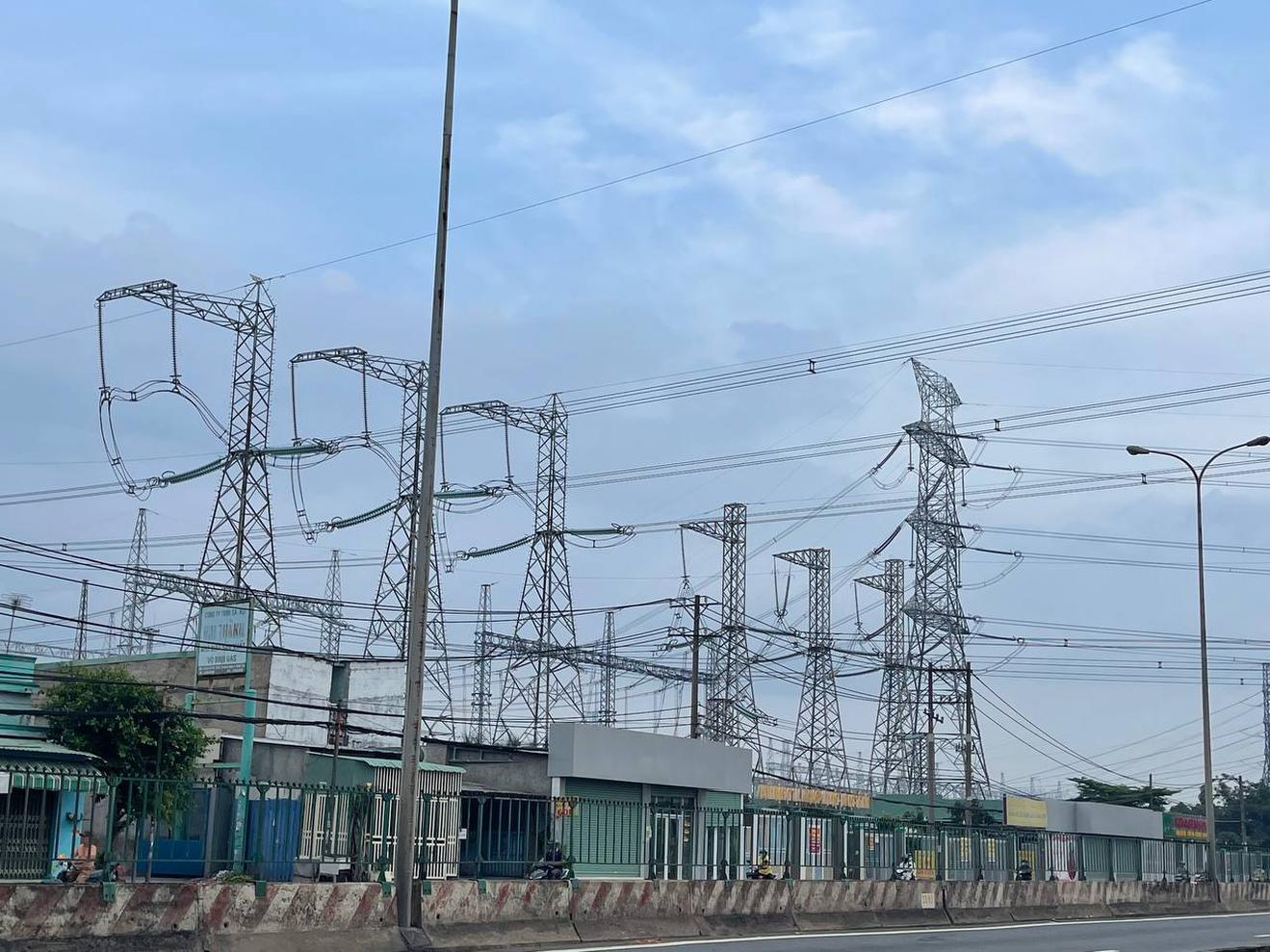
Buyers need to conduct a site survey to understand the electrical system. (Source: Collected)
6. Experience buying land to avoid electrical safety corridors
When buying land for residence or investment, buyers should proactively check the legal status and surrounding infrastructure carefully to limit the risk of encountering land affected by power line safety corridors. Thorough research from the outset will help avoid many risks related to construction, land use, and future transferability.
6.1. Thorough legal and planning checks
Before transacting, buyers should carefully check the land use rights certificate, planning information, and the local land use status. This is an important step to determine if the land parcel is within the scope of the electricity safety protection corridor or not.
Besides online lookup, buyers should also cross-reference information at the land registration office or the local People's Committee to ensure accuracy. This will help limit risks when buying land located within the electricity safety corridor without early detection.
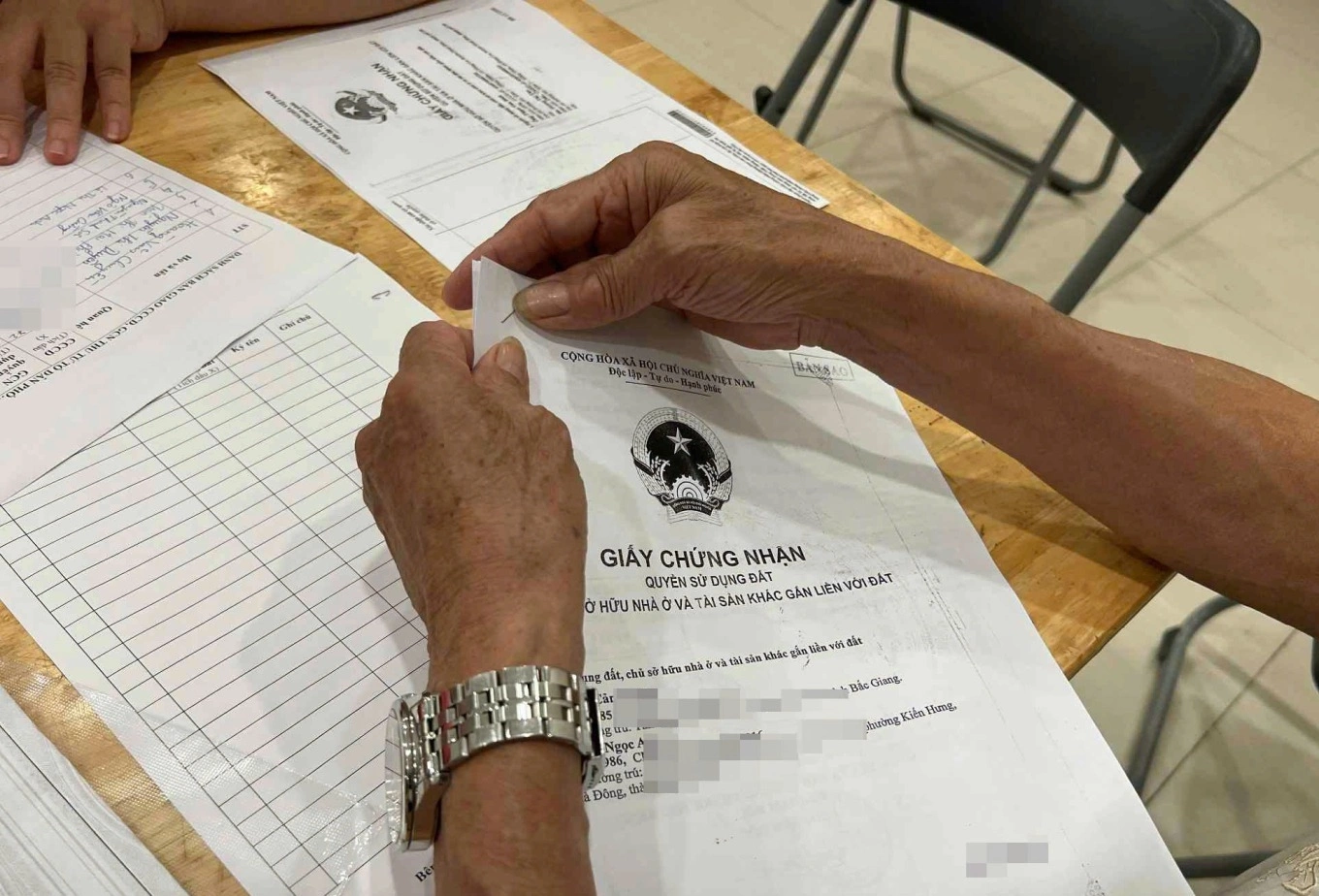
Buyers should thoroughly check the legal documents related to land use rights. (Source: Collected)
6.2. Assess actual construction feasibility
Not all land near power lines has the same building potential. Therefore, buyers need to survey the actual distance from the land to the power lines, the permissible building height, and related safety conditions.
In many cases, although the land can still be used, the construction may be limited in building area or must meet additional technical requirements. A thorough assessment of the actual building potential will help buyers avoid incurring costs or encountering difficulties when applying for a building permit later.
6.3. Seek legal expert assistance before transacting
For land plots located near high-voltage power lines or with unclear legal information, buyers should consult with lawyers, real estate experts, or legal consulting firms before making a purchase.
Having expert assistance will help check legal documents, assess risks related to planning, and accurately determine the actual land use potential. This is a way to help buyers feel more secure and limit future disputes or difficulties.
Before buying, selling, or building, people should thoroughly understand the regulations related to land located within the electricity safety corridor to limit legal risks and actual land use potential. Although some cases are still permitted for construction, the structures will have to meet many strict conditions regarding safe distances and electrical engineering. Therefore, checking the planning, verifying information with competent authorities, and assessing actual construction feasibility will help buyers make safer and more suitable decisions when transacting real estate.