


Can you buy a house with installments with bad credit and what should you pay attention to?
Whether you can buy a house on installment with bad debt is a common question for many people looking to borrow from the bank to own property. In reality, your borrowing eligibility will depend on the severity of your bad debt and how you managed your previous financial records.

▲Table of Contents
1. What is bad debt? How many groups of bad debt are there?
1.1. Concept of bad debt
Bad debt refers to loans where the borrower fails to meet their payment obligations as committed to the bank or credit institution. This can occur when the borrower makes late payments, underpayments, or loses the ability to pay within a certain period. When this situation persists, the loan will be recorded as bad debt and stored on the credit system, directly affecting the individual's financial reputation.
According to general regulations, loans overdue for payment from 90 days or more will be classified as non-performing loans. When falling into this situation, borrowers will face many difficulties in accessing new loans, especially home loans. Therefore, understanding the nature of non-performing loans is important to accurately assess the possibility of whether one can buy a house on installment with bad debt and have a plan to improve one's financial profile in the future.
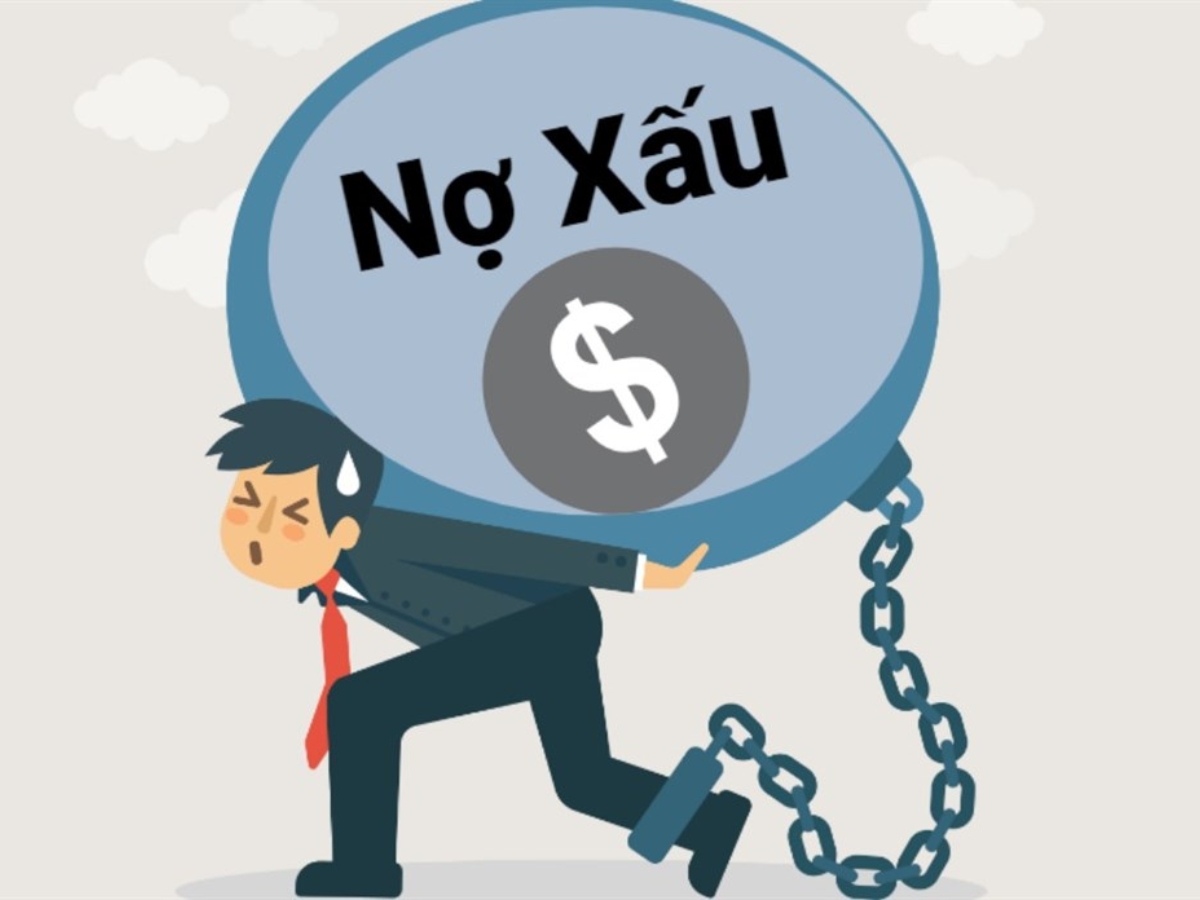
Bad debt makes it difficult for you to get new bank loans. (Source: Collected)
1.2. Classification of bad debt groups
To better understand the issue of whether bad debt allows buying a house with installments , it is first necessary to grasp how bad debt is classified according to the credit system. According to information from banks, loans are divided into 5 groups based on risk level and payment overdue time. This grouping will directly affect each individual's ability to borrow capital to buy a house.
Group 1: Standard Debt: Loans that are current or overdue by less than 10 days. This is a group with a good credit history, almost no impact on the ability to borrow for a house.
Group 2: Watchlist Debt: Loans overdue from 10 to less than 90 days. Borrowers begin to be assessed with mild risk, but still have a chance to borrow if they can prove their financial capacity.
Group 3: Substandard Debt: Loans overdue from 90 to less than 180 days. This is the level where they start to be classified as bad debt, with a significantly reduced chance of borrowing from banks.
Group 4: Doubtful Debt: Loans overdue from 180 to under 360 days. High risk, almost impossible for banks to approve new loans.
Group 5: Potential Loss Debt: Loans overdue over 360 days, assessed as very risky. People in this group can hardly borrow from banks for a long time.
Understanding each group clearly will help you accurately assess your situation and have a suitable improvement direction before thinking about buying a house on installment.
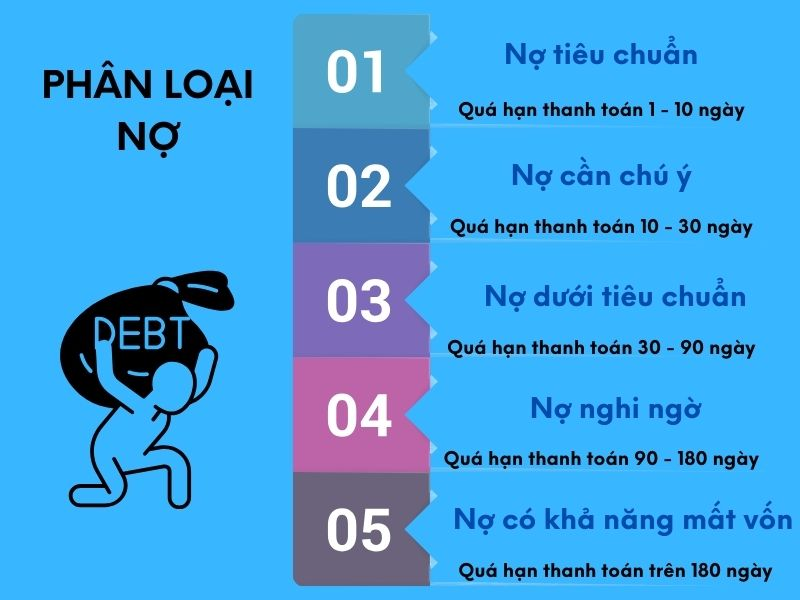
Classification of bad debt groups. (Source: Compiled)
1.3. Impact of bad debt on borrowing capacity
Bad debt directly affects the ability to borrow capital, especially for large loans such as home loans. When checking credit history, banks will assess the borrower's financial credibility through debt groups. If belonging to the bad debt group, the loan application is almost rejected from the start due to high risk. This is why many people wonder can bad debt buy a house on installment, as accessing bank capital becomes much more difficult.
Not only does it affect loan approval, but bad debt also impacts loan conditions if approved. Borrowers may face higher interest rates, lower loan limits, or stricter collateral requirements. In many cases, banks require the full settlement of bad debt and the maintenance of a good credit history for a period before reconsidering the application. Therefore, controlling and improving bad debt status is a key factor if you want to access financial solutions like buying a house on installment.
2. Can you buy a house on installment with bad debt?
2.1. Mild bad debt cases (Group 1-2)
For debts in group 1 and group 2, borrowers still have the opportunity to access bank capital if they know how to improve their credit profile. This is a low-risk debt group, often due to short-term payment delays. If fully settled and no longer overdue, banks can still consider lending based on stable income and current repayment ability.
In this case, maintaining a good credit history after settlement is very important. Borrowers should ensure timely payment of small expenses or loans to improve their credit score. When the financial profile improves significantly, the chances of getting a home loan approved will increase significantly.
Mild bad debt group is still considered for loans by banks if they have stable income and good repayment ability. (Source: Collected)
2.2. Severe bad debt cases (groups 3 – 5)
For debt groups 3 to 5, borrowing from banks to buy a house is almost impossible in the short term. These are high-risk debts, indicating prolonged late payments or inability to pay. Banks will usually reject applications right from the appraisal stage to limit credit risk.
In this situation, borrowers need to prioritize settling the debt completely and wait for a period to improve their credit history. After full repayment, more time is needed for the profile to be re-evaluated before being able to borrow again. If you still want to own a house soon, you can consider flexible payment options from the investor without being entirely dependent on banks.
2.3. Time to 'clear' bad debt history
After fully repaying the loan, the borrower's bad debt history will not disappear immediately but will still be stored on the credit system. Specifically, related information such as past loans, late payment periods, outstanding amounts, and lending institutions will be recorded at the National Credit Information Center of Vietnam (CIC). This serves as the basis for banks to assess a customer's financial credibility before deciding to lend.
According to regulations, the storage period for bad debt history usually lasts from 3 to 5 years from when the borrower has fully paid both principal and interest. During this period, borrowing, especially for home loans, will face many limitations. Therefore, if you are planning to buy a house on an installment plan, borrowers need to proactively settle debts early and patiently improve their credit profile to increase the chances of approval in the future.
3. Conditions for borrowing to buy a house when having had bad debt
3.1. Have fully settled all old debts
The prerequisite for getting a mortgage after having had bad debt is to fully settle all previous debts. Banks will only consider the application when the borrower no longer has overdue debt and has confirmation of having completed their financial obligations. In many cases, settling the debt is a mandatory factor before submitting a new loan application.
Besides, some banks also require a "waiting" period after settlement to ensure credit risk has been controlled. If the old debt is not resolved, the possibility of getting approved for a loan is almost zero, especially for large-value home loans.
3.2. Have stable income and clear financial proof
Besides dealing with bad debt, borrowers need to prove a stable income source to ensure repayment ability. Banks will require documents such as salary statements, labor contracts, or business records to assess cash flow. This is one of the important conditions when considering a home loan application.
The clearer and more stable the income, the higher the chance of approval, even if the borrower has had a poor credit history. In some cases, the bank may require additional collateral or a co-borrower to minimize risk.
Borrowers need to prove a stable income source to ensure repayment ability. (Source: Collected)
Credit history is improved over time
After settling bad debt, borrowers need to maintain a good credit history for a certain period before borrowing again. This includes making timely payments on small loans, not incurring new overdue debts, and keeping financial records transparent. This is an important factor that helps banks re-evaluate the customer's credibility.
Typically, banks will prioritize applications that have shown stable credit improvement for at least 12 to 24 months. If this condition is met, the possibility of obtaining a home loan will be expanded, even if there was previously bad debt.
4. Experience buying a home safely with financial issues
4.1. Do not attempt to borrow before meeting eligibility criteria
When facing financial problems, the most important thing is not to try to borrow capital when you have not yet met the required conditions. Rushing to own a home can cause buyers to fall under prolonged debt pressure, especially when income is not yet stable or credit history has not been improved. A poorly considered decision can lead to a new debt spiral, making the financial situation more difficult to control.
Instead, buyers should take time to strengthen their financial profile, address outstanding debts, and improve their ability to pay. When their financial foundation is stronger, buying a home will be safer and more sustainable. Patience at this stage is the way to minimize long-term risks.
4.2. Prioritize properties within affordability
Choosing a property that fits one's financial capacity is a key factor to ensure safety when buying a home. Many people, due to the mentality of wanting to own a better product, have chosen homes beyond their affordability, leading to significant debt repayment pressure over a long period. This is particularly risky for those who have previously had financial issues.
The reasonable solution is to clearly define the budget and financial limits before making a decision. Buyers should prioritize products of reasonable value, suitable for current income, and with financial leeway for contingencies. A suitable choice will help maintain stability instead of creating additional burden.

Prioritize selecting properties that are affordable. (Source: Collected)
4.3. Long-term financial planning before buying
Before deciding to buy a house, long-term financial planning is a crucial step. Buyers need to calculate in detail future income, expenses, and debt repayment obligations to ensure cash flow balance. This helps prevent insolvency when there are financial fluctuations.
Additionally, a contingency fund should be prepared to cope with risks such as job loss, reduced income, or unforeseen expenses. A clear financial plan not only facilitates a smooth home purchase but also ensures long-term stability after owning the property.
5. Suggestions for choosing real estate when not yet eligible for bank loans
When not yet eligible for loans, buyers can still consider real estate projects with flexible payment policies instead of relying entirely on banks. Projects that allow payment according to progress or offer financial support from the investor will help reduce initial pressure and open up opportunities to own a home sooner. This is a suitable solution for those who are in the process of improving their finances or have not yet completed their credit profile but still want to seize market opportunities.
Among them, Sun Group's products are a worthwhile suggestion thanks to flexible and diverse financial policies. Many projects allow customers to borrow up to about 70% of the product value, while supporting 0% interest rates for a long period and principal grace periods, helping to reduce initial repayment pressure. Additionally, payment schedules are divided into multiple stages, or customers can own real estate by paying only a small initial portion. Therefore, even if not immediately eligible for bank loans, buyers can still choose suitable options to gradually access and safely own assets.

Real estate projects under Sun Group often have attractive support policies and incentives. (Source: Collected)
Can you buy a house with a mortgage with bad debt depends greatly on the level of debt and each person's ability to improve their finances. Although it is not a completely closed door, to realize the plan to buy a house, borrowers need to settle debts definitively, rebuild their credit history, and prepare a stable income. With thorough preparation, choosing the right time, and suitable solutions, homeownership is still entirely within reach, even when facing financial difficulties.