


Certificate of Land Use Rights and House Ownership
In many real estate transactions, the Certificate of Land Use Rights and Ownership of Houses is the most frequently mentioned document but is also easily misunderstood. Understanding the correct legal name, practical value, and issuance procedures under new regulations will help buyers, sellers, and property owners be more proactive in 2026.

▲Table of Contents
1. Certificate of Land Use Rights and Ownership of Houses Must Be Understood Correctly According to Current Law
1.1. What is the Certificate of Land Use Rights and Ownership of Houses
Certificate of Land Use Rights and Ownership of Housing is a phrase many people use to search for information, especially when needing to look up procedures for buying and selling, transferring ownership, or mortgaging. However, the official legal name being uniformly applied in 2026 according to Land Law No. 31/2024/QH15 is the Certificate of Land Use Rights and Ownership of Assets Attached to Land. Understanding this new name helps you accurately complete registration forms and avoid confusion with the old conceptual system before 2025.
Since the Land Law No. 31/2024/QH15 took effect, the system of guiding documents such as Decree No. 101/2024/ND-CP and Circular No. 10/2024/TT-BTNMT has established a unified legal framework. By 2026, these regulations have been operating stably, creating new standards for certificate templates, displayed content, and the nationwide issuance and registration process.
1.2. Legal value of certificates in transactions and asset ownership
Land Use Rights and House Ownership Certificate has legal significance in confirming the land use rights of the person named on the certificate, and simultaneously records the ownership of houses or other assets attached to the land if they meet the certification conditions. This is an important basis for exercising civil and commercial rights related to real estate, including transfer, gifting, inheritance, capital contribution, or mortgage, provided that the land parcel and assets fully meet the legal requirements.
When transacting, this document not only helps identify the rightful owner but also shows the scope of rights, land type, usage duration, and the extent to which the property's status has been certified. In other words, this is the central document for parties to assess the legality of the transaction, instead of relying solely on introductions or fragmented photocopies. The legal value of the document is therefore directly linked to the ability to protect rights when disputes arise or when changes need to be registered after the transaction.
1.3. Why is it necessary to update the understanding of the certificate in 2026?
Certificate of Land Use Rights and Ownership of Houses needs to be reinterpreted according to new standards because many common interpretations online still adhere to the regulatory framework of the 2013 Land Law. Since the 2024 Land Law came into effect, regulations on conditions for issuance, principles of issuance, registration of changes, land records, forms, and handling authority have been standardized by many new documents.

Land Law 2024 changes the understanding and procedures for issuing the red book. (Source: Collected)
By 2026, people will not only need to update the correct name but also recognize further changes regarding one-stop procedures, decentralization of authority at the local level, and the forms currently in use in practice. If the old understanding continues to be applied, those processing applications will easily confuse between new issuance, re-issuance, and registration of changes, or miss conditions for certifying assets attached to the land. Therefore, the updated content is not merely formal but directly affects the progress of applications and the legal safety of transactions.
2. Content on the Land Use Rights and House Ownership Certificate
2.1. Information about the land user and the owner of assets attached to the land
Certificate of Land Use Rights and Ownership of Houses should always be read from the section recording information about the land user and the owner of assets attached to the land. This is the area that shows the full name, identification documents, address, whether the usage is joint or individual, as well as how the subject is recorded in cases where multiple people have rights. If the name, identification number, or personal information is recorded incorrectly, all subsequent steps such as notarization, registration of changes, or mortgage can encounter difficulties.
In real estate transactions, many risks arise from buyers only looking at the cover without carefully comparing the named party with current identification documents or marital status, and common property. Therefore, correctly verifying the party is the first step to assess whether the document reflects the rightful owner, especially for assets formed during marriage or jointly owned assets.
2.2. Data on land parcels, houses, and assets attached to land
Certificate of Land Use Rights and Housing Ownership not only indicates who has the rights but also shows the extent to which the land parcel and assets are recognized by law. You need to pay attention to the information fields regarding area, land use purpose, usage duration, individual or joint usage form, land parcel address, parcel number, map sheet, and the description of housing, construction, or other assets if certified. This is content with high practical value because, for the same location, usage rights can differ in purpose, duration, or the recognized status of assets.
Circular 10/2024/TT BTNMT has quite detailed regulations on the document template, how content is presented on the document, and related land registry records, so the document holder needs to read according to the information structure, not just keep the document as a formal proof. When understanding these items, citizens will easily identify which parts have been recognized, which parts have not been recorded, or are in need of further updates.
2.3. Details on the certificate easily overlooked during real estate transactions
Certificate of Land Use Rights and Housing Ownership are often overlooked in sections that have a significant impact on transactions. A common mistake is not carefully checking the land's intended use, leading to confusion between residential land and agricultural land or land for other purposes. Another risk is overlooking the land's expiry date, when this is data that directly affects its usability value and future mortgage or transferability.
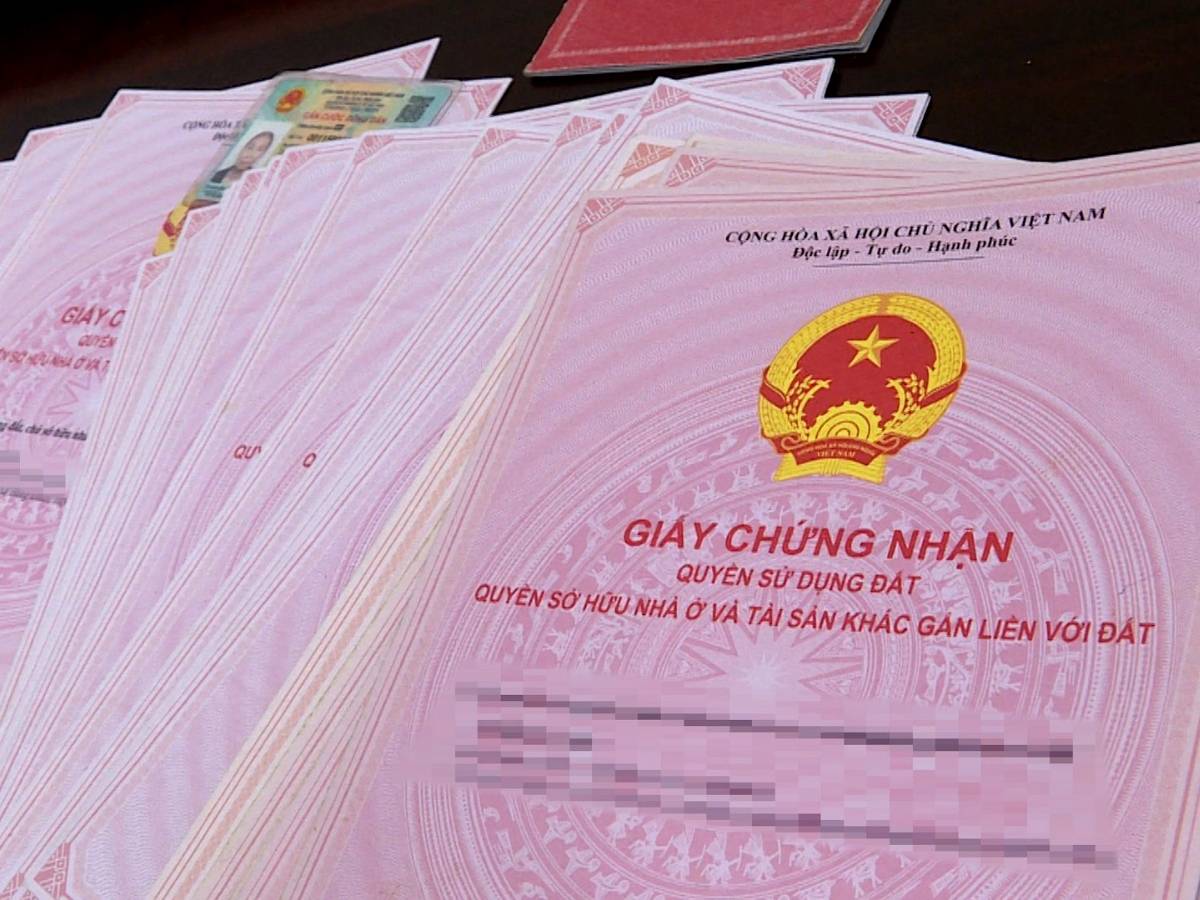
Disregard the purpose and duration of land use, which can lead to transaction risks. (Source: Compilation)
Many cases of houses or constructions on land have not yet been certified, but the buyer mistakenly believes that all assets are fully recorded on the document. It is also necessary to check for changes after the document was issued to see if it has been updated with recent changes, as this indicates whether the information being used is still synchronized with the current land registry records.
2.4. Cases requiring new issuance, renewal, or registration of changes
Certificate of Land Use Rights and Ownership of Houses do not always follow the same procedure. New issuance is usually required when land users or owners of assets attached to the land are eligible but have never been issued a certificate for that parcel of land or asset. Replacement is applied when a certificate already exists but needs to be replaced with a new template, needs amendment due to changes in information, due to re-measurement of area, or because the old certificate is damaged, torn, faded, or difficult to use.
Meanwhile, registration of changes is required when land use rights or assets have changed due to transactions, inheritance, gifts, mortgages, changes in land-attached assets, or other variations that need updating. Clearly distinguishing these cases is crucial for optimizing file processing time. According to Decree 49/2026/ND-CP (effective from January 31, 2026) and its guiding circulars updated to 2026, authorities have detailed the classification of application streams, helping citizens correctly identify their requirements from the outset, thereby minimizing incorrect submissions or missing documents.
3. Procedures related to land use rights and home ownership certificates under new regulations
3.1. What does the application file for the first-time certificate include?
The Certificate of Land Use Rights and Ownership of Housing, when issued for the first time, requires land registration documents that are suitable for each specific case. The application file typically includes an application form, documents proving land use rights, and materials related to assets attached to the land. Additionally, the applicant needs to provide proof of financial obligations or exemption documents if applicable. The components of the application file may vary depending on the origin of land use or the type of asset, so it is necessary to identify the correct case to prepare it fully.

The initial application file for a land use rights certificate includes the registration form and related documents. (Source: Compiled)
3.2. Current receiving authority and submission location
Giai chung nhan quyen su dung dat quyen so huu nha o is received at various agencies depending on the local administrative organization. People can submit applications at the Trung tam phuc vu hanh chinh cong or the Van phong dang ky dat dai cap huyen, tinh. Some localities have implemented an online submission system, helping to reduce travel time and increase transparency in application processing.
3.3. Trinh tu xu ly ho so cap moi, cap doi va sang ten sau giao dich
Land use rights and house ownership certificate is processed according to a unified procedure from receipt to result. After submitting the application, the competent authorities will check the validity, verify the information, and update the data into the land system. Land users need to fulfill financial obligations if they arise before receiving the results.
3.4. Cases where certificates are not granted
Based on the provisions of Land Law No. 31/2024/QH15, not all parcels of land are eligible for certification. Cases such as land with unresolved disputes, land used for purposes other than planned, or land not meeting conditions for legal origin of use will be denied certification. Specifically, acts of violating land law that have been concluded by competent authorities and have not yet been remedied are also subject to denial of certification under the current legal framework.
4. Legal considerations when using certificates of land use rights and ownership of houses in 2026
4.1. Distinguish between common names and legally correct names
Certificate of land use rights and ownership of houses is still a familiar phrase in searches, but the official name to be used is Certificate of land use rights and ownership of assets attached to land. In 2026, although the habit of calling them "Red Book" or "Pink Book" is still common, on notarized documents and administrative declarations, you must use the name: Certificate of land use rights and ownership of assets attached to land in accordance with the spirit of the Land Law No. 31/2024/QH15.
4.2. Thoroughly check the certificate before buying, selling, mortgaging, or receiving as a gift
The Land Use Right and Home Ownership Certificate requires comprehensive inspection before carrying out a transaction. Transaction participants should cross-reference subject information, fluctuation status, and recorded asset details. Additionally, it is necessary to determine if the asset is subject to updates or changes. Thorough checking helps mitigate risks and ensures the rights of all parties involved in real estate transactions.
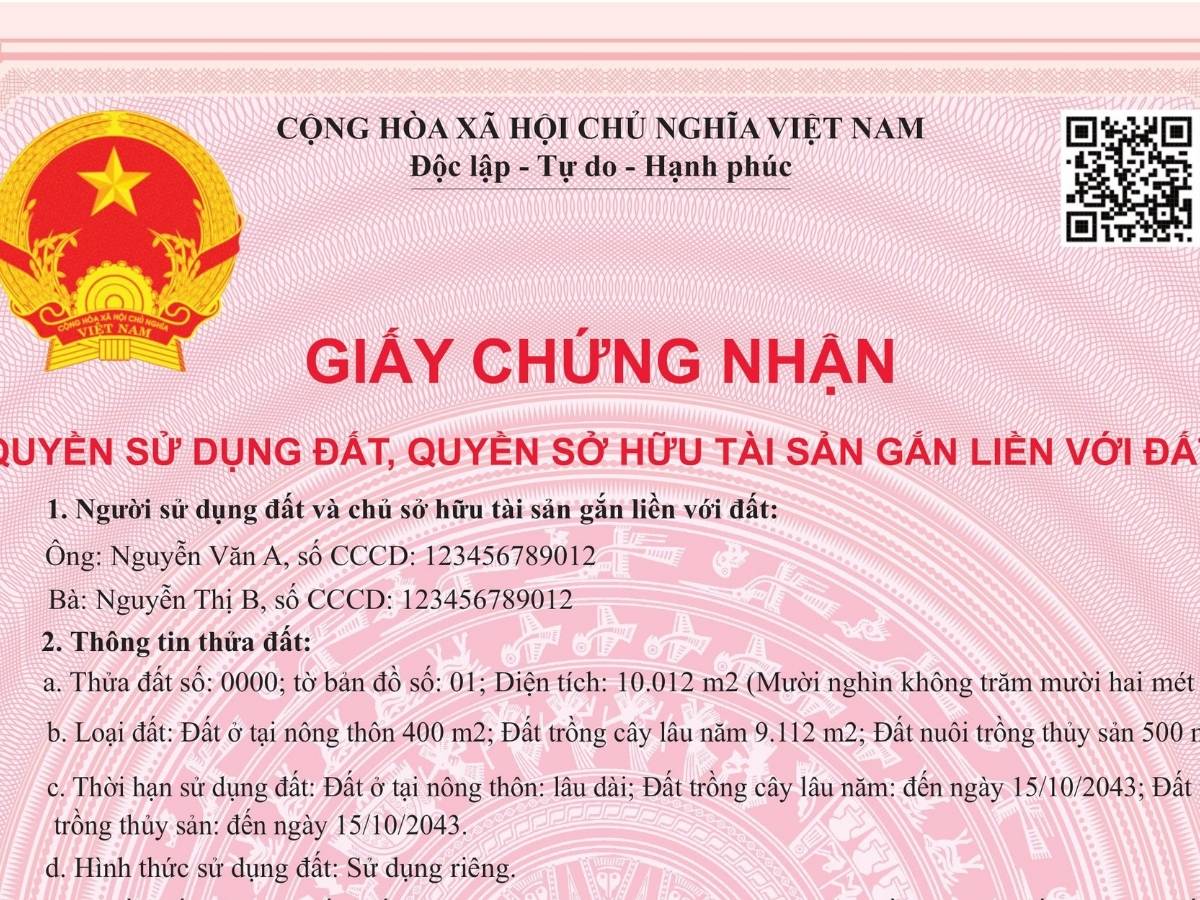
Thoroughly checking the red book ensures legal compliance and mitigates transaction risks. (Source: Collected)
Understanding the Certificate of Land Use Rights and Ownership of Houses correctly is a very important step to protect your rights in all real estate transactions. In the context of land law being updated and stably applied in 2026, you should be clear about the current legal name, the usage value of the Certificate, and related procedures to avoid errors when buying, selling, transferring ownership, mortgaging, or exercising other rights related to real estate.