


Dong Nai's transportation planning opens up great investment opportunities
Dong Nai's latest transportation planning is attracting great interest as this province becomes a key infrastructure hub of the Southern region. A series of expressways, airports, and ring roads being implemented are expected to create a strong boost for Dong Nai's economy and real estate.

▲Table of Contents
1. Why does Dong Nai play a strategic role in transport planning?
In the infrastructure development strategy of the Southern region, Dong Nai is considered a locality playing a particularly important role thanks to its inter-regional connectivity and its potential for industrial and logistics development. The strong investment in the transportation system in Dong Nai not only serves travel needs but also contributes to expanding the economic and urban development space for the entire Southeast region.
1.1. Gateway position connecting Ho Chi Minh City and the Southeast region
Dong Nai boasts a location adjacent to Ho Chi Minh City and serves as a gateway connecting to many provinces in the Eastern South, Central Highlands, and the South Central Coast. This locality plays a crucial transit role in the inter-regional transportation network thanks to its increasingly complete system of expressways, national highways, and connectivity infrastructure.
This locational advantage helps Dong Nai transport planning become one of the key infrastructure development focuses of the Southern region. Many large-scale projects currently concentrate on enhancing connectivity between Dong Nai, Ho Chi Minh City, and neighboring economic centers.
1.2. Large industrial, logistics, and satellite urban center
Dong Nai is currently one of the most industrially developed localities in the country with many large-scale industrial parks and an increasingly expanding logistics system. In addition, the rapid urbanization process also helps the locality become an important satellite city of Ho Chi Minh City in the future.
The strong development of industry, logistics, and urban areas leads to a great demand for synchronized transport infrastructure to serve goods transportation, labor circulation, and expand economic connectivity. This is also the reason why many key transport routes are being prioritized for implementation in Dong Nai.
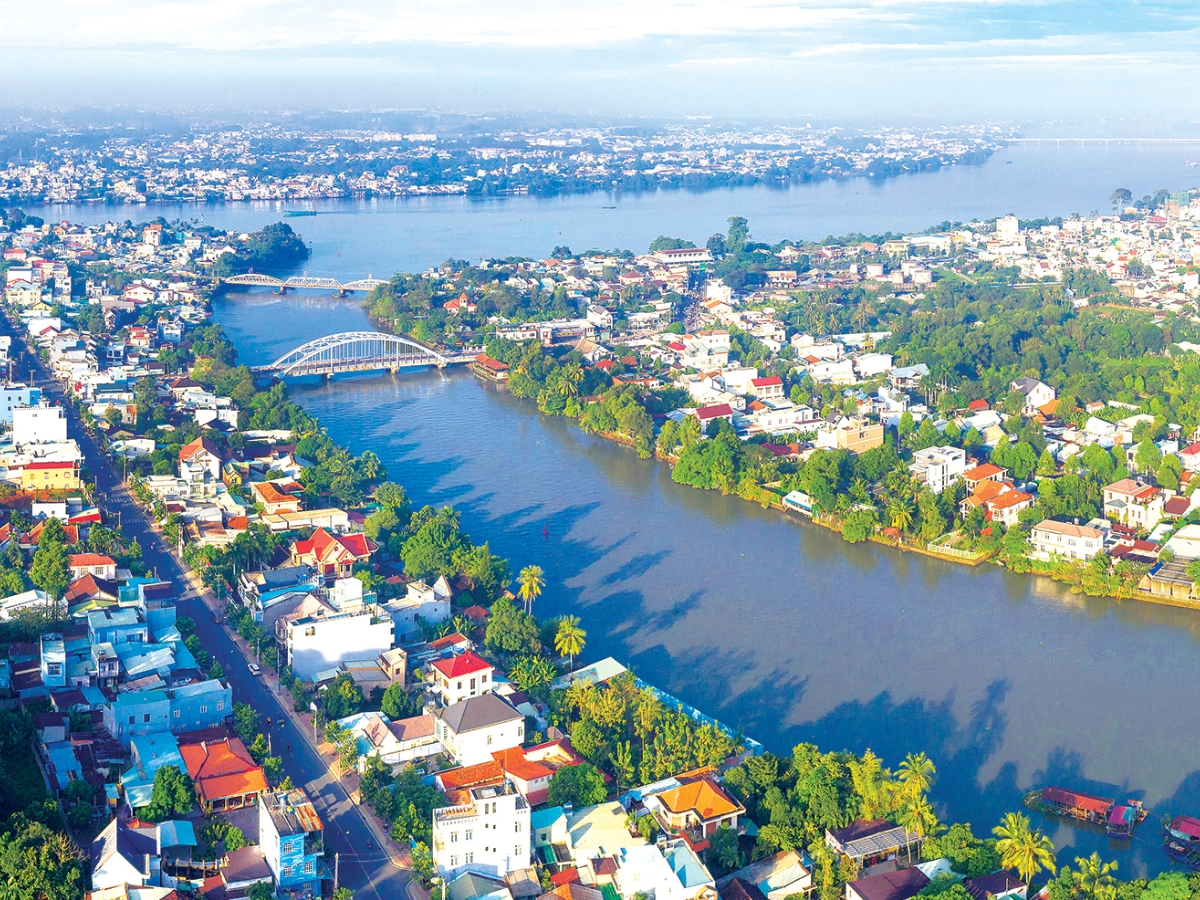
Dong Nai is one of the major industrial, logistics, and satellite urban centers. (Source: Collected)
1.3. The demand for inter-regional connectivity is increasingly high
Economic development and population growth in the Southern region are increasing the demand for inter-regional connectivity. Dong Nai not only needs to increase connectivity with Ho Chi Minh City but also to effectively connect with Ba Ria - Vung Tau, Binh Duong, Binh Thuan, and the Central Highlands.
Therefore, many projects such as Long Thanh Airport, Bien Hoa - Vung Tau Expressway, Ring Road 3, or Ring Road 4 are being accelerated to enhance the region's transportation capacity. This is also an important foundation to promote the economic and real estate development of Dong Nai in the coming time.
2. What are the highlights of Dong Nai's transportation planning?
2.1. Long Thanh Airport is the nucleus of the regional transport network
Long Thanh International Airport is identified as the most important project, playing the role of "heart" in the province's infrastructure development plan. According to the plan, most of the international traffic volume will gradually shift from Tan Son Nhat to here from 2027. The province's main arterial roads are designed radially or encircling the airport to optimize the capacity for transporting international passengers and goods.
More than just an airport hub, the area surrounding the airport is being developed into a modern 'airport city' model. Supporting infrastructure projects such as logistics warehousing, high-tech industrial parks, and service urban areas are being synchronously deployed to turn Long Thanh into one of the most bustling trading centers in the Southeast Asia region.
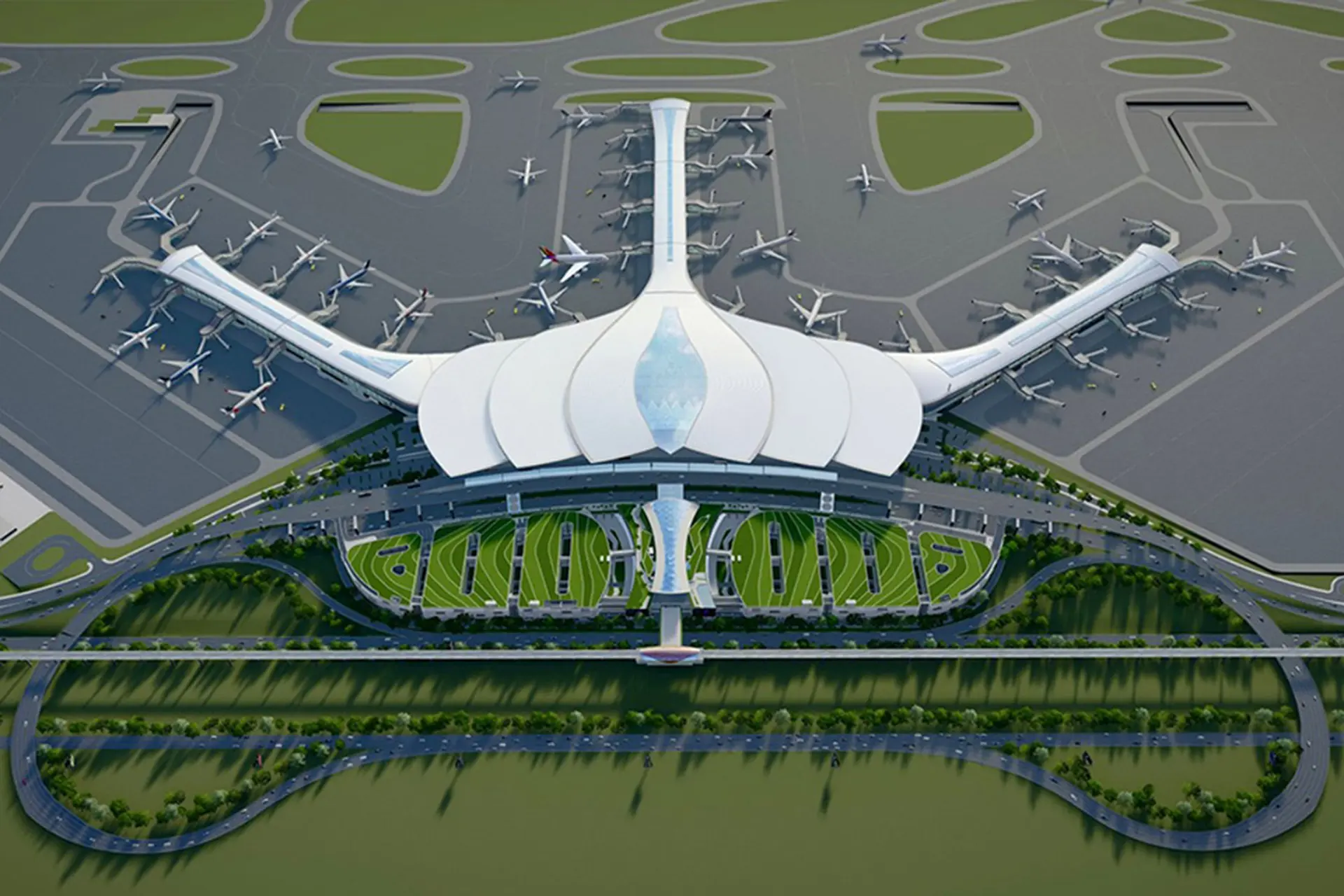
Mock-up image of the Long Thanh airport project. (Source: Collected)
2.2. Becoming a hub connecting national key expressway routes
Dong Nai currently possesses the largest number of kilometers of expressways under construction and planned in the country. Arterial routes such as Ho Chi Minh City - Long Thanh - Dau Giay, Dau Giay - Phan Thiet, and soon Bien Hoa - Vung Tau along with Ben Luc - Long Thanh will form an interconnected network. This connectivity significantly shortens travel time from Dong Nai to the Mekong Delta, Central, and Central Highlands provinces.
The convergence of many expressways helps Dong Nai thoroughly solve the overload situation on old national highways such as QL51 and QL1A. This system not only serves travel needs but also acts as a lever for the development of new industrial parks along the routes, creating dynamic economic corridors stretching from North to South and from East to West.
2.3. Accelerate the construction of strategic bridges connecting Ho Chi Minh City
To break the barrier of "separating river and market", Dong Nai is coordinating with Ho Chi Minh City to implement large-scale bridge projects across the Dong Nai River and Nha Be River. Notably, the Cat Lai Bridge and Nhon Trach Bridge projects (part of Ring Road 3), these works are expected to completely replace the old ferry system, helping to directly connect Nhon Trach district with the financial centers of District 2 and District 9 of Ho Chi Minh City.
These bridges play a decisive role in expanding the urban space to the East. When the strategic bridges are completed, the geographical distance between Dong Nai and Ho Chi Minh City will be bridged, creating favorable conditions for population relocation from the inner city of Ho Chi Minh City to modern satellite urban areas in Dong Nai, while reducing logistics costs for businesses.
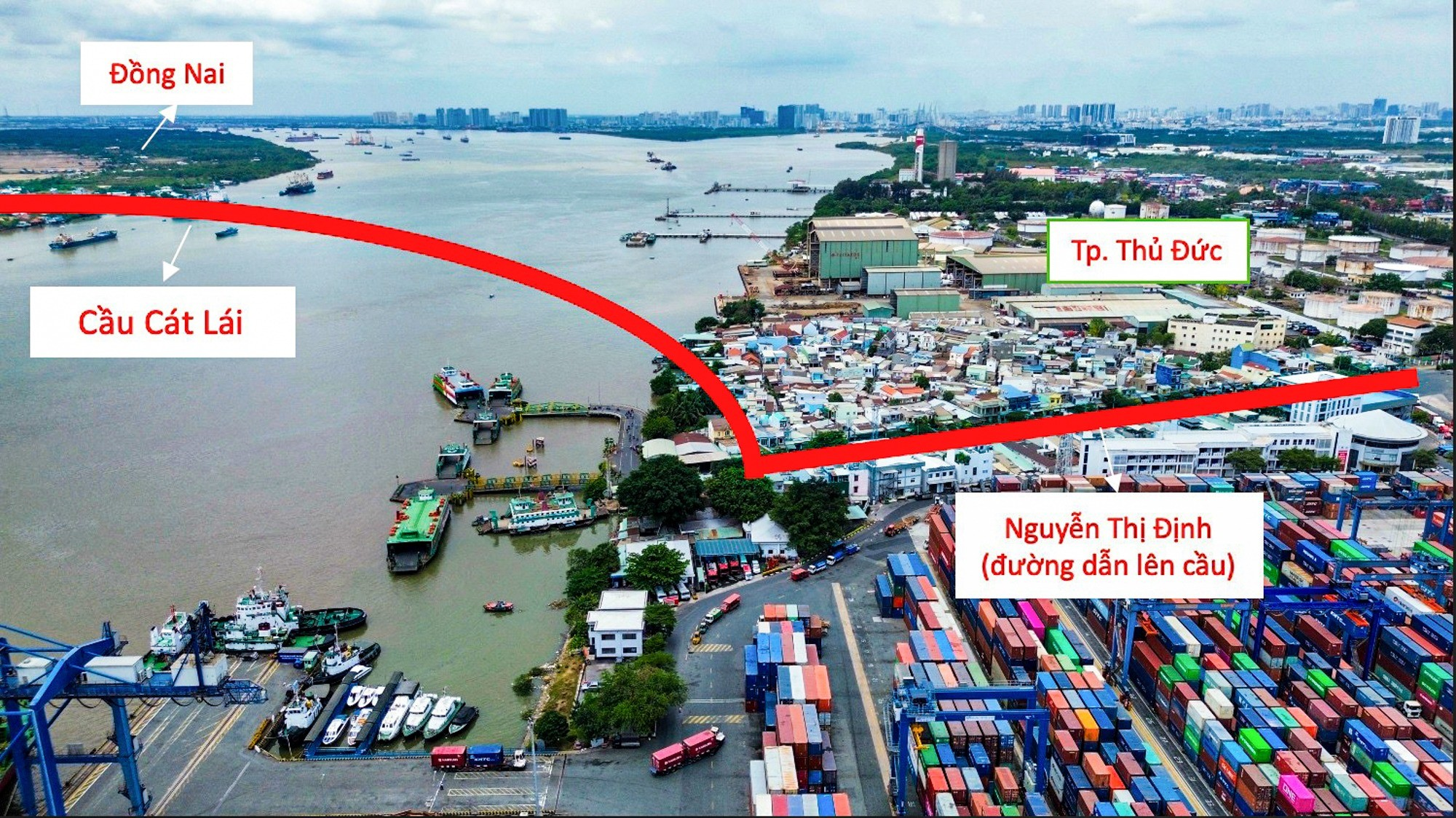
The Cat Lai bridge project helps connect Nhon Trach district directly with the financial center of Ho Chi Minh City. (Source: Collected)
2.4. Formation of a service urban axis along the Dong Nai river bank
The planning of the road along the Dong Nai river (section from Hoa An bridge to the border of Vinh Cuu district) is a breakthrough step to change the urban architectural face of Bien Hoa City. Instead of turning its back on the river, the province is focusing on building this axis with a wide sidewalk, green parks, and bustling commercial service areas to maximize the value of the river landscape.
Along the riverside route, new urban subdivisions will be formed with full amenities such as convention centers, entertainment areas, and waterway tourism. This is not only an infrastructure solution to reduce inner-city traffic load but also a strategy to create added value for land funds, turning the riverside strip into the most valuable "frontage" of the province in the future.
2.5. Development of a modern urban railway and high-speed rail system
Dong Nai is actively coordinating to implement important railway lines, including the North-South high-speed railway passing through the province with strategic stopping stations. In addition, the project to extend Metro Line No. 1 from Suoi Tien to Bien Hoa City and towards Long Thanh Airport is accelerating investment preparation steps to create a large-volume passenger transport method.
The urban railway system (LRT) connecting Long Thanh Airport and Thu Thiem is also a planning priority to serve tourists and experts. Integrating the railway into the existing transport network will help reduce pressure on roads, protect the environment, and complete the final piece in the province's modern, multimodal transport landscape.
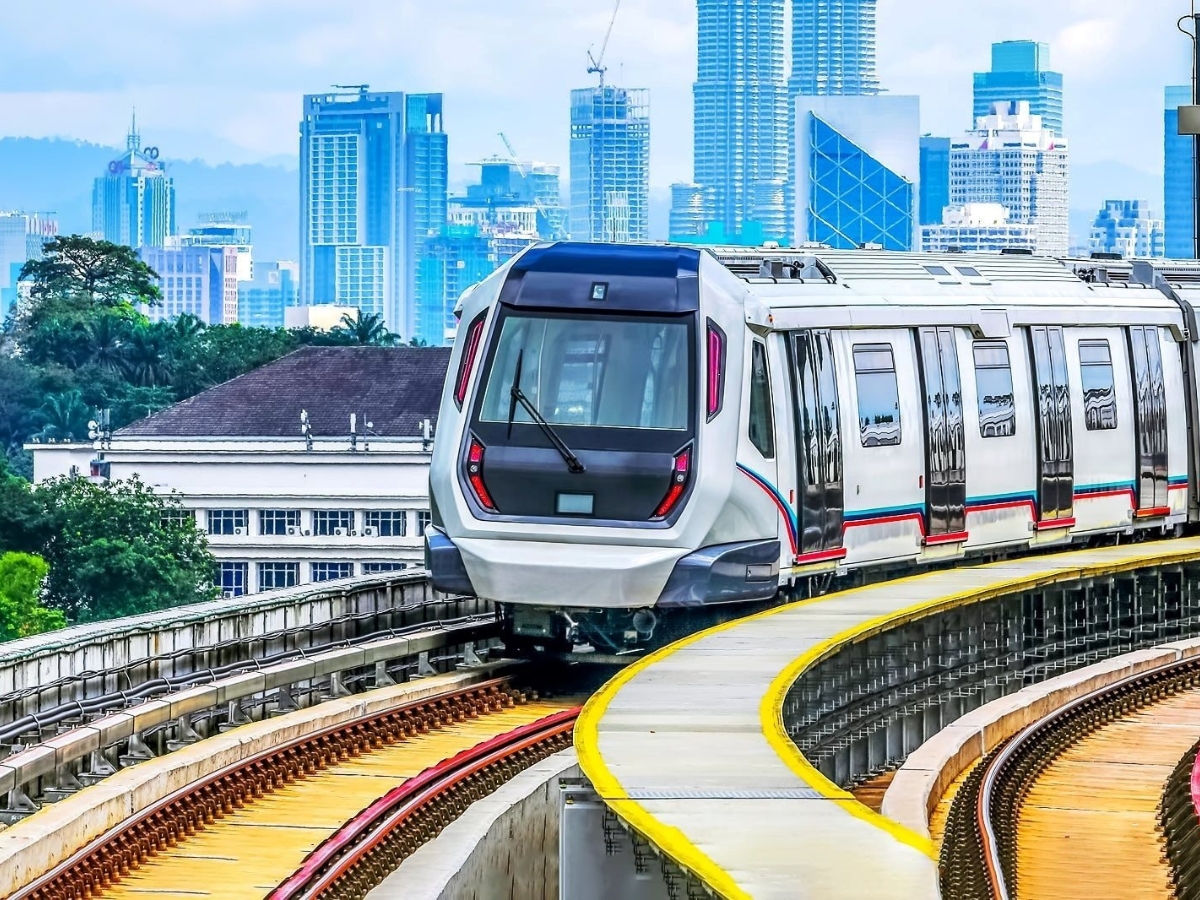
Urban railway system (LRT) connecting Long Thanh Airport and Thu Thiem. (Source: Collected)
3. How does transportation infrastructure impact Dong Nai?
The strong investment in expressways, airports, and inter-regional transport routes is creating many clear changes for Dong Nai in the new phase. As connectivity with Ho Chi Minh City, Ba Ria - Vung Tau, and the Dong Nam Bo provinces becomes increasingly convenient, this locality has more conditions to expand its economic, urban, and industrial development space.
Moreover, the completion of projects such as Long Thanh Airport, Bien Hoa - Vung Tau expressway, or Ring Road 3 also helps Dong Nai increase its role as a logistics center and satellite urban area of the Southern region. This is considered an important foundation to promote investment attraction, develop service infrastructure, and increase housing demand in the coming time.
4. Impact of transport planning on Dong Nai real estate
Strong infrastructure development is creating significant momentum for the Dong Nai real estate market, especially in areas near Long Thanh Airport, expressways, and inter-regional transport routes. As connectivity becomes increasingly convenient, many areas in Dong Nai are beginning to attract investor interest due to their price appreciation potential and long-term exploitation capabilities.
Besides residential real estate, segments such as satellite urban areas, commercial services, and industrial real estate are also clearly benefiting from the infrastructure expansion process. This is considered a prominent development trend for the market as Dong Nai transport planning continues to be promoted in the coming period.
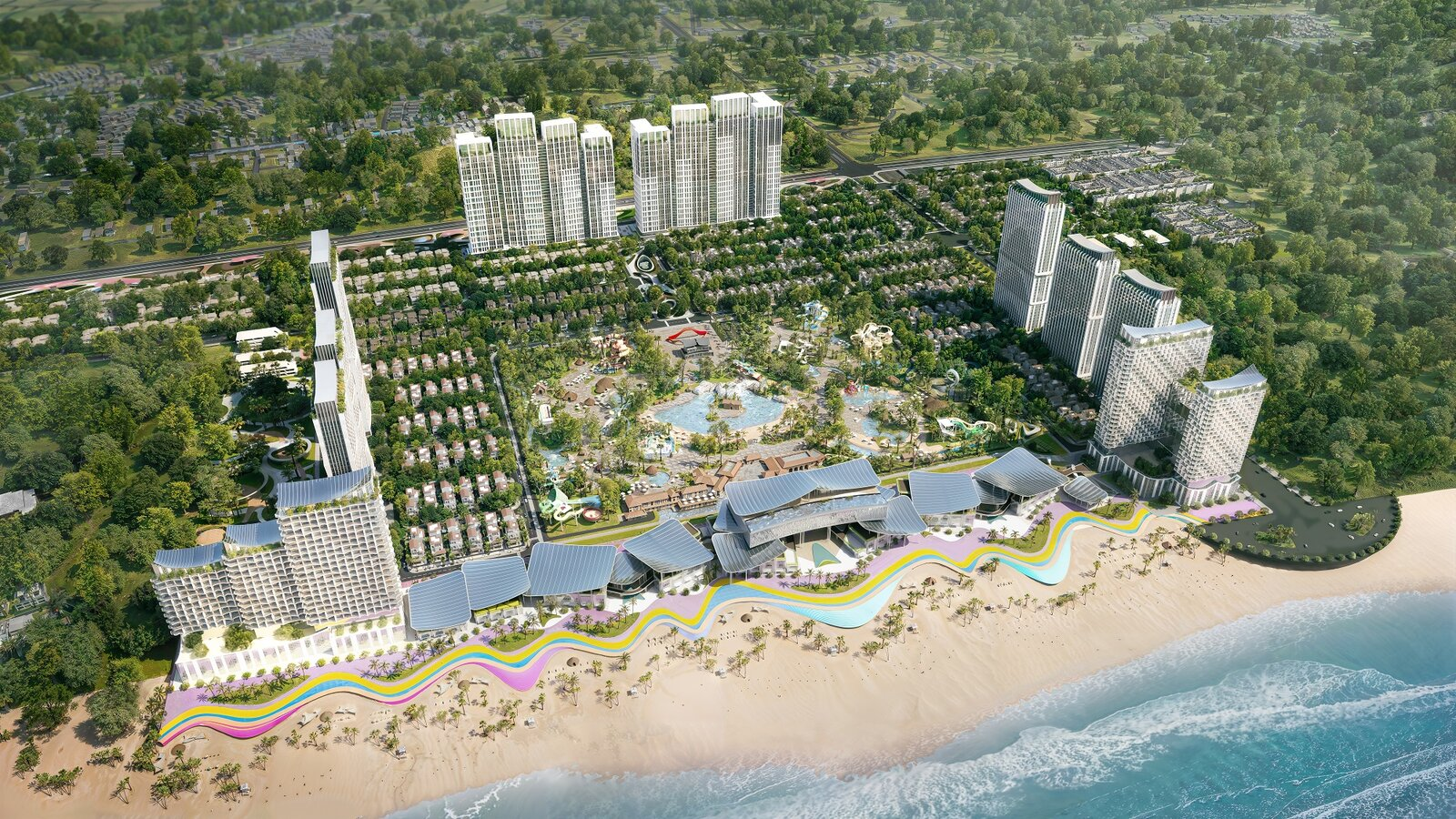
Transportation planning positively impacts the real estate market in Dong Nai. (Source: Compiled)
Evidently, Dong Nai's transport planning is opening up numerous development opportunities for the economy, urban areas, and real estate in the southern region. With a series of key projects such as Long Thanh Airport, Bien Hoa - Vung Tau Expressway, or inter-regional ring roads, Dong Nai is expected to continue to increase its role as an important connecting hub, logistics center, and satellite urban area of Ho Chi Minh City in the future.