


Guide on how to calculate apartment area according to the new law.
How to calculate apartment area according to the new law is an issue of great interest to many homebuyers to avoid area discrepancies and contract disputes. The article will help you clearly understand the current regulations and how to accurately determine apartment area.

▲Table of Contents
1. How is the apartment area regulated according to the new law?
1.1. Legal regulations on apartment area
According to current legal regulations, the method of calculating apartment area according to the new law is applied uniformly in real estate purchase contracts, aiming to ensure transparency between the investor and the buyer. In which, the apartment area must be clearly stated according to a specific measurement method, helping the buyer accurately understand the area they own and use.
This regulation also requires the investor to clearly state the method of area calculation in the contract, to avoid confusion between different measurement methods. This is an important basis for protecting the rights of homebuyers.
1.2. What is Usable Area?
Usable area (also known as net area) is the method of calculating apartment area commonly used in practice, especially for apartments. This term is also mentioned in the Housing Law 2023 and guiding documents, but without a detailed specific definition, it is mainly understood through practical application.
In common understanding, usable area is the actual usable space inside the apartment, measured by the space that water can “pass through” without being obstructed by external walls or structural elements. More simply put, this is the actual living space that the buyer can use daily.
It should be noted that usable area includes the internal usable area of the apartment, partition walls between rooms, and also balconies or loggias (if any). However, it does not include the apartment's external walls, walls separating units, and structural columns, so the area figure will be closer to the actual usable space compared to the centerline measurement method.
1.3. What is centerline measurement area?
Wall core area is a calculation method that includes the entire floor area of the apartment, measured from the core of the main walls, partition walls between apartments, load-bearing columns, and technical areas within the apartment. This calculation method usually results in a larger number compared to the usable area.
However, the wall core area does not accurately reflect the actual usable space for the buyer. Therefore, when learning about how to calculate apartment area according to new regulations, buyers need to clearly distinguish between these two concepts to avoid misunderstandings when comparing prices between projects.

The difference between the calculation of usable area and the calculation of wall-core area. (Source: Compilation)
2. How to calculate apartment area according to new law
2.1. How to calculate usable area
According to the new law apartment area calculation method , the apartment area is currently usually determined by the usable area, which is the actual usable area inside the apartment that the buyer can directly live in. This calculation method helps reflect the actual living space instead of including walls and load-bearing structures.
The basic formula can be understood as follows:
Usable area = Actual usable floor area + balcony/loggia area (if any) − walls, columns, technical shafts located within the apartment (not included in the area).
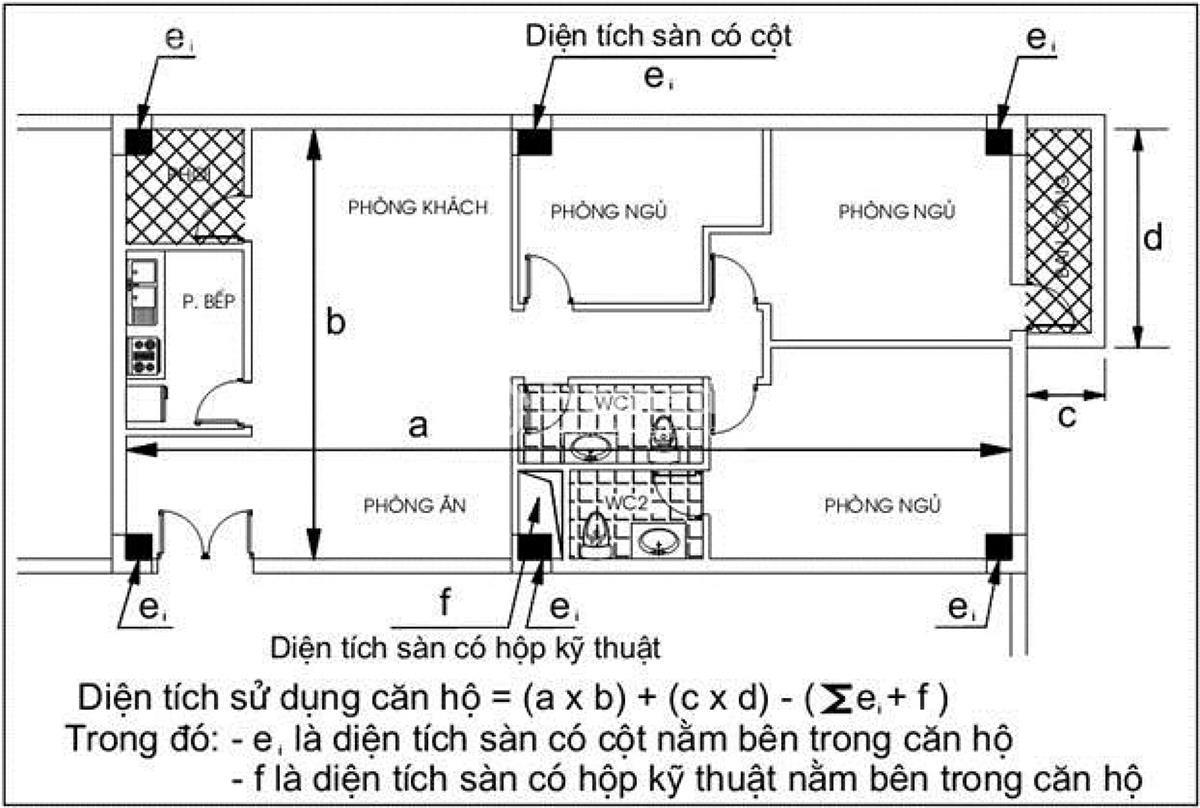
Illustration of how to calculate usable area. (Source: Collected)
2.2. Practical illustrative example
Suppose an apartment has the following parameters:
Gross area (measured to wall centers): 70 m²
Area occupied by walls and columns: 6 m²
Usable balcony area: 4 m²
Khi đó, diện tích thông thủy sẽ được tính như sau:70 m² − 6 m² = 64 m² (diện tích sử dụng thực tế trong nhà)Sau đó cộng thêm ban công: 64 m² + 4 m² = 68 m² diện tích thông thủy
Như vậy, theo cách tính diện tích căn hộ theo luật mới , căn hộ này sẽ được ghi nhận là 68 m² diện tích sử dụng thực tế, giúp người mua dễ hình dung không gian sống và so sánh chính xác giữa các dự án khác nhau.
3. Ưu nhược điểm của cách tính diện tích thông thủy
3.1. Ưu điểm
The greatest advantage of calculating the net usable area is that it most accurately and closely reflects the actual usable area of the apartment. Buyers can accurately visualize the living space inside, including functional rooms such as the living room, bedroom, kitchen, and bathroom, instead of being "exaggerated" by wall sections or structural elements.
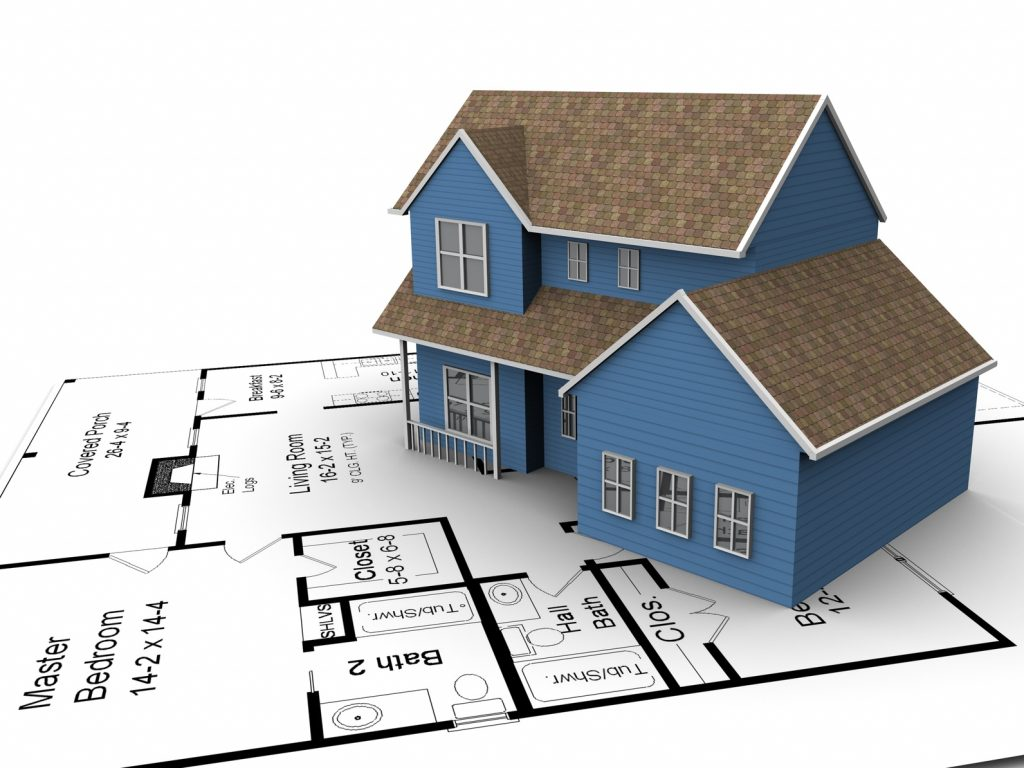
The method of calculating usable area accurately and most closely reflects the actual usable area of the apartment. (Source: Collected)
In addition, this method helps increase transparency when comparing different real estate projects. When all apartments are calculated according to the same standard, buyers can easily assess the actual usable value, thereby making a more objective decision instead of just relying on the number of large or small areas.
Furthermore, the usable area calculation method helps limit misunderstandings in home purchase transactions. Buyers can clearly know what area they are paying for that can be used, making the buying and selling process clearer and fairer between the investor and the customer.
3.2. Disadvantages
Despite many advantages, the usable area calculation method also has certain limitations. The most obvious disadvantage is that the area figure is usually smaller than the wall-center calculation method, making buyers initially feel a “shortage” of area compared to their expectations.
Furthermore, if they do not understand the nature of it, buyers can easily be confused when comparing projects that use different calculation methods. For example, a 70m² apartment calculated by wall-center may only be about 65m² of usable area, but if buyers are unaware of this, they may misjudge the actual value of the apartment.
Finally, in some cases, clearly separating the usable area and the structural area can make it difficult for buyers to visualize the overall built space of the apartment. Therefore, when learning about how to calculate apartment area according to the new law, buyers need to clearly understand both the advantages and disadvantages to make a more accurate decision.
4. Notes when buying an apartment by actual area
4.1. Check the area in the sales contract
When learning about how to calculate apartment area according to new law , buyers need to pay special attention to the area stated in the purchase contract. This is an important legal basis for determining the rights and obligations between the buyer and the investor.
Besides the area figure, buyers also need to clearly see if the apartment is calculated using the usable area (thong thuy) or wall-to-wall (tim tuong) method. Understanding correctly from the beginning will help avoid confusion and limit future disputes.
4.2. Compare the apartment floor plan drawing
A floor plan is an important document that helps buyers clearly visualize the structure and layout of the interior space of an apartment. Comparing the plan with the area information in the contract helps ensure consistency between design and reality.
Buyers should carefully check areas such as balconies, loggias, partition walls, and load-bearing columns to clearly understand which areas are included in the usable space. This helps to more accurately assess the actual value of the apartment.
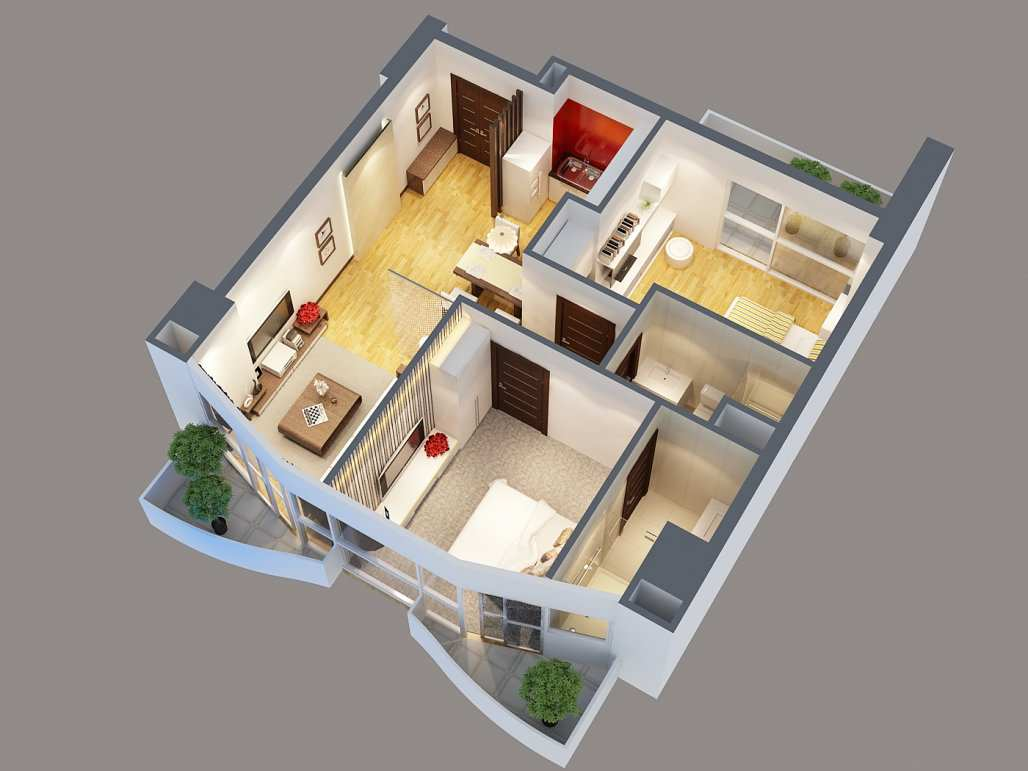
Buyers need to carefully check the apartment floor plan. (Source: Collected)
4.3. Actual measurement upon handover
When receiving the house handover, actual measurement is the final step to re-check the apartment's area. This is how buyers can confirm whether the apartment matches the specifications committed in the contract.
In case of a significant discrepancy between reality and the contract, the buyer needs to work with the developer for explanations or adjustments according to regulations. Thorough checks at this stage help ensure rights and limit future risks.
5. Suggestions for choosing a suitable apartment based on the new apartment area calculation law
When researching how to calculate apartment area according to new law , buyers not only need to pay attention to the area figure but also must consider the overall actual usability value of the apartment. Projects with transparent area calculation methods based on usable area, optimal design, and clear legal status will help buyers easily assess the living space and avoid confusion when comparing products.
In the real estate ecosystem, projects developed by Sun Property (a member of Sun Group) are often focused on designs that optimize actual usable area, helping customers easily visualize living spaces according to usable area standards. Some projects such as Sun Symphony Residence in Da Nang, Sun Urban City in Ha Nam or urban areas in Phu Quoc are all planned to optimize functionality, minimize wasted space, and increase usability. Besides, products like Sun Cosmo Residence or Sunneva Island are also designed flexibly, helping buyers easily compare actual area instead of just looking at the total figure.

Apartments under Sun Property are designed for optimal area utilization, bringing a comfortable living space. (Source: Collected)
Choosing the right project not only helps to better understand how to calculate apartment area according to new law , but also ensures buyers own a living space of true value, transparent, and suitable for long-term practical use.
In summary, the calculation of apartment area under the new law helps buyers better understand the actual usable space instead of just looking at the numbers on paper. By understanding the difference between usable area (dien tich thong thuy) and wall thickness area (tim tuong), buyers can accurately compare between projects and avoid unnecessary confusion. This is an important basis for making a transparent home purchase decision that meets needs and is suitable for the actual usage value of the apartment.