


Hamptons style in interior design and what you need to know
Inspired by American coastal homes, the Hamptons style in interior design brings an elegant and airy aesthetic. This is an ideal choice for those who love serene yet luxurious living spaces. The article below will analyze this more thoroughly; we invite you to take a look.

▲Table of Contents
1. A General Overview of Hamptons Style in Interior Design
1.1. Definition and Basic Characteristics of Hamptons Style
The Hamptons style originates from the Hamptons area on the East Coast of the United States, known for its coastal residences serving the seasonal vacation and living needs of its residents. Structures here often feature open designs, maximizing natural light and sea breezes to create an airy living space. In the current context, applying the Hamptons style also requires adherence to architectural laws, emphasizing designs that harmonize with the natural landscape and preserve cultural identity while ensuring modern comfort and convenience.
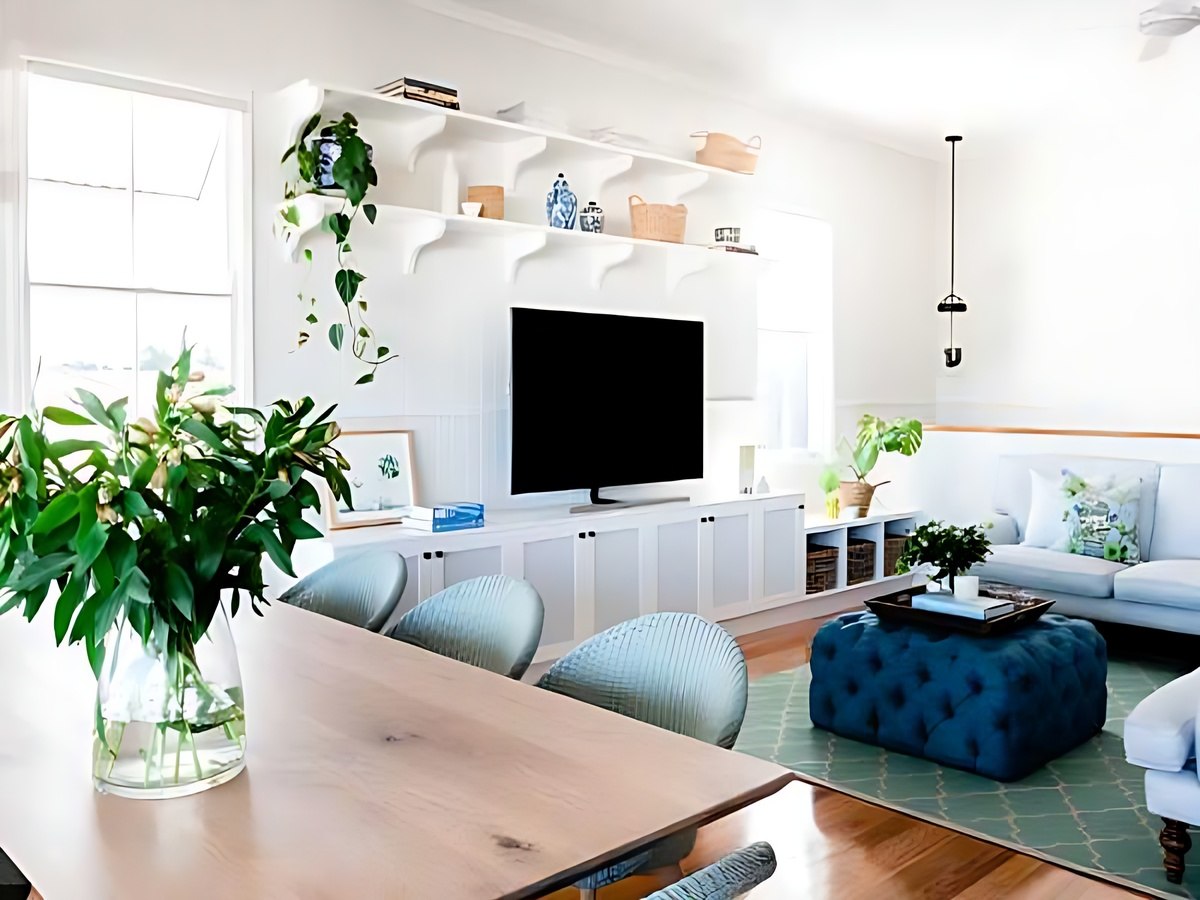
Hamptons style in interiors creates an airy coastal space. (Source: Collected)
The characteristics of this style are reflected in spacious spatial organization, combining a neutral color palette with elements reminiscent of the sea, such as blue, white, or beige. Furniture is often large-sized, with a balanced arrangement to ensure harmony between aesthetics and functionality. This approach helps the space to be both resort-like and suitable for daily living.
1.2. Elegant and Approachable Design Spirit
The spirit of the Hamptons style is expressed through the combination of elegant elements and a sense of closeness to nature in living spaces. Design details are often restrained to create a balance between aesthetics and daily user experience. In that context, the Hamptons style in interior design aims to create a gentle and stable living space.
The spirit of the Hamptons style is expressed through a combination of elegance and a sense of closeness to nature in living spaces. Design details are often understated to create a balance between aesthetics and daily use experience. Spaces designed in this style typically feature a connection between functional areas such as the living room, kitchen, and common living area.
Specifically, large glass door systems must meet Vietnam Standards (TCVN) for safety and energy saving for housing in 2026, helping to maximize natural light intake while ensuring thermal insulation, contributing to improving the quality of life in urban conditions.
1.3. Differences between Hamptons and other interior design styles
The Hamptons style differs when compared to the coastal style, despite both being inspired by the sea. Coastal often leans towards simplicity and rustic charm, while Hamptons places more emphasis on material finishing and spatial arrangement. Therefore, the Hamptons style in interior design typically exhibits greater balance and clear organization.
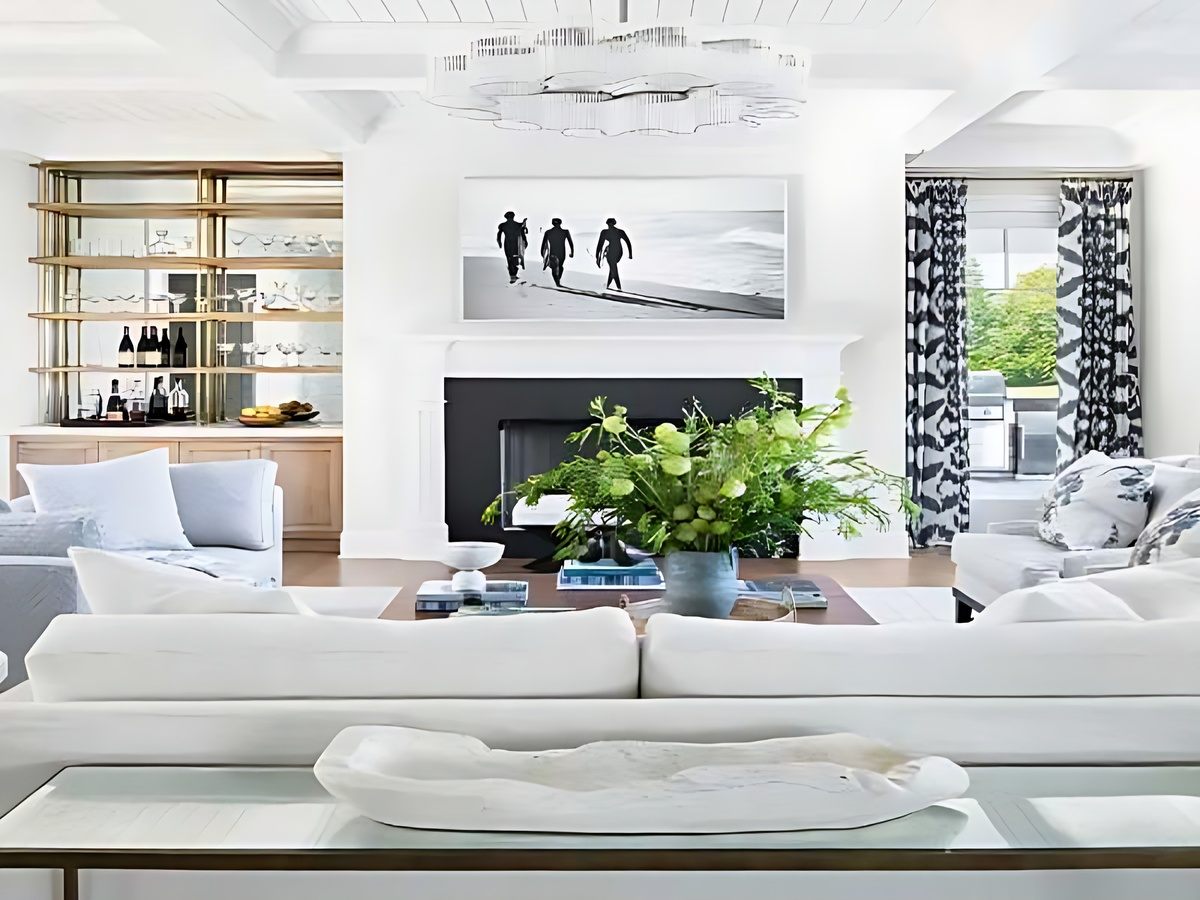
Hamptons style is distinguished by its balance and sophistication. (Source: Collection)
Compared to modern style, Hamptons does not pursue complete minimalism but still retains traditional decorative details. Soft interior lines combined with a neutral color palette make the space more accessible. This creates flexibility in practical application.
2. Key features of the Hamptons style in living spaces
2.1. Light color palette and inspiration from the sea
The color palette of the Hamptons style typically revolves around light tones such as white, blue, beige, and light gray, creating a sense of lightness and airiness in the space. These colors are inspired by the sea, sky, and sand, helping the space become harmonious with nature. In this context, the Hamptons style in interior design uses color as an important element to shape the emotional feel of the space.
Color coordination is usually done according to the principle of balance between shades to avoid monotony. Color layers can be layered through walls, furniture, and decorative accessories. This helps create visual depth while maintaining a sense of lightness overall.
In addition, white often serves as a background to highlight interior details and increase light reflection. The combination of background and accent colors makes the space brighter and more pleasant. This is an important element in Hamptons-style interior design.
2.2. Natural materials and high-end interiors
Hamptons style prioritizes the use of natural materials such as wood, stone, linen fabric, and rattan in interior design. These materials not only create a sense of intimacy but also contribute to enhancing the aesthetic value of living spaces. In that context, Hamptons style in interior design embodies the combination of natural elements and the high finish of materials.
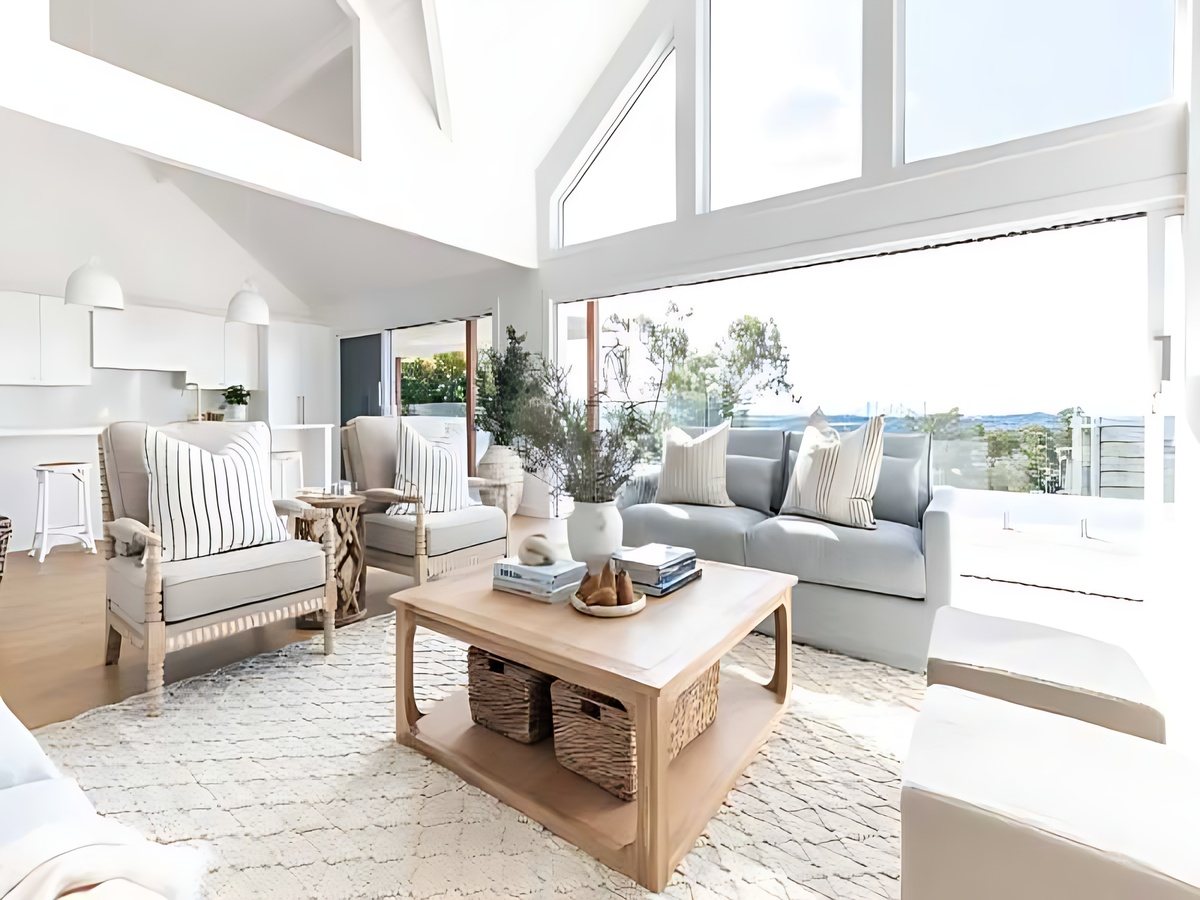
Natural materials and high-end interiors create the Hamptons style. (Source: Collected)
Wood is often treated with white paint or kept light-colored to match the overall color palette. Fabrics like linen or cotton are used for sofas, curtains, and throw pillows to add softness to the space. The combination of these materials helps balance durability and aesthetics.
2.3. Spacious and well-lit spatial layout
Space layout in the Hamptons style often aims for openness and connection between functional areas. Rooms are arranged seamlessly to create a sense of spaciousness and convenience in daily living. To optimize this, architects need to pay attention to the current National Technical Regulations on Housing and Public Works, ensuring clear floor area and natural ventilation. Natural light is fully exploited, helping to enhance brightness and significantly reduce electricity consumption, meeting the criteria of green buildings in the new era.
3. How to incorporate the Hamptons style into each interior area
3.1. An elegant Hamptons-inspired living room
Hamptons-style living rooms often feature large sofas in neutral tones paired with light-colored wooden tables to create balance in the space. Decorative elements such as throw pillows or wall art often feature sea-inspired colors to add a focal point. Overall, the Hamptons style in interior design helps the living room become a primary living area that is relaxing.
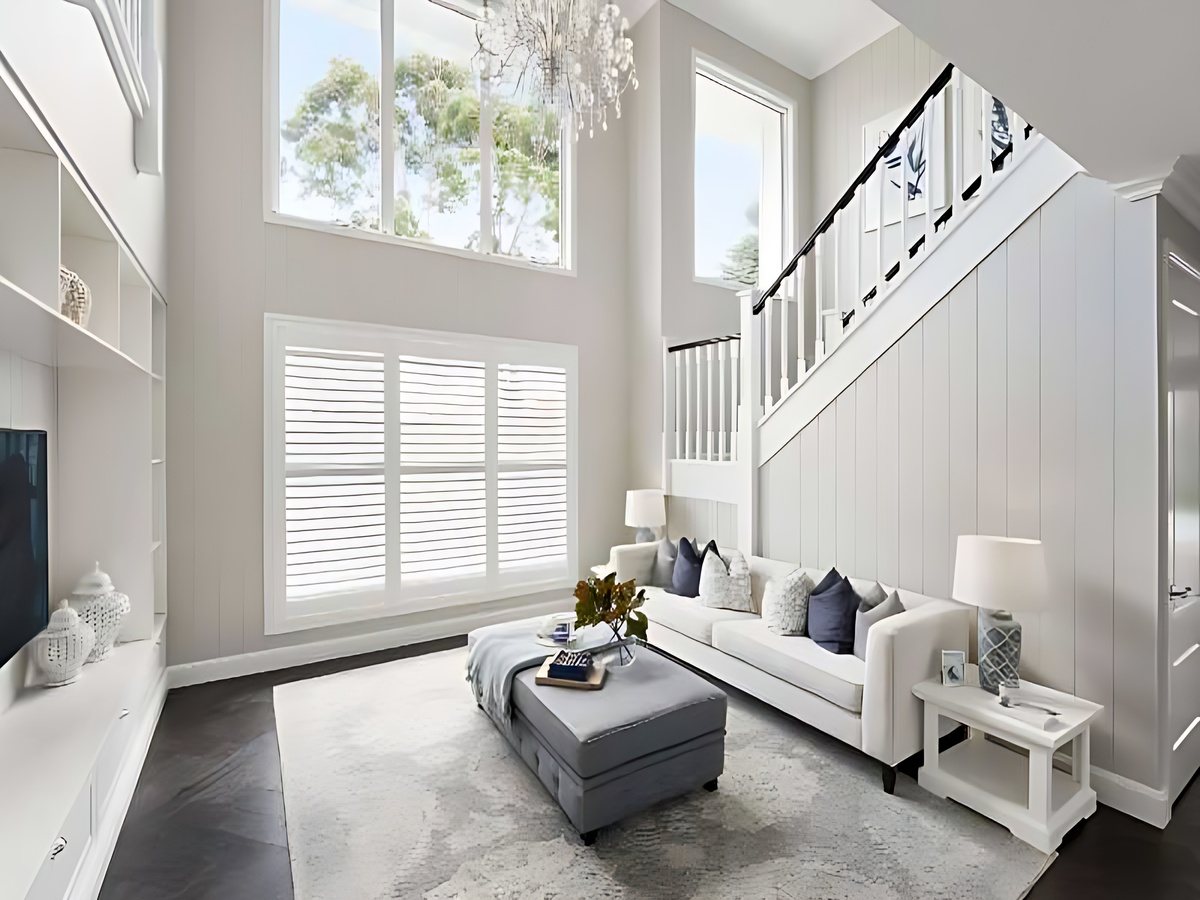
Spacious, relaxing, and balanced Hamptons-style living room. (Source: Collected)
The living room layout is often designed with an open plan, connecting with the kitchen or dining area to increase interaction. The use of rugs helps divide the space without losing continuity in the layout. This helps the space be clear in function and ensure aesthetics.
3.2. Gentle, relaxing Hamptons-style bedroom
Hamptons-style bedrooms often aim for lightness and relaxation through the use of neutral colors and soft lighting. Furniture is chosen with a simple design to create a comfortable feeling during rest. Meanwhile, the Hamptons style in interior design helps maintain a balance between aesthetics and functionality.
Materials used in bedrooms are typically linen, cotton, and light-colored wood to create softness and warmth. Decorative details are restrained to avoid visual clutter and impact sleep quality. This makes the space more pleasant for daily living.
Furthermore, the arrangement of windows and curtains is also emphasized to control light suitable for different times of the day. The combination of light and materials helps create a stable resting space. This is an important factor in bedroom space design.
3.3. Application in townhouses and modern apartments
Hamptons style can be flexibly applied in townhouses and modern apartments by adjusting the layout and materials to suit the area. Small spaces can use a light color palette to create a sense of spaciousness. According to sustainable trends in 2026, interior selection prioritizes product lines with green certifications, free from volatile organic compounds (VOCs) to ensure user health.
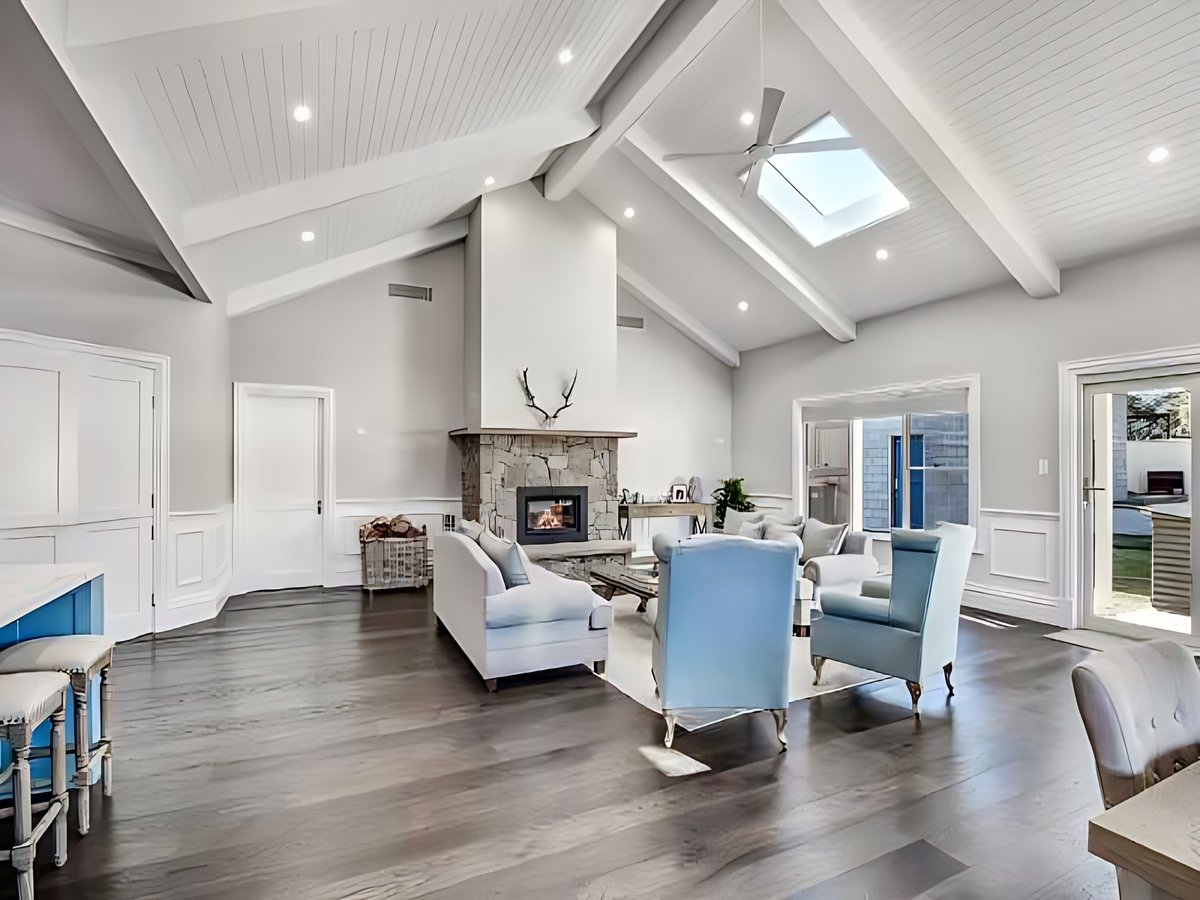
Flexible Hamptons style applies to townhouses and apartments. (Source: Collected)
Multifunctional or appropriately sized items help optimize space, ensuring convenience and safety in accordance with fire safety regulations for high-rise housing. This helps ensure convenience in urban housing conditions. Furthermore, utilizing natural light and ventilation also helps improve the quality of space in apartments.
4. Keys to Interior Design in the Hamptons Style
4.1. Choosing Furniture and Materials Suitable for the Hamptons Style
Furniture selection in the Hamptons style needs to ensure consistency in color and material to create a harmonious overall look. The pieces should have a simple design but be meticulously finished to ensure aesthetic appeal. In particular, the Hamptons style in interior design requires careful consideration during the material selection process.
Materials should prioritize natural types such as wood, fabric, and stone to maintain a sense of closeness to the environment. The combination of these materials needs to be done appropriately to avoid creating a disjointed feeling in the space. This helps enhance the overall design effectiveness. Additionally, the selection of decorative accessories also needs to be controlled to avoid disrupting the balance of the space. Details should be complementary rather than taking the main role. This is an important principle in Hamptons design.
4.2. Common mistakes when designing in the Hamptons style
One of the common mistakes is overusing too many colors or decorative details, which detracts from the inherent lightness of the Hamptons style. Besides, ignoring load-bearing regulations or altering load-bearing structures when renovating an apartment in this style is a serious violation of the Amended Construction Law. Using furniture that is not suitable for the area can also affect escape routes and air circulation. Items that are too large or too small both reduce usability and overall aesthetics.
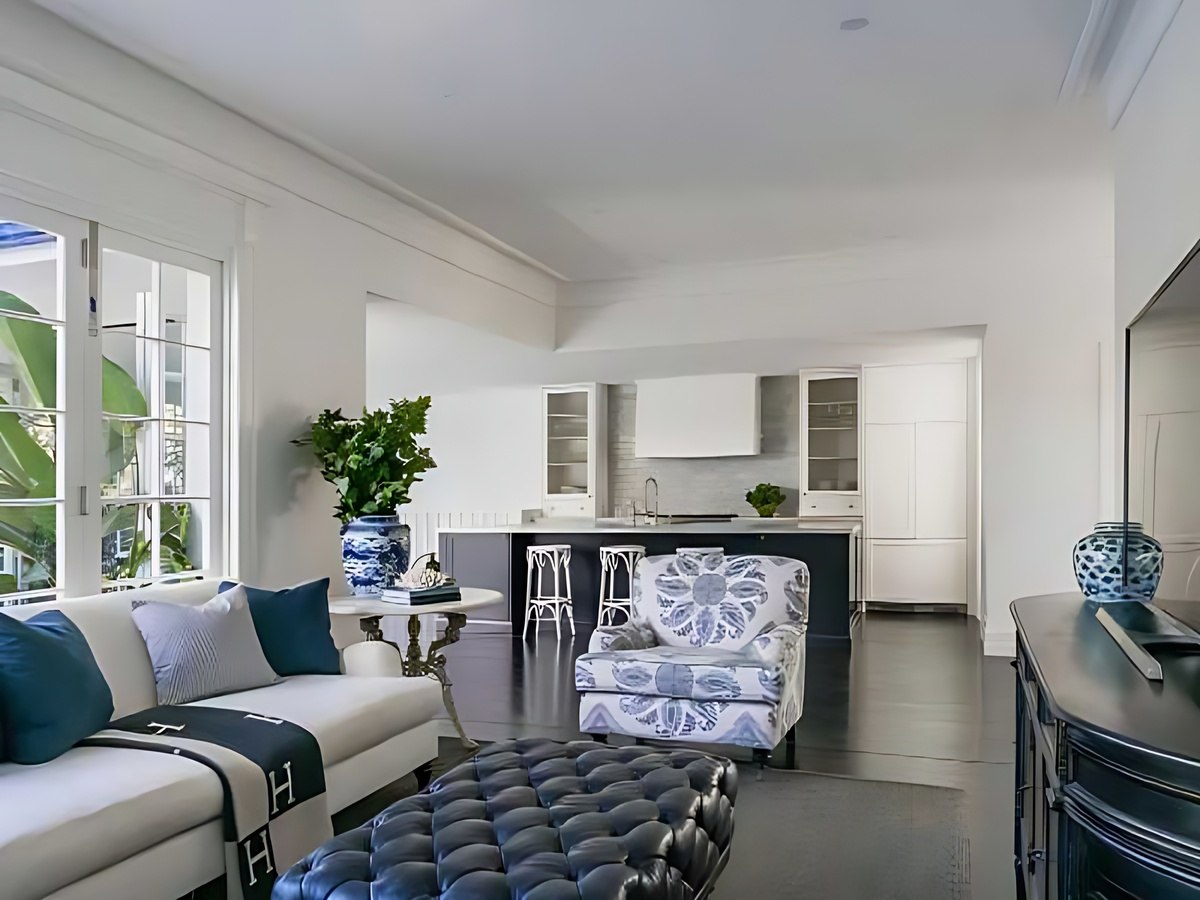
Applying the Hamptons style requires avoiding visual clutter and unsuitable furniture. (Source: Collected)
4.3. How to balance budget when pursuing the Hamptons style
To optimize costs, one can choose materials that are reasonably priced but still ensure aesthetics and durability in use. Replacing some high-end materials with equivalent ones helps reduce costs without significantly affecting the overall. Among these, the Hamptons style in interior design can still retain its characteristics if adjusted appropriately.
Furthermore, simplifying decorative details also helps reduce construction and furnishing costs. The space can still achieve aesthetic effectiveness if arranged reasonably and using suitable colors. This helps balance the budget and design quality.
The choice of the Hamptons style in interior design will bring a living space that is elegant, airy, and inspiring. If applied correctly, this style not only enhances aesthetic value but also creates a comfortable and sustainable living environment.