


Is a notarized deposit safe? Detailed explanation
Is a notarized deposit safe? is a question of great interest to many people when conducting real estate transactions. Notarizing the deposit contract enhances legal validity and helps prevent disputes; however, it does not always guarantee absolute safety if property information is not transparent.

▲Table of Contents
1. Nature of Notarized Deposit in Real Estate Transactions
1.1. Concept of Deposit According to Civil Regulations
In many real estate transactions, the question is a notarized deposit safe often arises when parties prepare to sign a deposit agreement before proceeding with the official purchase contract. According to the Civil Code 2015, a deposit is the act of one party handing over to the other a sum of money or an asset of value within a specified period to ensure the conclusion or performance of a contract. This regulation indicates that a deposit is a measure to secure obligations in civil transactions, commonly applied in real estate sales.
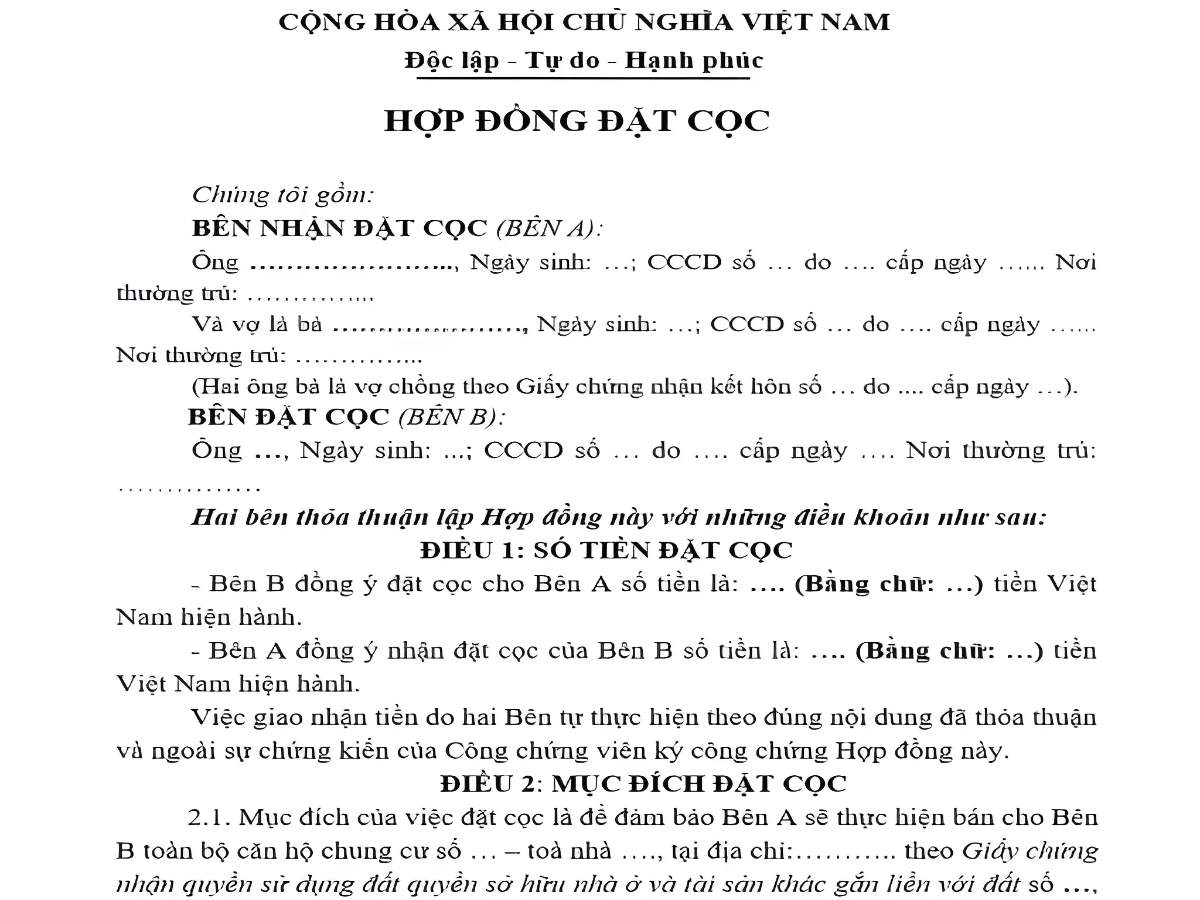
Deposit is a guarantee measure for contractual commitment according to civil law provisions. (Source: Collected)
The legal nature of a deposit is to bind the responsibilities between parties before signing a land use right transfer contract. If the purchase contract is signed and executed according to the agreement, the deposit will be returned or deducted from the buyer's payment obligation. Conversely, if one party refuses to enter into or perform the contract, the deposit may be handled according to the principle of deposit forfeiture as stipulated by law.
1.2. The difference between a handwritten deposit agreement and a notarized deposit contract
When comparing transaction forms, many people often raise the issue of is notarized escrow safe compared to making a handwritten deposit agreement between parties. Although general law does not require it, for real estate projects formed in the future, Article 23 of the Real Estate Business Law 2023 stipulates that investors may only collect a deposit not exceeding 5% of the selling price when the housing or construction works are eligible for business. Notarizing the deposit contract at this time is the optimal solution to control the deposit ratio and the legal validity of the project on the interconnected notarization data system.
However, a notarized deposit contract often provides clearer evidentiary value in case of disputes. When the document is made at a notary practice organization, the notary will check personal identification documents, explain the contract's content, and confirm the parties' signatures. As a result, the possibility of denying signatures or denying the transaction later is usually significantly reduced.
1.3. Confusion between notarization of deposit and notarization of sale and purchase contracts
In the real estate market, many people confuse notarizing a deposit contract with notarizing a land use right transfer contract. When asking the question is a notarized deposit safe, some people believe that notarizing a deposit means the transaction is completely secured. However, these two types of documents have different legal natures and are performed at two different stages of the transaction.
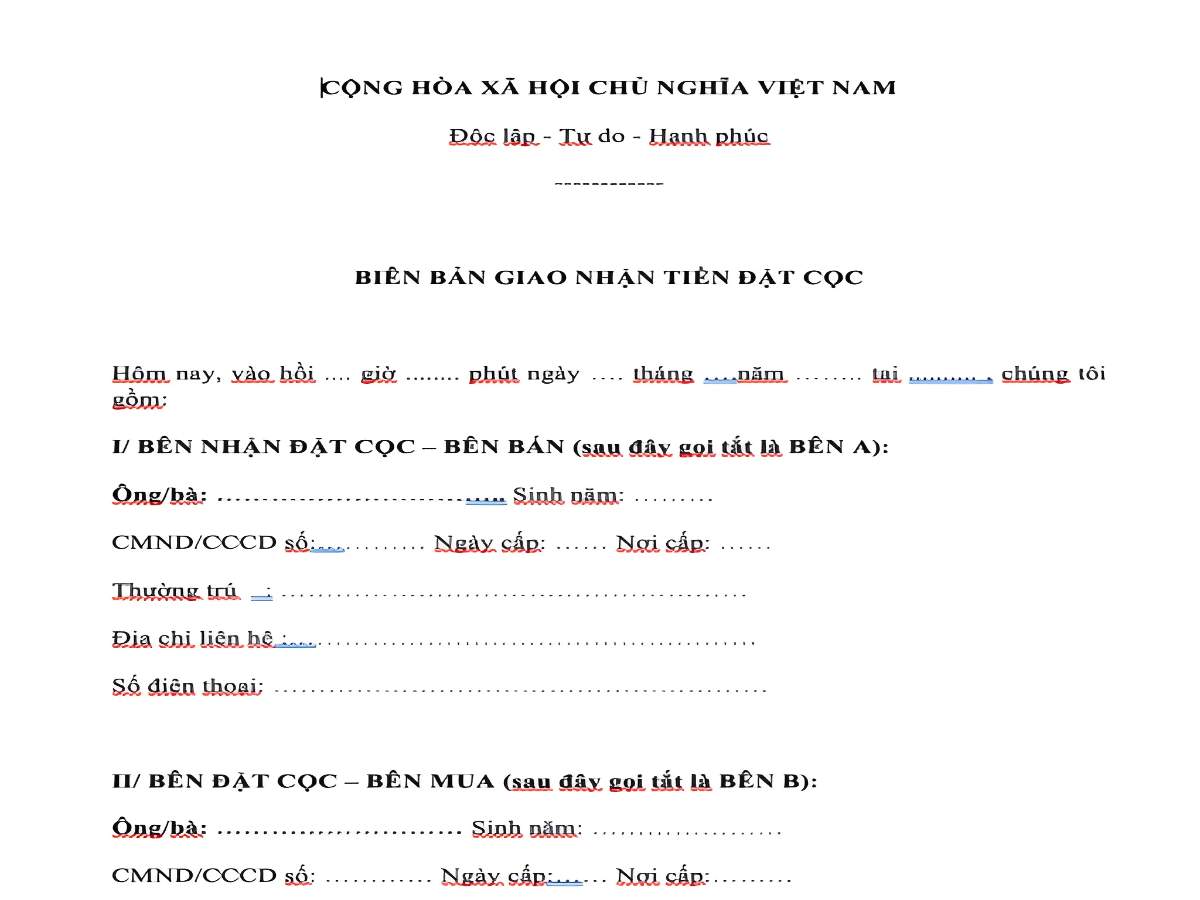
Notarizing a deposit does not replace a real estate purchase agreement. (Source: Collected)
A deposit contract is merely a step to bind responsibility before signing the official transfer contract, while a real estate purchase and sale contract is the document that creates the right to transfer assets. According to land law regulations, a land use right transfer contract must be notarized or certified to have legal effect. Therefore, notarizing a deposit cannot replace the notarization of a purchase and sale contract.
2. When is a notarized deposit considered safer
2.1. Assets with clear legal status and eligible for transaction
When evaluating if a notarized deposit is safe, the first factor to consider is the legal status of the transacted real estate. According to Land Law 2024, transaction conditions also include that the land must have fulfilled financial obligations and is not subject to temporary emergency measures. Specifically, buyers can use the QR code on the New Sample Certificate to check the transaction blocking status right at the Notary Office before signing the deposit agreement.
Additionally, buyers often need to directly check the original land use right certificate and compare information on the owner, area, land type, and land use duration. This check helps confirm the seller has the right to dispose of the asset and limits the risk of transacting with an unauthorized person. If the information on the certificate matches the records at the land management agency, the possibility of legal risks is usually significantly reduced.
2.2. Contract content strictly stipulates rights and obligations
In many cases, determining is a notarized deposit safe depends on the level of detail in the deposit contract. A clear contract should typically include the full deposit amount, the expected transfer price, the deadline for signing the sales contract, and related financial obligations. When the basic terms are clearly defined, parties will find it easier to fulfill their obligations and limit disputes during the transaction process.

A clear deposit contract helps prevent disputes in transactions. (Source: Collected)
In addition to basic information, the deposit contract also needs to clearly stipulate the penalty clause in case one party fails to fulfill their commitments. According to the Civil Code, if the depositor refuses to enter into the contract, the deposit money may belong to the recipient of the deposit.
2.3. Transacting parties ensure information transparency
Another factor affecting whether notarized deposit is safe is the level of information transparency of the parties involved in the transaction. The seller needs to provide full personal documents, land use rights certificates, and information related to marital status or joint ownership of the property. When this information is clearly confirmed, the signing of the deposit contract will have a stronger legal basis.
In cases where the asset is jointly owned by a married couple or multiple individuals, all co-owners must sign the deposit contract or have a valid power of attorney. If only one person signs without the consent of the remaining owners, the transaction may be declared void in case of dispute. Accurately identifying the parties with the right to dispose of the asset helps limit future legal risks.
3. Risks that can still occur despite notarized deposit
3.1. Assets affected by planning or potential disputes
Even if the deposit contract has been notarized, the question is a notarized deposit safe still needs to be considered based on the actual condition of the real estate. Some cases where new planning is announced after the deposit can cause the land parcel to be restricted from construction or fall into the area to be recovered. At that time, the transfer may encounter difficulties even though the parties had signed the deposit contract earlier.
Besides planning, land use rights disputes can also arise after a deposit transaction has been made. For example, family members or co-owners may claim rights to the land plot, leading to the transaction being temporarily suspended. These disputes are sometimes only discovered after conducting further checks on the property's legal records.
3.2. Seller lacks sufficient rights to dispose
Another risk when considering whether a notarized deposit is safe is the case where the seller does not have full rights to dispose of the property. This often happens when the property is jointly owned by multiple people but only one person signs the deposit contract.

Seller without sufficient disposal rights can render the contract invalid. (Source: Collected)
When remaining co-owners disagree with the transaction, the contract may be declared void. With the operation of the National Population Database, notaries in 2026 will be able to check the marital status and household members of the seller online. However, risks still exist if the digital information has not been updated in a timely manner. Buyers need to request the seller to confirm their property disposal rights based on level 2 electronic identification data to ensure the deposit contract is not invalidated.
3.3. Buyer lacks financial capacity
In many real estate transactions, the assessment of is notarized deposit safe also relates to the buyer's financial capacity. Some buyers plan to take out bank loans to pay the remaining value of the property after making the deposit. If the loan is not approved, the signing of the transfer contract may be delayed or canceled.
When the deposit contract does not clearly stipulate conditions related to bank loans, deposit disputes may arise between the parties. If the buyer is unable to pay the remaining part of the transaction, the seller may request the application of the deposit penalty clause as per the initial agreement. This makes the deposit amount a common source of dispute in many real estate transactions.
4. How to increase safety when making a notarized deposit
4.1. Conduct independent legal checks before depositing
To reduce risks in real estate transactions, the assessment of is a notarized deposit safe usually begins with an independent legal check of the property. In 2026, searching has become more convenient through the National Land Information Portal . Buyers should ask the Notary Office to check the "transaction history" of the property on the UCHI system (or local notary management software) to ensure this property has not previously been deposited or promised for sale to anyone else.

Legal checks before making a deposit help reduce transaction risks. (Source: Compiled)
Besides checking with the management agency, buyers should also carefully check the original land use right certificate. Information such as area, land type, usage period, and owner's name needs to be cross-referenced with the seller's personal identification documents. If the information matches and there are no unusual signs, the transaction's safety level is usually higher.
4.2. Drafting a strict deposit contract
Another important factor to assess is a notarized deposit safe is the quality of the deposit agreement drafted between the parties. The agreement needs to clearly state the deposit amount, the expected transfer price, the deadline for signing the purchase agreement, and the financial obligations related to the transaction. When the terms are specified in detail, the rights of each party will be better protected.
In addition to basic content, the deposit contract should also clearly stipulate the deposit penalty amount and compensation responsibilities if one of the parties violates the agreement. These clauses help clarify how to handle situations when the transaction is not carried out according to the initial commitment. Thereby, the parties have a legal basis to resolve disputes if they arise.
4.3. Prioritizing transparent asset transactions and reputable projects
Another factor affecting whether notarized deposit is safe is choosing the right type of real estate and transaction environment. Properties with clear legal records, stable planning, and transparent information often help the deposit and notarization process go more smoothly. In synchronously planned urban areas, the legal data for each product is usually prepared completely before the transaction.
Many homebuyers nowadays also prioritize choosing projects developed by investors with experience in urban planning and development. In such projects, transaction processes, contracts, and legal documents are usually standardized from the outset. This helps buyers easily access transparent information and reduces the risk of disputes.
Whether a notarized deposit is safe depends on the execution method and the level of legal control in each transaction. When the deposit contract is clearly drafted, fully notarized, and accompanied by a thorough check of the asset's legal documents, it is a relatively safe method to protect the rights of the parties involved. However, notarization only confirms the legality of the transaction and does not absolutely guarantee against risks if the initial information has not been thoroughly verified.