


Is a staircase in the middle of the house good for Feng Shui? Proper remedies.
In home design, many homeowners wonder if a staircase in the center of the house is good feng shui and whether this arrangement affects wealth or health. Actually, the location of the staircase plays an important role in guiding qi. The article below will help you clearly understand the essence of feng shui, while also suggesting effective and easy-to-apply solutions.

▲Table of Contents
1. Feng Shui Overview of Central Staircases
1.1. Concept of Staircases in Home Feng Shui
In home Feng Shui, staircases are considered vertical conduits for Qi, playing a role in transporting energy between floors in a living space. According to traditional beliefs, Qi flows from lower to higher floors via the staircase, directly influencing the circulation of vital energy throughout the entire house. Proper placement of staircases contributes to maintaining the stability of the Qi flow, especially in multi-story townhouse constructions in Vietnam.
Besides connecting floors, stairs also symbolize the continuous development and movement of energy. When the airflow circulates harmoniously, the living space will maintain a state of balance, limiting stagnation or dispersion of energy. This is a factor often considered in modern housing design, where Feng Shui is considered a part of the standards for evaluating space quality.
In reality, the role of the stairs is not just limited to technical factors but is also linked to the spiritual value of the house. When the design is unreasonable, the airflow can be interrupted or move unstably, affecting the overall space. Therefore, understanding the nature of stairs in feng shui is the basis for evaluating issues such as is the feng shui of stairs in the middle of the house good in each specific case.
1.2. The meaning of the stair's position in the space layout
The location of stairs in a house directly affects how airflow operates, thereby impacting the overall feng shui of the building. If the stairs are placed in a suitable location, airflow will circulate evenly between areas, making the space more airy and balanced. Conversely, an inappropriate location can cause airflow to be divided or disturbed, affecting the perception of space and daily life.
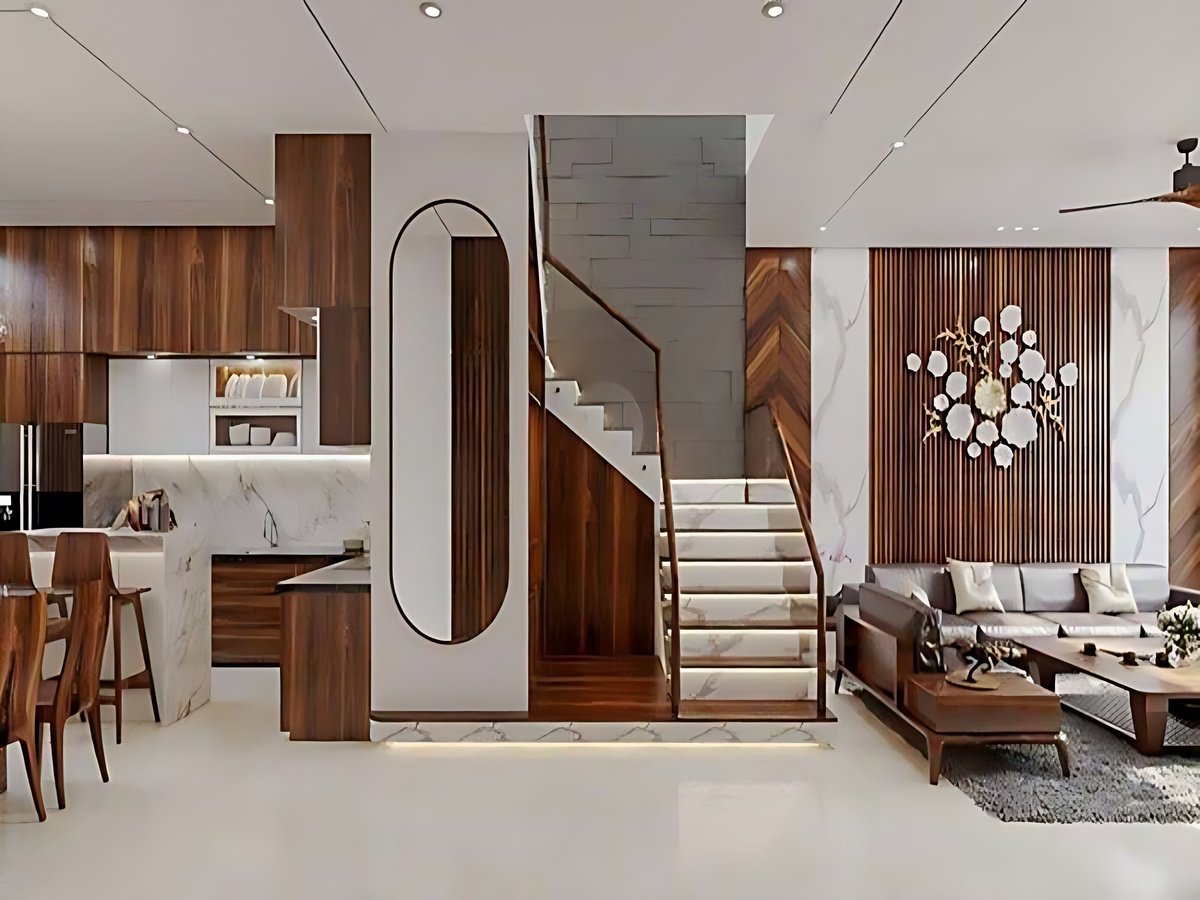
A proper staircase location helps air circulation, balances yin and yang, and increases house value. (Source: Collected)
In Feng Shui, the element of yin and yang balance plays an important role in maintaining the stable state of the house. A staircase placed in the wrong position can cause imbalance between areas, leading to energy disparities between floors. This is also considered by many experts to be related to real estate value, as reasonable Feng Shui elements can help increase housing value by 10–15% on the market.
1.3. Why many houses place the staircase in the middle of the house
In construction practice, many townhouses in urban areas choose to place the staircase in the middle of the house to optimize usable space. With limited width, placing the staircase in the center helps divide the space into two clear functional areas, such as the living room and kitchen. This design also helps maximize floor space, especially in houses with an area of less than 60m².
This design suits modern townhouse trends, however, special attention must be paid to fire safety for the house and building. Placing the staircase in the middle of the house requires ensuring a safe escape distance and not obstructing the escape route in case of an incident. Therefore, answering the question of whether a staircase in the middle of the house is good for feng shui must go hand in hand with adhering to the legally mandated escape plan to ensure absolute safety for the homeowner.
2. Is a Staircase in the Middle of the House Good for Feng Shui According to Experts
2.1. Feng Shui Assessment of a Staircase in the Middle of the House
According to Feng Shui principles, the central area of the house is called the ‘trung cung’ (central palace), where energy converges and is distributed to other areas. When the staircase is placed in this position, the airflow can be disturbed due to the continuous movement between floors. This causes the trung cung to lose its inherent stability, affecting the overall balance of the space.
Many experts believe that stairs in the middle of the house can disrupt the flow of energy, causing qi to disperse instead of gathering. This is also why the question is feng shui for stairs in the middle of the house good or not is often raised during the home design process. In the context of homebuyers increasingly paying attention to feng shui, this factor can influence investment decisions and real estate choices.
2.2. Impact on the homeowner's wealth and health
When the stairs are placed in the middle of the house, the airflow tends to disperse in many directions instead of concentrating in a specific area. This can affect the ability to accumulate wealth, making financial energy unstable according to feng shui principles. Some assessments suggest that an unreasonable arrangement can reduce the effectiveness of utilizing living space.
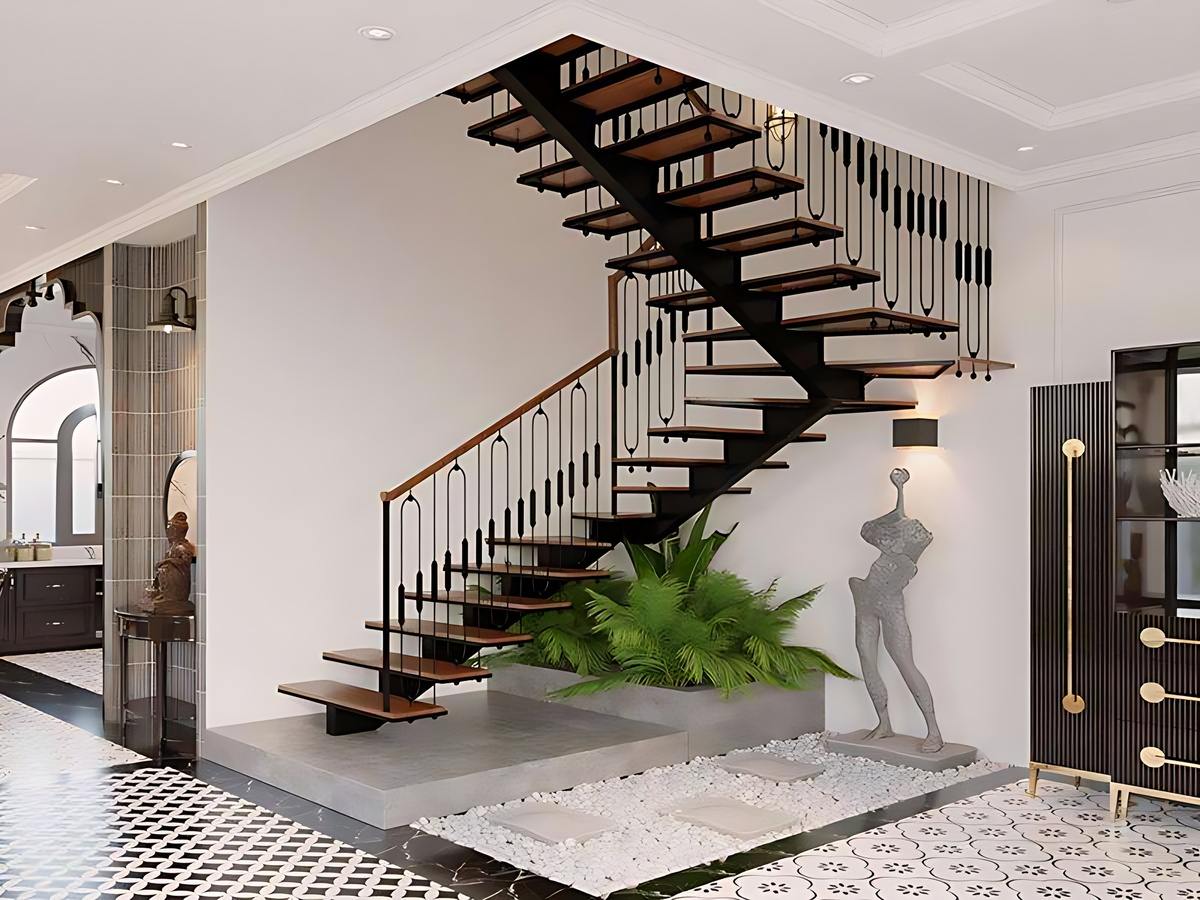
Staircases in the middle of the house cause air dispersion, affecting wealth and peace of mind. (Source: Collected)
Besides financial factors, air disturbance can also affect the mental state of family members. Spaces lacking energy stability can easily create feelings of unease or lack of focus in daily activities. In the context of the real estate market recording high demand for homes with good feng shui, about 85% of homebuyers consider this an important criterion when choosing.
2.3. Cases where staircases in the middle of the house are still acceptable
In some cases, a central staircase can still be acceptable if the design ensures ventilation and air circulation. Incorporating a skylight in the staircase area helps enhance natural light and air circulation, thereby minimizing stagnant air. This is a solution commonly applied in townhouses in large cities.
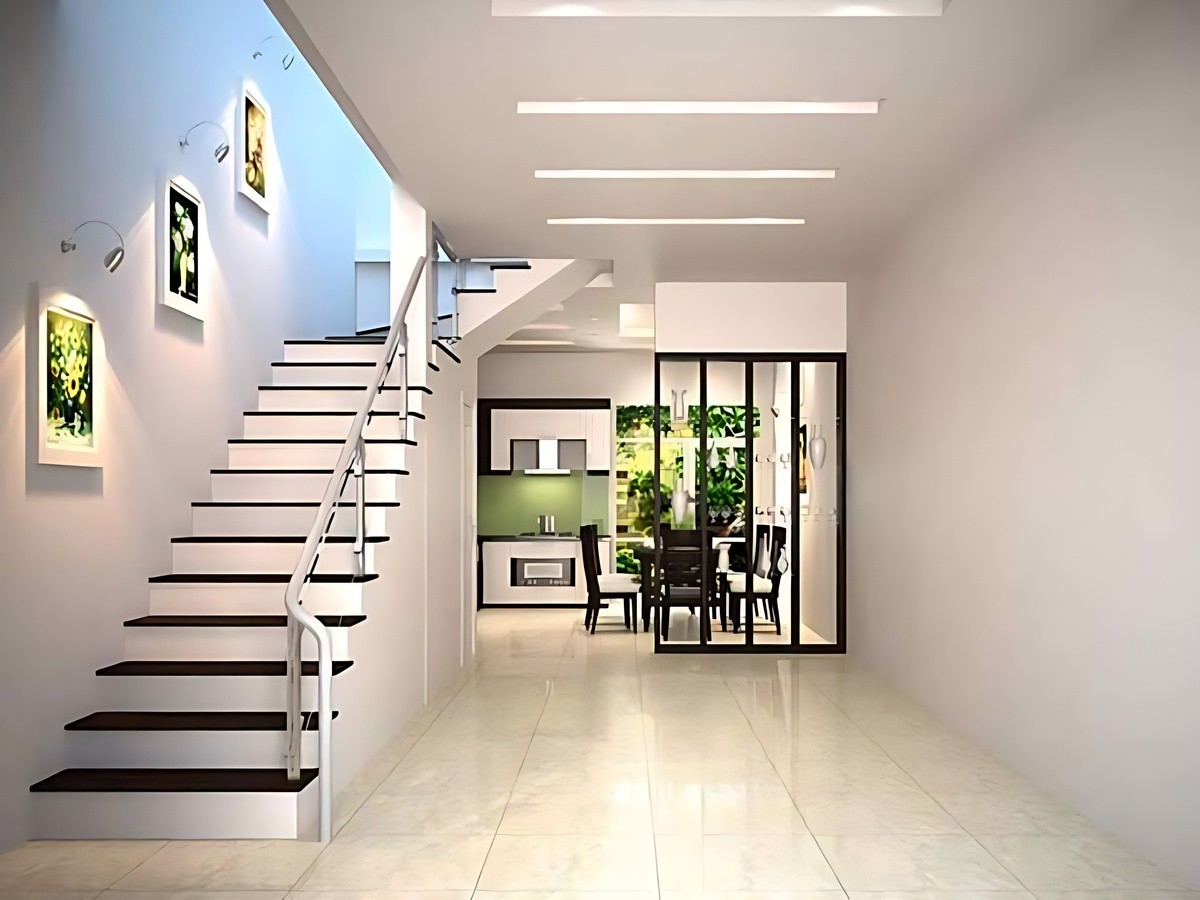
Combining skylights helps the central staircase be airy and have good air circulation. (Source: Collected)
Furthermore, the staircase's direction aligning with the homeowner's destiny also contributes to balancing energy in the space. When positioned in the correct direction and combined with reasonable design elements, a central staircase can mitigate negative influences. This indicates that the question is a central staircase good in feng shui does not have an absolute answer but depends on many specific factors.
3. Effective ways to resolve feng shui issues with a central staircase
3.1. Adjusting the staircase design to be feng shui compliant
One of the common ways to resolve is to adjust the staircase design to reduce the direct impact on the center of the house. Spiral or off-axis staircase designs are often chosen to limit excessively strong vertical airflow. This design helps to disperse energy more naturally, avoiding situations of concentrated or conflicting airflow.
In addition, limiting straight staircases pointing down into the center is also considered an important solution. Materials used such as wood, glass, or metal need to be chosen appropriately to create a sense of lightness and harmony. In reality, many modern townhouse projects have adopted these solutions to improve feng shui and enhance usability.
3.2. Arrangement of Feng Shui Supporting Items
Using green plants in the stair area helps balance the air and creates a pleasant feeling for the space. Plants can absorb bad air and supplement natural energy, contributing to the improvement of the living environment. This is a simple solution that many families apply in modern interior design.
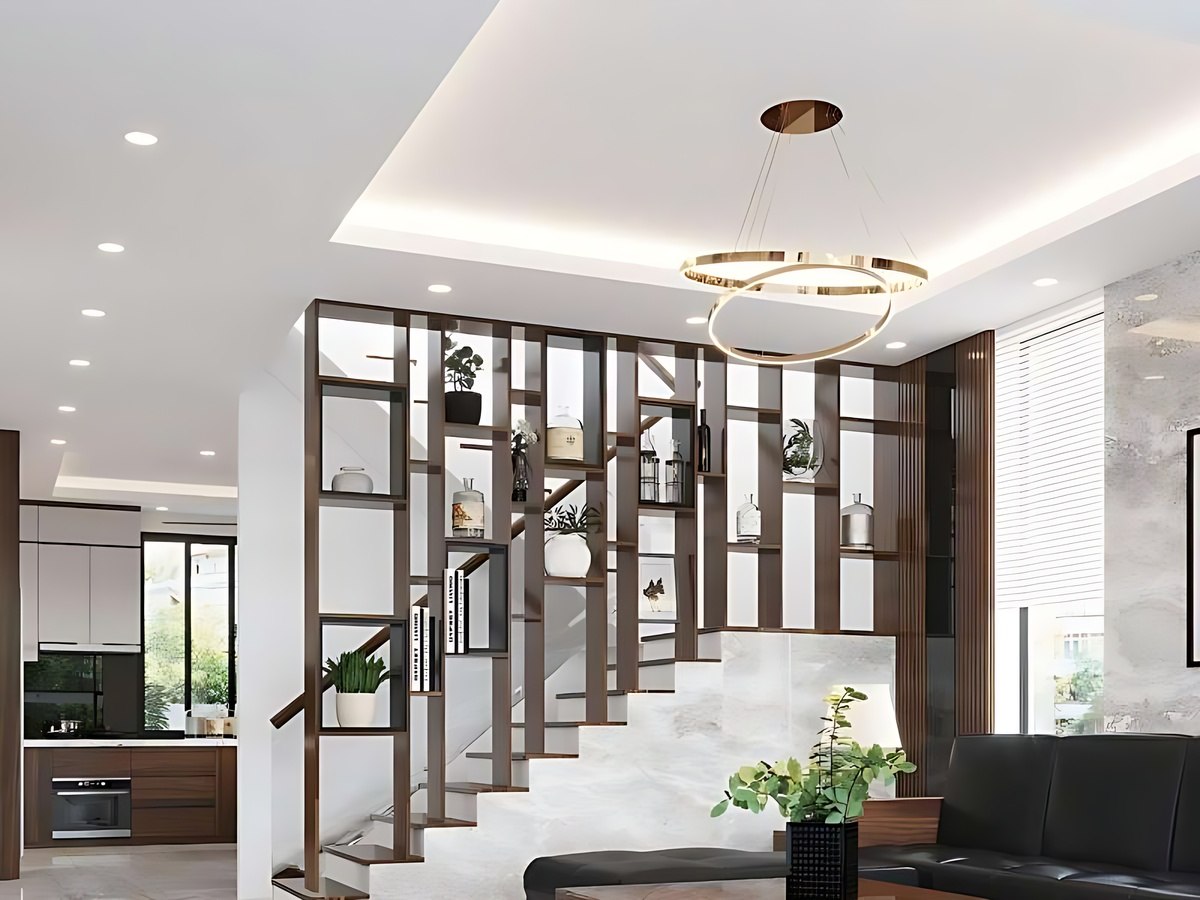
Greenery and light help balance vital energy, increasing ventilation for the stairs. (Source: Collected)
In addition, the lighting system also plays an important role in enhancing positive energy. Sufficient light helps the stair area become airy and limits the feeling of darkness. The use of light partitions also helps reduce negative energy, creating spatial separation without losing overall connectivity.
3.3. Notes on stair direction according to the homeowner's destiny
The staircase direction needs to be chosen based on the Five Elements to ensure compatibility with the homeowner. Directions such as Southeast (Dong Nam), North (Bac), or Southwest (Tay Nam) are often considered to bring positive energy in many cases. Choosing the right direction helps enhance harmony between people and living spaces.
Besides direction, the color of the staircase should also be suitable for the element to increase Feng Shui effectiveness. The combination of direction and color creates a balanced whole, limiting conflicting elements. In the context of Feng Shui increasingly being concerned in real estate investment, these factors contribute to enhancing the value and potential of real estate.
4. Principles of Staircase Design According to Feng Shui for Homes
4.1. Reasonable Placement of Staircases in the House
According to Feng Shui principles, staircases should be placed off-center or against a wall to ensure stable airflow. Avoiding placing the staircase in the center of the house helps limit energy disruption in the central area. This is a principle applied by many architects in modern townhouse design.
A reasonable layout not only helps improve feng shui but also enhances the space utilization experience. When the airflow is good, the space becomes more airy and comfortable. This also aligns with the trend of sustainable housing development in the context of a steadily growing real estate market.
4.2. Number of stair steps according to the cycle of birth, old age, sickness, and death
Besides calculating the number of steps according to the "birth - old age - sickness - death" cycle (formula $4n+1$) to wish for good luck, homeowners must strictly adhere to the Vietnamese National Standard TCVN 13967:2024 on housing design. Accordingly, the riser height must not exceed 190mm and the tread width must not be less than 250mm. The harmonious combination of feng shui step counts and legally mandated anthropometric dimensions helps ensure that the staircase not only brings good fortune but also guarantees safety, avoiding fatigue or accidents during daily movement.
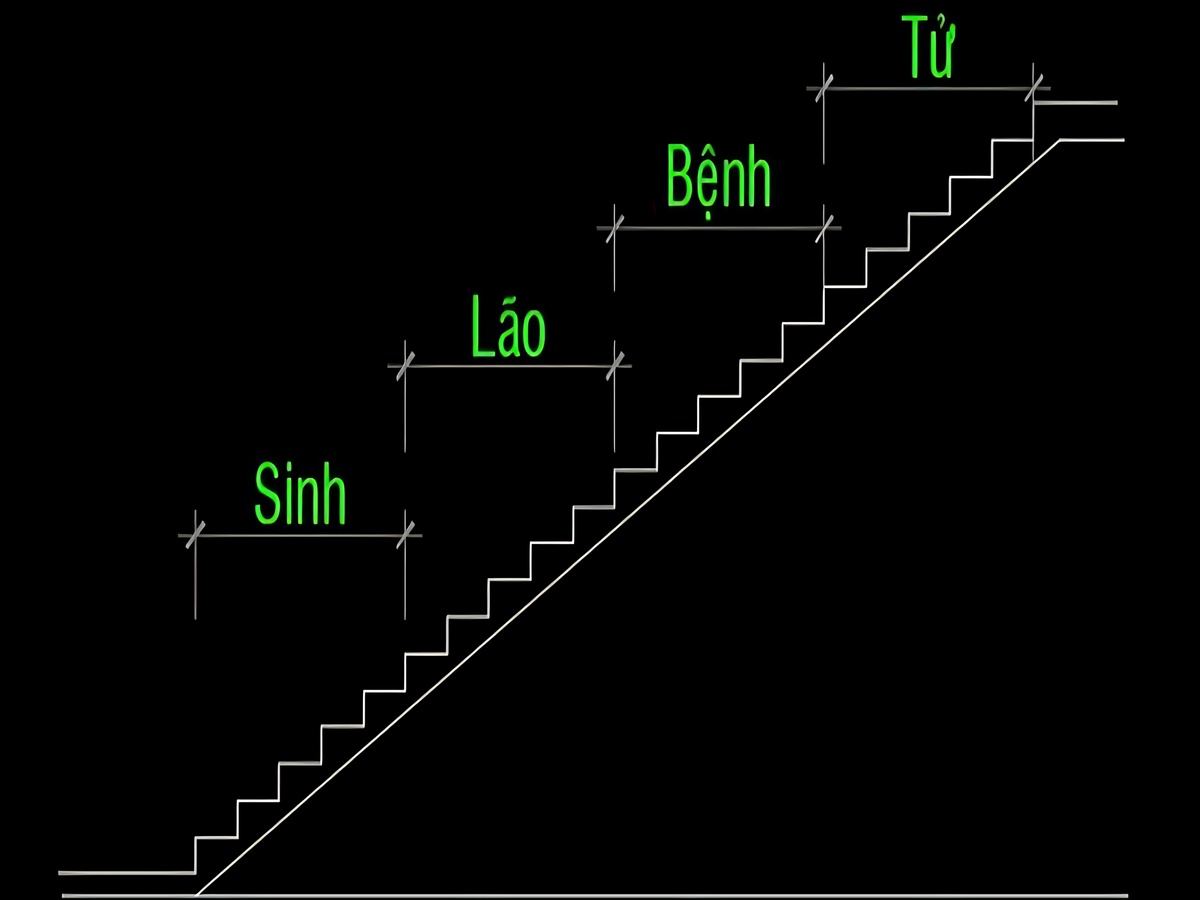
Staircase design harmonizing feng shui step count and technical standards. (Source: Collected)
Choosing the appropriate number of steps not only carries feng shui meaning but also ensures practicality in daily life. Avoiding inauspicious steps helps limit negative impacts on the family's fortune. In reality, many projects have adjusted their designs to comply with this principle to increase usability.
4.3. Taboos when designing stairs
One of the things to avoid is placing stairs directly opposite the main door, as this can cause the airflow to go straight out without staying in the house. Furthermore, stairs directly facing the kitchen are also considered inappropriate, as it affects the family's main living area. These factors are usually considered from the design stage.
A poorly lit staircase not only negatively affects energy but also violates lighting standards in housing. According to new regulations on energy saving and building safety, the staircase area must ensure minimum illuminance to avoid risks of falling. Designing a skylight or a sensor lighting system at the central staircase is the optimal solution to both resolve feng shui issues (increase yang energy) and meet current requirements for green buildings and construction safety.
It can be seen that whether Feng Shui for a staircase in the middle of the house is good depends on many factors such as design, direction, and overall layout. If not handled correctly, this position can easily affect wealth and health. However, homeowners can completely resolve this with suitable solutions to ensure a harmonious living space and long-term Feng Shui balance.