


Land Acquisition and Compensation Process Under Latest Regulations
The compensation and site clearance process is a matter of great concern to many people when the State reclaims land for project implementation. A clear understanding of the implementation steps and related rights will help people minimize disputes and ensure their legal entitlements.

▲Table of Contents
1. Understanding Land Clearance
1.1. What is Land Clearance?
Land clearance is the process of carrying out tasks related to relocating houses, trees, construction works, and people from land designated for planning purposes, aimed at serving renovation, expansion, or new project implementation.
This activity usually occurs when the State undertakes infrastructure projects, urban areas, residential areas, or land acquisition for national defense, security, and socio-economic development purposes. In the land acquisition and compensation process, mobilizing people to hand over land and implementing compensation, support, and resettlement policies plays a very important role in ensuring the rights and interests of all parties involved.
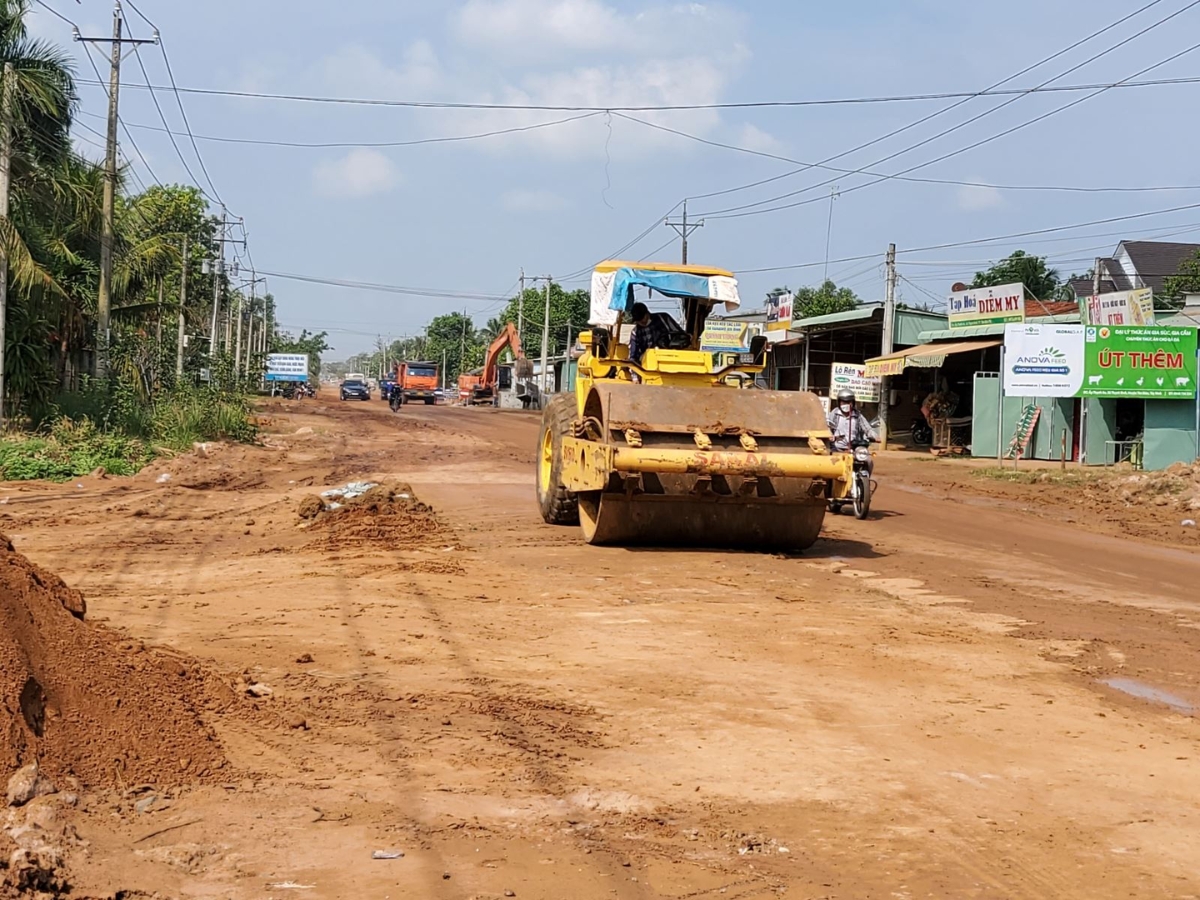
Land clearance is the process of reclaiming land and handing over the site for project implementation. (Source: Compiled)
In reality, land clearance is a rather complex process because it directly relates to people's land use rights, assets, and residences. If not carried out transparently and reasonably, this process can lead to prolonged disputes or complaints between the people and the project implementing unit.
1.2. Cases where the State reclaims land
According to current legal regulations, the State has the right to reclaim land in certain cases to serve the needs of management, socio-economic development, and ensure community safety. This is also an important basis for the compensation and site clearance process when implementing actual projects.
Common cases of State land reclamation include:
Land reclamation for national defense, security purposes, or for socio-economic development serving national and public interests.
Land reclamation due to land users violating land law, such as using land for the wrong purpose, land encroachment, or failure to fulfill obligations as prescribed.
Land recovery when land use is terminated according to legal regulations, people voluntarily return land or the land area is at risk of affecting human lives.
2. How does the compensation and site clearance process take place?
In the compensation and site clearance process , land recovery will be carried out in many steps to ensure the rights of the people and compliance with legal regulations. Each stage has specific timings, procedures, and responsible agencies.
2.1. Step 1: Land recovery notification
Before issuing the land recovery decision, the competent state agency must carry out land recovery notification according to the prescribed time. Specifically, the notification period is at least 90 days for agricultural land and 180 days for non-agricultural land.
Land recovery information will be sent to the concerned households through various forms such as local radio broadcasting, announcements on mass media, or public posting at the commune-level People's Committee headquarters and residential areas where the land is recovered. This helps people proactively prepare documents, assets, and relocation plans when necessary.
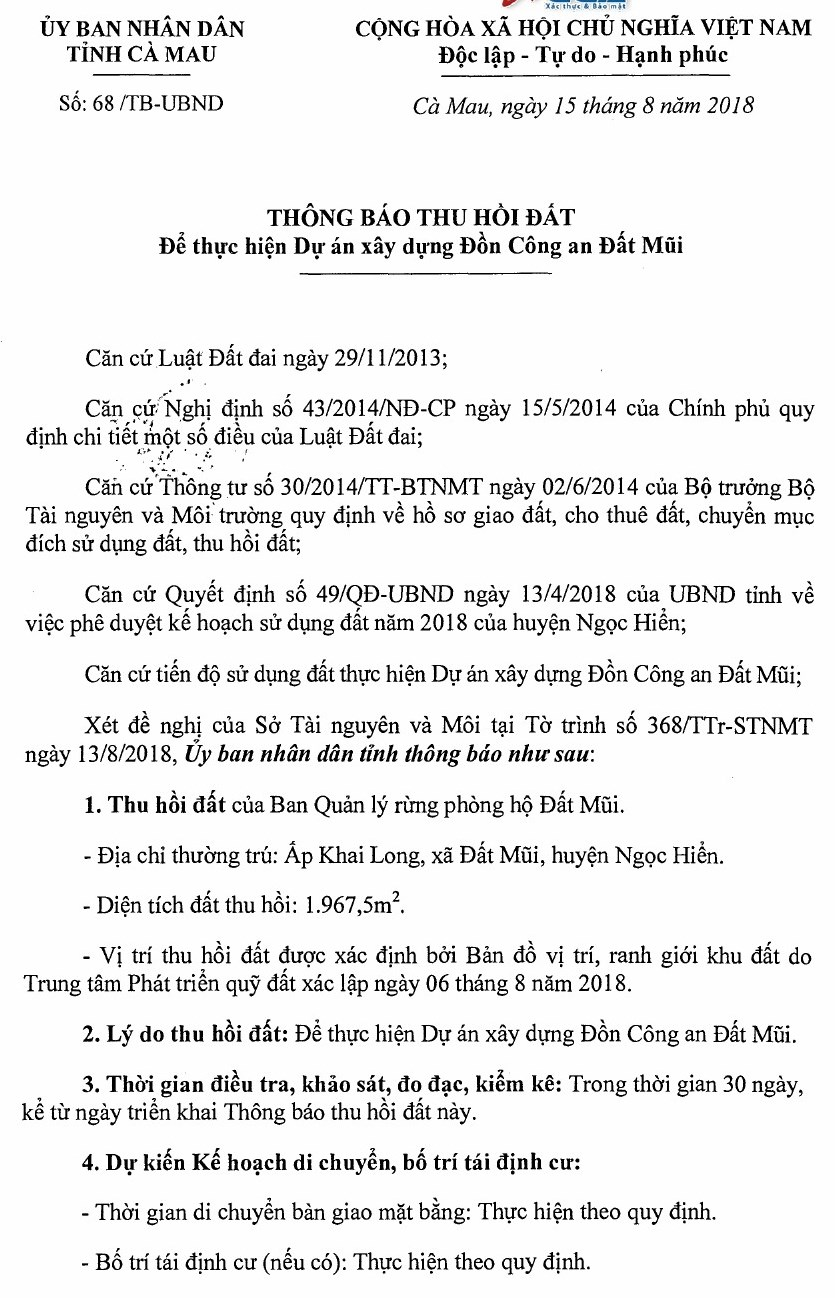
State agencies send land recovery notices to commune-level People's Committees and residential areas. (Source: Collected)
2.2. Step 2: Land Recovery
After completing the land recovery notice, competent state agencies will issue a land recovery decision in accordance with legal regulations. This is an important step in the land compensation and clearance process to officially determine the scope of land to be recovered and the applicable subjects.
According to current regulations, the authority for land recovery is decentralized as follows:
Provincial People's Committees: Have the authority to recover land from organizations, religious establishments, foreign-invested enterprises, foreign organizations with diplomatic functions, and overseas Vietnamese. In addition, Provincial People's Committees also have the authority to recover agricultural land belonging to the public land fund of communes, wards, and towns.
District People's Committee: Has the authority to recover land from households, individuals, residential communities, and overseas Vietnamese who own houses attached to land use rights in Vietnam.
After the land recovery decision is issued, competent authorities will continue to implement the steps of inventory, determining compensation levels, and resettlement support according to regulations.
2.3. Step 3: Inventory of assets on the land
After the land revocation decision is made, the competent authorities will proceed with the inventory and statistics of all assets currently on the revoked land. This is an important step in the compensation and site clearance process to determine the basis for calculating compensation and support for the people.
The commune-level People's Committee will coordinate with competent authorities to conduct an inspection of the current status of land, housing, crops, architectural structures, and related assets on the land. Land users and asset owners are responsible for coordinating, providing information, and supporting the inventory process to ensure the asset determination process proceeds more smoothly.
In case residents do not cooperate with the inventory after the prescribed period, competent authorities may proceed with mandatory counting in accordance with legal regulations. Specifically, if after 10 days from being mobilized and persuaded, the land user still does not cooperate, the Chairman of the District People's Committee will establish a dossier and issue a decision for mandatory counting enforcement to continue the land clearance work.
2.4. Step 4: Develop Compensation Plan
After completing the asset inventory, the competent authority or the unit assigned the compensation task will proceed to develop a compensation, support, and resettlement plan for people whose land is acquired. This is an important step in the land acquisition and compensation process aimed at specifically determining the rights and benefits of affected households.
The unit developing the compensation plan is usually the organization responsible for carrying out the land acquisition and compensation work for the project. The content of the plan will include the level of compensation for land, housing, assets on land, crops, architectural structures, and related support policies before being publicly disclosed for people to review and provide feedback.
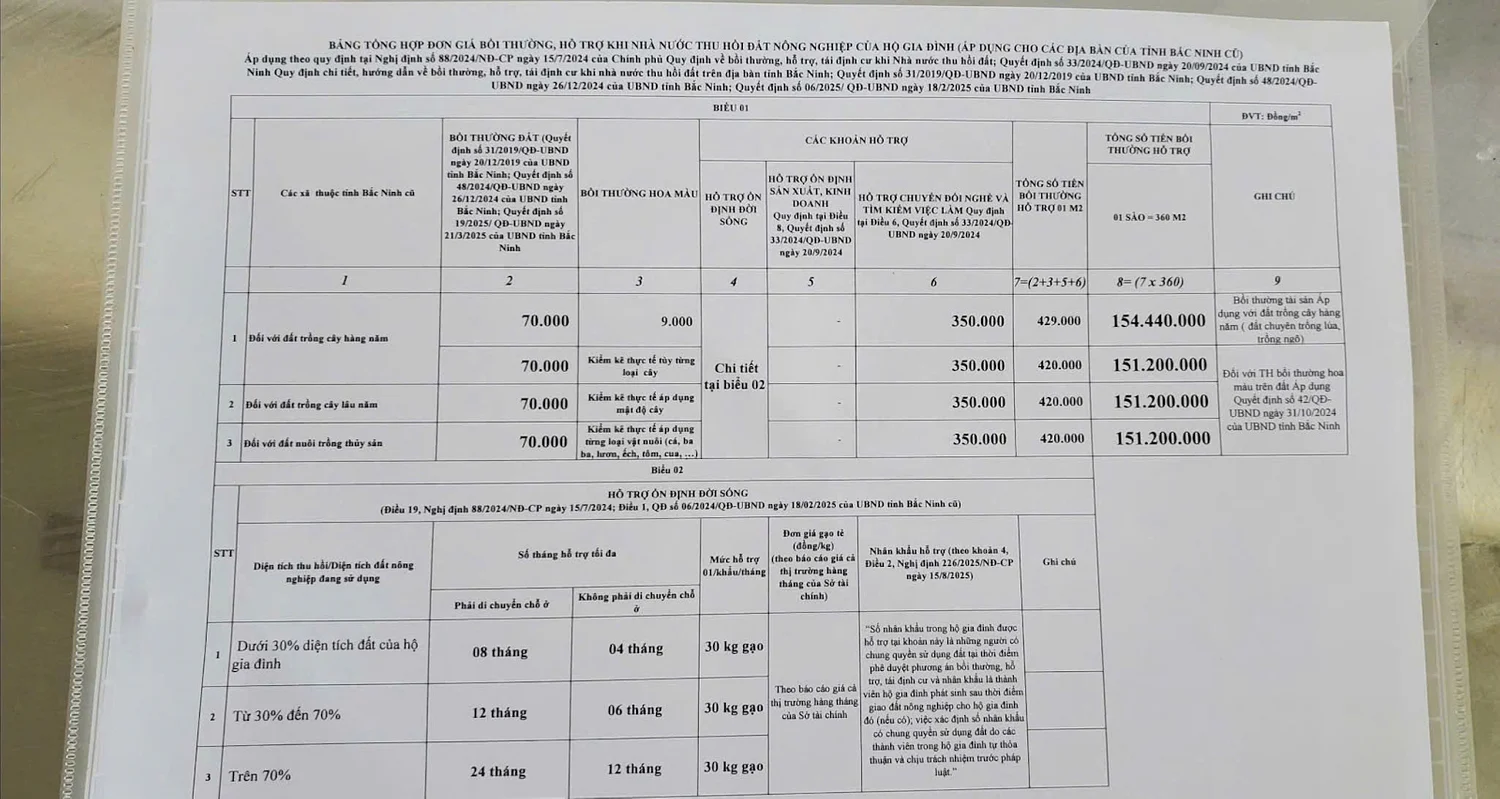
The State undertakes land compensation planning. (Source: Compilation)
2.5. Step 5: Gathering public opinion
After completing the compensation plan, relevant authorities will organize to collect opinions from people whose land is acquired to ensure publicity and transparency in the compensation and site clearance process . This is a step to help people understand their rights and related support policies before the plan is officially approved.
During this process, people can contribute opinions, provide feedback, or propose adjustments if they find any inappropriate information. Community consultation helps ensure the compensation plan is implemented reasonably, in accordance with legal regulations, and limits the occurrence of disputes or complaints later on.
2.6. Step 6: Complete Compensation File
After receiving and synthesizing opinions from the people, the competent authorities will complete the compensation, support, and resettlement file in accordance with legal regulations. This step helps to fully confirm all relevant information before issuing the official decision approving the compensation plan in the land clearance compensation process .
A completed dossier usually includes information about the land area to be acquired, assets on the land, compensation amounts, support packages, and resettlement plans, if any. After approval, the competent authorities will proceed with compensation payment and carry out site handover steps according to the project plan.
2.7. Step 7: Proceed with payment, compensation
After the compensation plan is approved and the land recovery decision is issued, the competent authority or unit will proceed with the payment of compensation, support, and resettlement funds to the people as stipulated by regulations. This is an important step in the land acquisition and compensation process to ensure the rights of households whose land is recovered.
Typically, payment will be made within 30 days from the date of the land recovery decision. People will receive compensation related to land, housing, assets attached to the land, and other support policies according to the approved plan.
In case the land area to be recovered is under dispute, the compensation amount will be temporarily deposited into the State Treasury pending the resolution of the dispute. After the case is resolved, competent authorities will proceed with the payment to the lawful land user in accordance with current regulations.

The State conducts compensation for the people. (Source: Collected)
2.8. Step 8: Site Handover to the Investor
After completing compensation, support, and resettlement payments according to regulations, households and organizations whose land is acquired will hand over the site to the investor or the project implementation unit. This is the final step in the compensation and site clearance process before the project is actually implemented.
Land users are responsible for handing over the land within the deadline specified by the competent authorities. In cases where full compensation has been received but the handover of the site is still not complied with, the competent state agency may carry out forced land recovery in accordance with current legal regulations.
Understanding the land acquisition and compensation process will help people be more proactive when their land is subject to acquisition and better protect their legal rights during project implementation. From the steps of land acquisition notice, asset inventory, compensation plan development to payment and site handover, everything needs to be carried out transparently and in accordance with legal regulations. Therefore, land users should regularly update planning information, prepare complete legal documents, and coordinate with relevant authorities to ensure the site clearance process proceeds more smoothly.