


Latest land use and construction planning 2026
Land use planning and construction planning are two concepts that many people often confuse when looking up legal information about land, housing, and investment. The article below will help you clearly understand the nature of each type of planning, their relationship, and the latest legal updates in 2026.

▲Table of Contents
1. Overview of land use planning and construction planning in the current legal system
1.1. What are land use planning and construction planning
Land use planning and construction planning are two different layers of management tools that directly impact land, works, and development space. According to the current legal framework, land use planning focuses on the allocation and zoning of land types, determining land use indicators for each period, and serving as a basis for land fund management and exploitation.
Meanwhile, current construction planning is implemented synchronously according to the Law on Urban and Rural Planning No. 47/2024/QH15. This is an important legal document consolidating regulations on urban and rural planning, effective from July 1, 2025, linked to spatial organization, technical and social infrastructure systems. Land management, simultaneously based on the Law on Land No. 31/2024/QH15, has stabilized, creating uniformity in land allocation and spatial development orientation.
1.2. Why land use planning and construction planning are easily confused
Land use planning and construction planning are easily confused because both appear in decisions related to land use rights, investment in construction, and development of residential space. When people look up a plot of land, they often encounter information about land type, area function, boundaries, building height, or transportation network simultaneously, so it is easy to understand that it is a unified system.
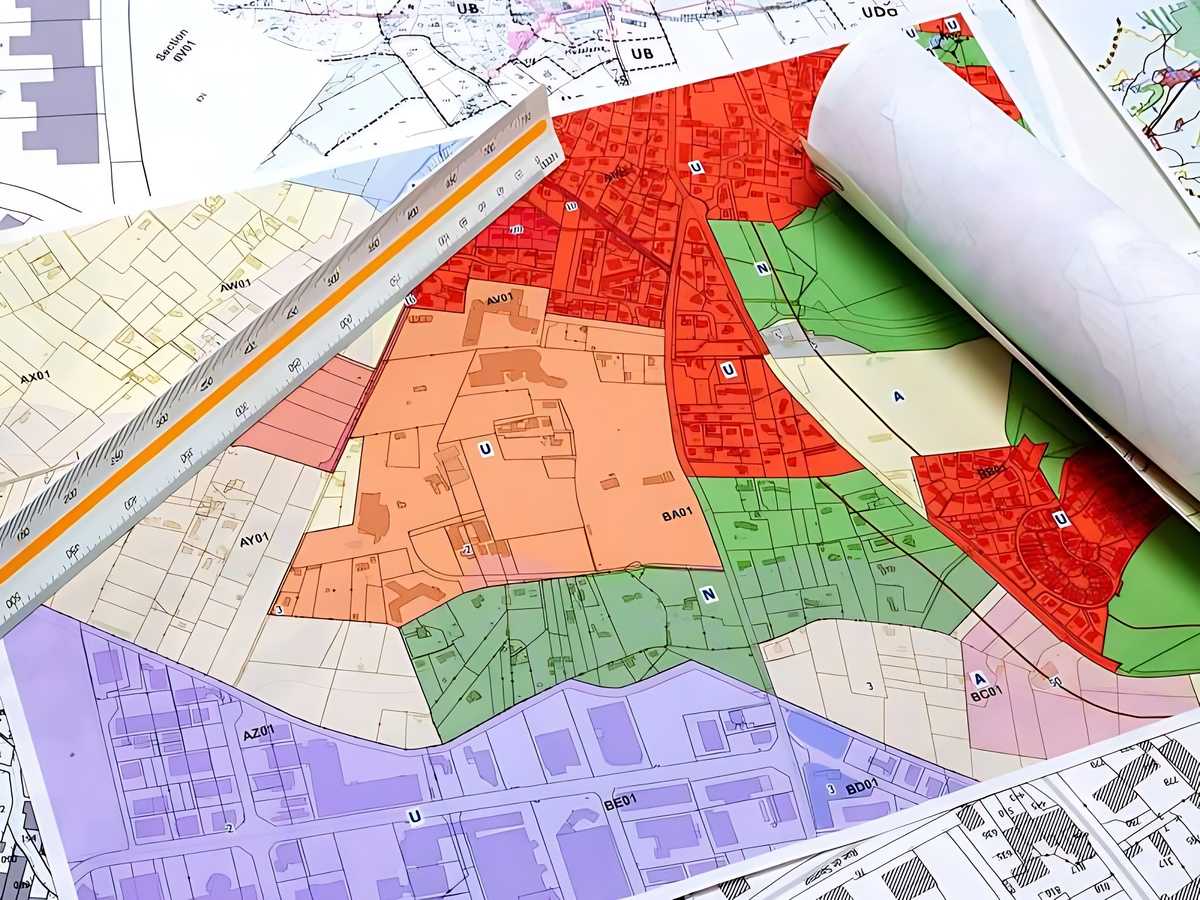
Distinguishing planning helps avoid confusion when looking up land information. (Source: Collected)
1.3. Role of land use planning and construction planning for citizens, investors, and management agencies
Land use planning and construction planning have very clear practical significance for three main groups of subjects. For citizens, this is an important basis to check construction feasibility, land use conversion, subdivision, applying for permits, or assessing transaction suitability. For investors, these two layers of planning directly affect project feasibility, development scale, infrastructure costs, and legal limitations of the land area.
2. Differences between land use planning and construction planning that need to be understood correctly
2.1. Differences in management objectives
Land use planning and construction planning differ first and foremost in their management objectives. Land use planning aims at allocating land resources according to the needs of socio-economic development, national defense, security, environmental protection, and ensuring the economical and effective use of land. Meanwhile, construction planning focuses on organizing space, site layout, technical and social infrastructure networks, and orienting the development of specific functional areas.
2.2. Contrast in content shown on maps and planning documents
Land use planning and construction planning also differ quite clearly when looking at maps and planning documents. Land use planning documents typically reflect land types, land quotas, land use zoning, and land allocation plans by period, while construction planning documents reflect spatial structure, functional areas, density, building height, transportation networks, and technical infrastructure systems.
Technically, the development and adjustment of land use plans are currently carried out according to the regulations in Circular No. 29/2024/TT-BTNMT of the Ministry of Natural Resources and Environment, which guides the technical requirements, content, and procedures for developing land use plans. For land records and Certificates, the regulations are implemented according to Circular No. 10/2024/TT-BTNMT. In the construction sector, the development of urban and rural planning projects must comply with specialized regulations and standards issued by the Ministry of Construction, including Circular No. 04/2024/TT-BXD on urban and rural planning project documentation.
Specifically, according to the Law on Urban and Rural Planning 2024, from 2026, all planning dossiers must be digitized on the national planning information system, using a digital map platform (GIS) to ensure publicity and ease of lookup for citizens.
2.3. Agencies responsible for drafting, appraising, approving, and applicable legal documents
Land use planning and plans are implemented in accordance with the Land Law 2024 and its implementing documents, falling under the scope of state land management. Meanwhile, construction planning and urban and rural planning are carried out according to the Urban and Rural Planning Law 2024 and specialized regulations on construction. The authority to develop, appraise, approve, and adjust these types of planning is exercised in accordance with current laws and the local government organizational structure applicable at each period. Citizens and investors should follow new regulations as well as guidance from competent authorities to carry out procedures in accordance with regulations.

Distinguishing authority helps in consulting planning with the correct agency and regulations. (Source: Compilation)
2.4. Differences in applied value in each administrative decision and practical procedures
Land use planning and construction planning are not always interchangeable in practical procedures. When needing to know if land meets residential land criteria, or if it is subject to change of purpose or revocation, people must cross-reference the land use plan and also the annual land use plan if the procedure is related. But when the goal is to apply for a construction permit, check building lines, construction density, land plot function, or development potential of the project, the inquirer must also consult the construction plan, zoning plan, or detailed plan depending on the area.
3. Relationship between land use planning and construction planning according to legal updates 2026
3.1. How should land use planning and construction planning be consistent?
Land use planning and construction planning, in principle, do not operate as two separate systems. Legal analysis from official sources shows that these two types of planning must be consistent in both space and time, and must support each other in the process of management, exploitation, and development. If land use planning determines land reserves for a certain function but construction planning organizes space in an incompatible direction, the processes of licensing, investment, and management will encounter conflicts.
3.2. Notable changes from the Land Law 2024 and the Law on Urban and Rural Planning
Land use planning and construction planning are being placed in a new legal context, with a relatively rapid update pace. The legal system in 2026 has achieved high synchronization thanks to the Land Law No. 31/2024/QH15 and the Law on Urban and Rural Planning No. 47/2024/QH15. A key new point is the integration of planning: construction planning must be consistent with approved land use planning. In case of conflict, higher-level planning will be the priority legal basis for adjustment, ensuring unity in state management.

New planning legal framework helps synchronize land management and urban space. (Source: Collected)
3.3. Adjustment of national land use planning and its impact on the current understanding of planning
Land use planning and construction planning in practice do not remain static according to a fixed plan for many years. On March 18, 2025, the Government issued Resolution 52 approving the task of lập Điều chỉnh quy hoạch sử dụng đất quốc gia thời kỳ 2021 đến 2030, tầm nhìn đến năm 2050 (Adjusting the National Land Use Planning for the period 2021-2030, with a vision to 2050), showing that the land planning system is still being updated to better suit new development needs. This directly impacts the understanding of citizens and investors, because when researching a land area or a project, attention must be paid to the time point, planning level, and the version of the document being applied. Information that was correct at a previous time may need to be reviewed when an adjustment task or a new document has been issued.
4. How to look up and apply land use planning and construction planning in practice
4.1. Situations requiring prior consultation of land use planning
Land use planning and construction planning do not always need to be looked up in the same order. If the goal is to buy land, request land use conversion, check if the land falls within residential land quotas, determine the possibility of land allocation or lease, or see if the land parcel is subject to conversion to another purpose, the inquirer should look up the land use plan first. This is the layer of information that helps answer fundamental questions about the land parcel's status and intended use under the current planning period. In many cases, cross-referencing with the annual land use plan is even more important as it is the basis closest to specific administrative decisions.
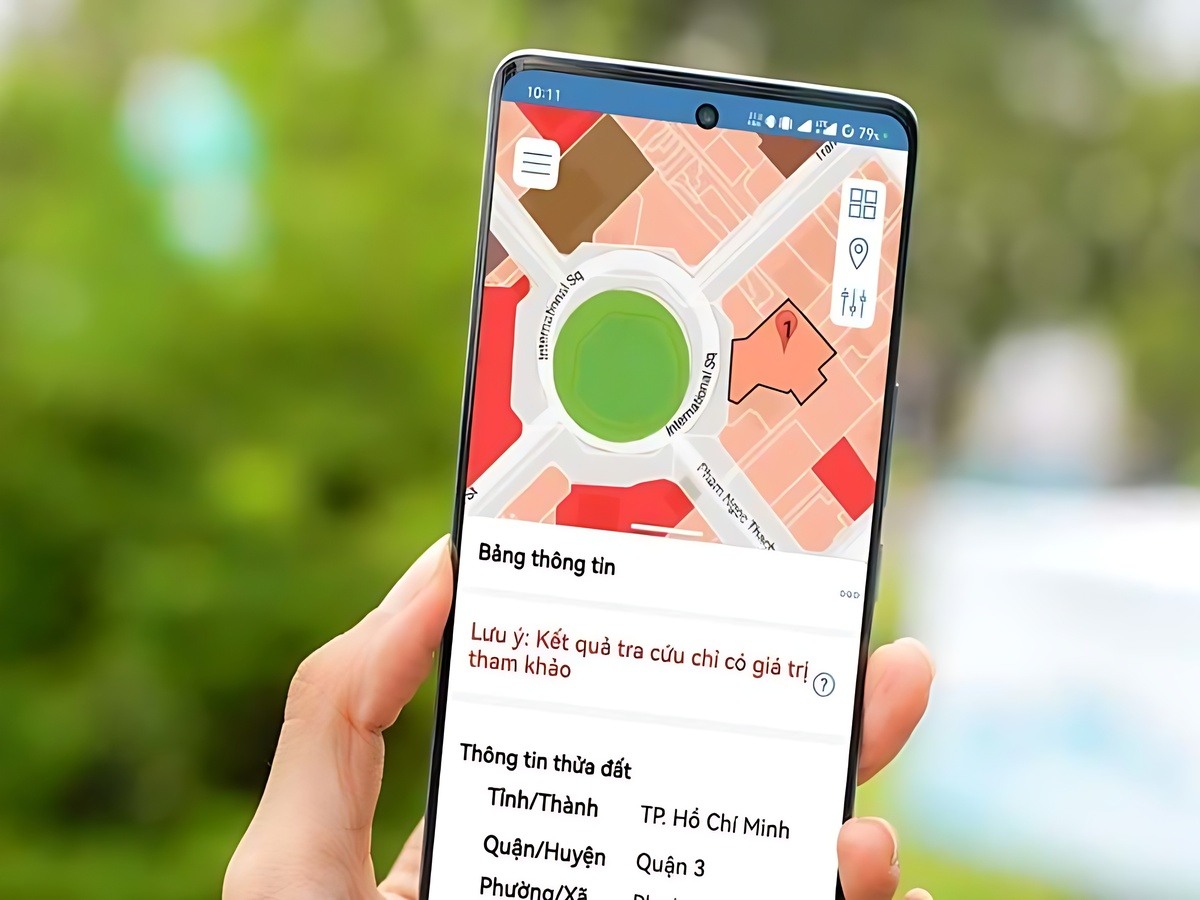
Prioritize land use planning lookup to determine clear usage objectives. (Source: Collected)
4.2. Cases requiring further review of construction planning before deciding to invest or build a house
Land use planning and construction planning need to be considered together when the goal is not just land ownership but shifts to construction or investment in projects. If the inquirer wants to obtain construction permits, check building lines, construction density, building height, land plot function, technical infrastructure, or project implementation feasibility, looking only at land use planning is not enough. At this point, construction planning, urban planning, zoning planning, or detailed planning are the layers of information that show how the land plot can be organized with structures. This difference explains why the same plot of land may be suitable in terms of land type but still be limited in construction options in practice.
4.3. Steps to look up land use planning and construction planning from official sources
Land use planning and construction planning should be looked up from official sources following a concise and practical sequence. Initially, citizens accurately identify the location of the land parcel, the administrative unit, and the purpose of the check, whether it is for land or construction. The next step is to cross-reference at the natural resources and environment agency, the construction agency, the local planning information portal, or the planning data system announced by the Ministry of Construction.
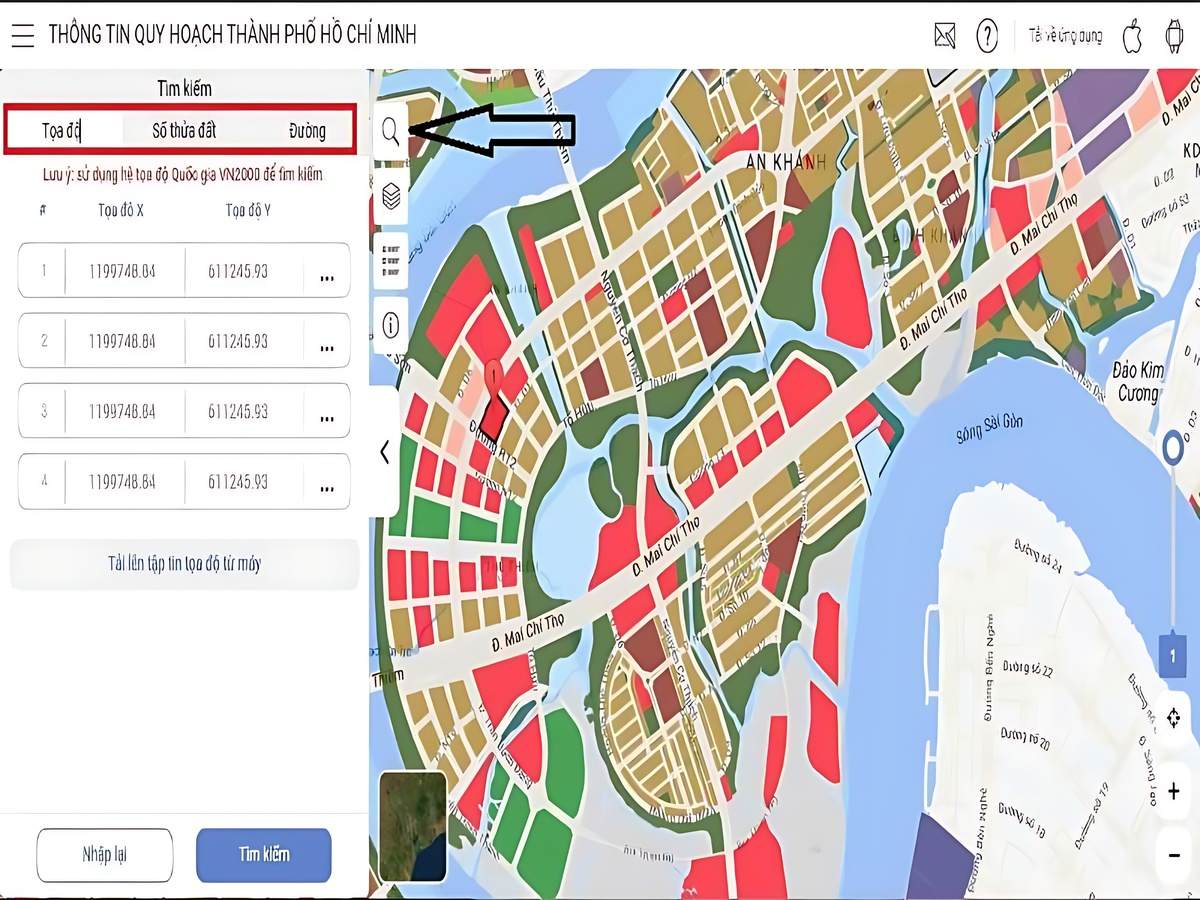
Consulting zoning plans from official sources ensures accurate information. (Source: Compiled)
From 2026, people can simultaneously look up two types of planning via the National Planning Information System. For land use planning, access the Information Portal of the Ministry of Natural Resources and Environment. For construction planning, access the Construction and Urban Planning Information Portal of Vietnam (quyhoach.xaydung.gov.vn). Notably, current GIS applications on mobile devices of provinces/cities allow overlaying between land use maps and construction maps to check the compatibility of land parcels.
4.4. Notes to avoid confusion between land use planning and construction planning when transacting
Land use planning and construction planning when applied to actual transactions need to be checked cautiously. The inquirer should not just rely on information from brokers or unclear source map copies, but should cross-reference planning timelines, the validity status of the document, and the actual status of the land.
Furthermore, it is necessary to distinguish planning from annual land use plans, as these are two layers of information with different application values in many procedures. Another note is to correctly identify the type of planning that serves as the direct legal basis for buying, selling, construction permits, or investment, avoiding the assumption that the mere existence of a plan guarantees approval of the procedure.
Land use planning and construction planning are two closely related but distinct planning layers. By understanding their true nature, updating to the correct legal framework until 2026, and knowing how to search from official sources, citizens and investors will use information about land use planning and construction planning more accurately, limit legal risks, and make more appropriate decisions.