


Latest real estate deposit regulations buyers need to know
The latest regulations on real estate deposits are an important issue that real estate buyers and sellers need to understand clearly to limit legal disputes. Understanding the deposit contract correctly will help ensure safe transactions and protect the rights of the parties involved.

▲Table of Contents
1. Overview of real estate deposit
1.1. What is a real estate deposit?
A deposit is one of the security measures for concluding or performing a contract stipulated in the Civil Code 2015. Accordingly, one party will give to the other party a sum of money, property, or valuable item within a specified period to ensure the conclusion or performance of the contract as agreed between the parties.
In real estate transactions, a property deposit is often used to confirm that the purchase and sale have been agreed upon by both parties before signing the official transfer contract. This deposit is usually considered an advance payment and will be deducted from the purchase price upon completion of the transaction.

Real estate deposit is the act of the buyer paying an amount in advance to ensure the execution of a real estate transaction. (Source: Collected)
According to the latest real estate deposit regulations , if the depositor refuses to enter into or perform the contract, the deposit amount will belong to the recipient of the deposit. Conversely, if the recipient of the deposit refuses to enter into or perform the contract, they must return the deposit and compensate an amount equivalent to the value of the deposited asset, unless the parties have other agreements in the deposit contract.
1.2. Purpose of real estate deposit
In real estate transactions, the deposit is made to ensure the parties will proceed to sign and execute the contract for buying and selling land/property according to the initial agreement. This is considered an important intermediate step that helps the buyer reserve the property, while also demonstrating the parties' good faith in the transaction before completing the related legal procedures.
Besides ensuring contract execution, a deposit also helps limit the situation where one party unilaterally cancels the transaction or sells the asset to another person when an agreement has been reached. According to the latest regulations on real estate deposits, if one party violates the deposit commitment, they will be responsible according to the agreed terms or current legal provisions.
2. Latest regulations on real estate deposits
Currently, the law does not have mandatory regulations on what percentage of the property value must be deposited for the contract to be effective. However, based on practical experience and opinions from many legal experts, buyers should generally only deposit about 10% to 20% of the property value to limit risks during the transaction process. For example, if a house is valued at around 3 billion VND, the appropriate deposit amount usually ranges from about 300 to 600 million VND, depending on the agreement between the parties.

There are currently no specific regulations regarding the amount of money for real estate deposits. (Source: Collected)
According to the latest real estate deposit regulations, the collateral property can be cash, precious metals, gemstones, or other valuable assets. However, in current real estate transactions, cash or bank transfer remains the most common form of deposit. To ensure rights and interests, the deposit should be made in writing with full information about the deposit amount, payment deadline, responsibilities of the parties, and dispute resolution methods when one party breaches the commitment to limit future disputes.
3. Latest Real Estate Deposit Procedures
To ensure real estate transactions are transparent and comply with the law, parties should make deposits in a clear sequence and have complete supporting documents. Understanding the latest regulations on land deposit amounts will help limit disputes as well as protect the rights of both buyers and sellers during the transaction process.
3.1. Step 1: Drafting the land purchase deposit contract
After both parties agree on the selling price and the deposit amount, the parties will proceed to draft the real estate purchase deposit contract. This is an important document to record all agreements between the parties and serves as a legal basis if disputes arise in the future.
Typically, a deposit contract will include contents such as personal information of the buyer and seller, the deposited asset, the purpose of the deposit, the transfer price, payment method, deposit period, rights and obligations of the parties, as well as a resolution plan in case of contract breach. In addition, the parties also need to agree on the responsibility for notarization and property title transfer after the transaction is completed.
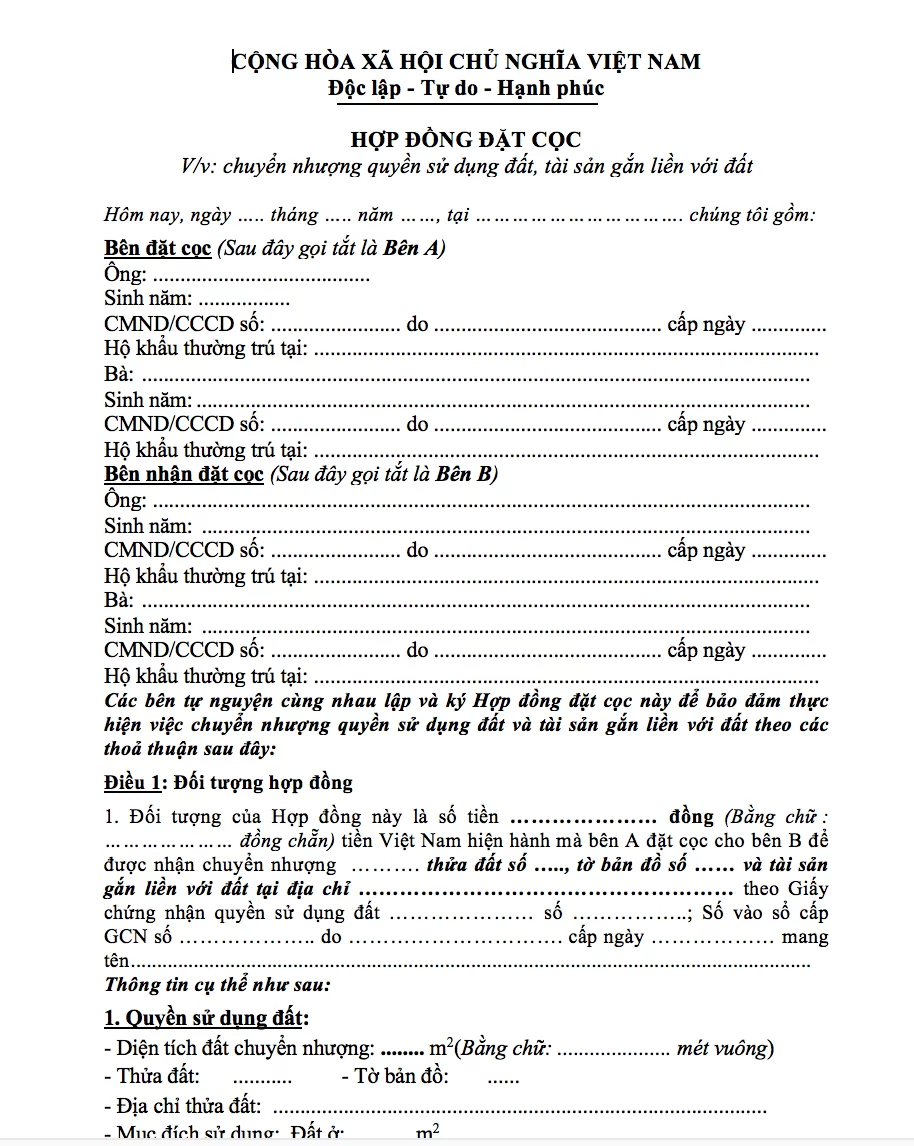
Sample contract for real estate deposit. (Source: Collected)
3.2. Step 2: Signing the house purchase deposit contract
After completing the drafting and agreeing on the content, the parties will proceed to sign the real estate purchase deposit contract. The signing should be done directly between the depositor and the deposit recipient to ensure transparency in the transaction.
In practice, the buyer should have an additional witness when signing a deposit contract to increase legal validity and limit future disputes. The witness should be someone not related to the transacting parties and needs to sign clearly in the contract to serve as a basis for verification when necessary.
3.3. Step 3: Executing the land purchase deposit contract
After the contract is signed, the buyer will proceed to pay the deposit amount as agreed between the two parties. To ensure safety and have proof of the transaction, payment should be made via bank transfer instead of cash transactions.
Bank transfer not only helps the payment process become more transparent but also creates a basis for proof in case of disputes related to the deposit. After completing this step, the parties will continue to perform notarization procedures and property transfer according to the content committed in the deposit contract.
4. Common risks when depositing to buy property
Although depositing is a common step in real estate transactions, if legal information and contract content are not carefully checked, buyers are very likely to encounter arising risks during the transaction process. Therefore, before signing, people should thoroughly understand the latest real estate deposit regulations to limit disputes and protect their rights.
4.1. Depositing when legal status is unclear
One of the most common risks is buyers making a deposit when the property lacks complete legal documents or is not yet eligible for transfer according to regulations. In many cases, houses and land do not have a red book (so do), pink book (so hong), or are subject to planning issues, but buyers still proceed with the deposit due to a lack of checking the actual information.
This can prevent the transaction from proceeding or prolong the transfer time, affecting the buyer's rights. Therefore, before making a deposit, buyers should carefully check the land use rights certificate, planning information, and the property's legal status.
4.2. Properties under dispute or mortgage
Some properties are under dispute of ownership or have been mortgaged by the owner at the bank, but the buyer is not fully informed. If not checked carefully, the buyer may encounter difficulties during the notarization, title transfer process, or even legal disputes may arise after placing a deposit.
To limit risks, buyers should check mortgage information at the Land Registration Office, notary office, or request the seller to provide full legal documents related to the property before signing the deposit contract.
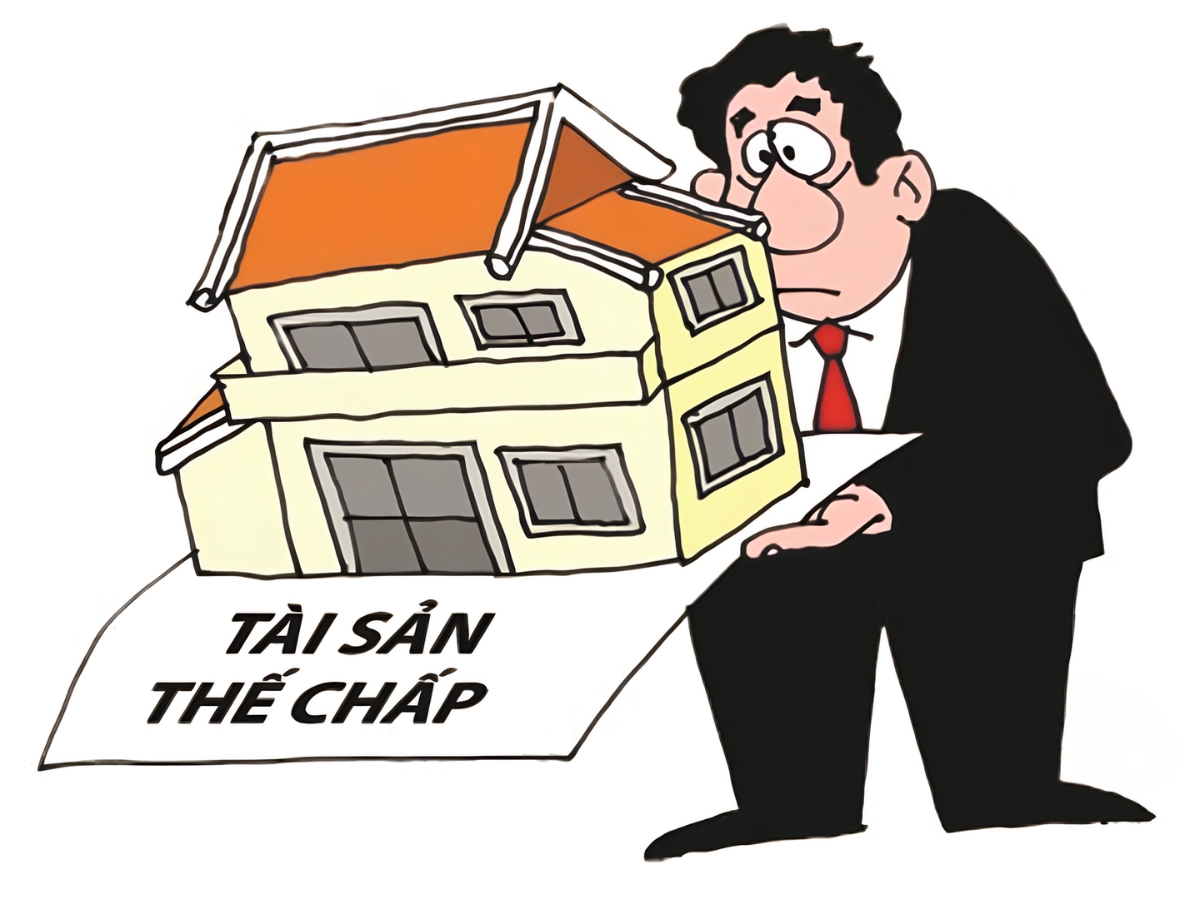
Mortgaged properties will face difficulties in the buying and selling process. (Source: Collected)
Deposit contracts lack important clauses
Many deposit contracts are drafted carelessly, lacking important contents such as payment deadlines, responsibilities of the parties, deposit penalty clauses, or solutions for contract breaches. This is the cause of disputes that are difficult to resolve or make it hard to protect the rights of the parties.
To ensure transaction safety, deposit contracts should be clearly drafted in writing with all necessary legal content. Buyers should also carefully read the terms before signing or seek assistance from lawyers, legal experts to review the contract if the transaction is of high value.
5. When is the deposit forfeited or must be compensated?
In real estate transactions, a deposit is considered a measure to ensure the signing or performance of a real estate purchase and sale contract. Therefore, if one of the parties fails to fulfill their commitment, they may have to forfeit the deposit or compensate the deposit amount according to the agreement and current legal regulations.
5.1. Case where the buyer violates the commitment
According to the latest regulations on real estate deposits, if the buyer is the one who made the deposit but later unilaterally refuses to enter into or continue the real estate purchase and sale contract, the deposit amount will usually belong to the party receiving the deposit, unless the parties have a different agreement.
For example, after signing the deposit contract, if the buyer changes their mind and does not continue the transaction or fails to pay within the committed deadline, the seller has the right to keep the deposit amount according to the terms of the contract signed between the two parties.
5.2. Case where the seller refuses the transaction
If the seller has received the deposit but then refuses to sign the transfer contract or sell the property to another person, they must return the deposit to the buyer and compensate an additional amount equivalent to the deposit value, unless the contract stipulates otherwise.
In practice, this is often called "den coc" (deposit forfeiture penalty) and is a mechanism to protect the buyer's rights when the seller fails to fulfill the real estate transaction commitment according to the signed deposit contract.
5.3. Handling disputes related to deposit money
When disputes arise related to the deposit money, the parties should prioritize negotiation and review the agreed-upon contract terms to find a suitable resolution. Having a contract with full clauses on payment deadlines, party responsibilities, and violation handling methods will facilitate the dispute resolution process.
In case of inability to reach a mutual agreement, the parties may request mediation or file a lawsuit at a competent Court for resolution in accordance with the law. Therefore, before signing a real estate deposit contract, buyers and sellers should carefully review the contract content to limit future legal risks.
Understanding the latest regulations on real estate deposit money will help buyers and sellers avoid many legal risks during real estate transactions. From determining the appropriate deposit amount, drafting a clear contract, to thoroughly checking property legalities, these are all important steps to ensure the rights of the parties. Therefore, before depositing for real estate transactions, people should thoroughly research property information, read the contract terms carefully, and prioritize transparent transactions to limit future disputes.