


Latest regulations on minimum subdivision area to know
Regulations on the minimum land subdivision area are a matter of great interest to many people when buying, selling, gifting, or dividing land. Understanding the conditions for land subdivision will help limit legal risks and ensure the procedure is carried out smoothly.

▲Table of Contents
1. Information about land subdivision
1.1. What is land subdivision?
Land subdivision is the process of dividing a land parcel that has been granted a land use rights certificate into many different smaller parcels according to the law. After completing the procedures, each new land parcel will have its own legal information and certificate to serve the needs of use, transfer, or inheritance.
Generally, land subdivision is carried out when landowners want to divide land for relatives, sell a portion of the area, or serve real estate investment needs. However, to be subdivided, the land parcel must meet conditions related to area, planning, and infrastructure according to the minimum subdivision area regulations in each locality.
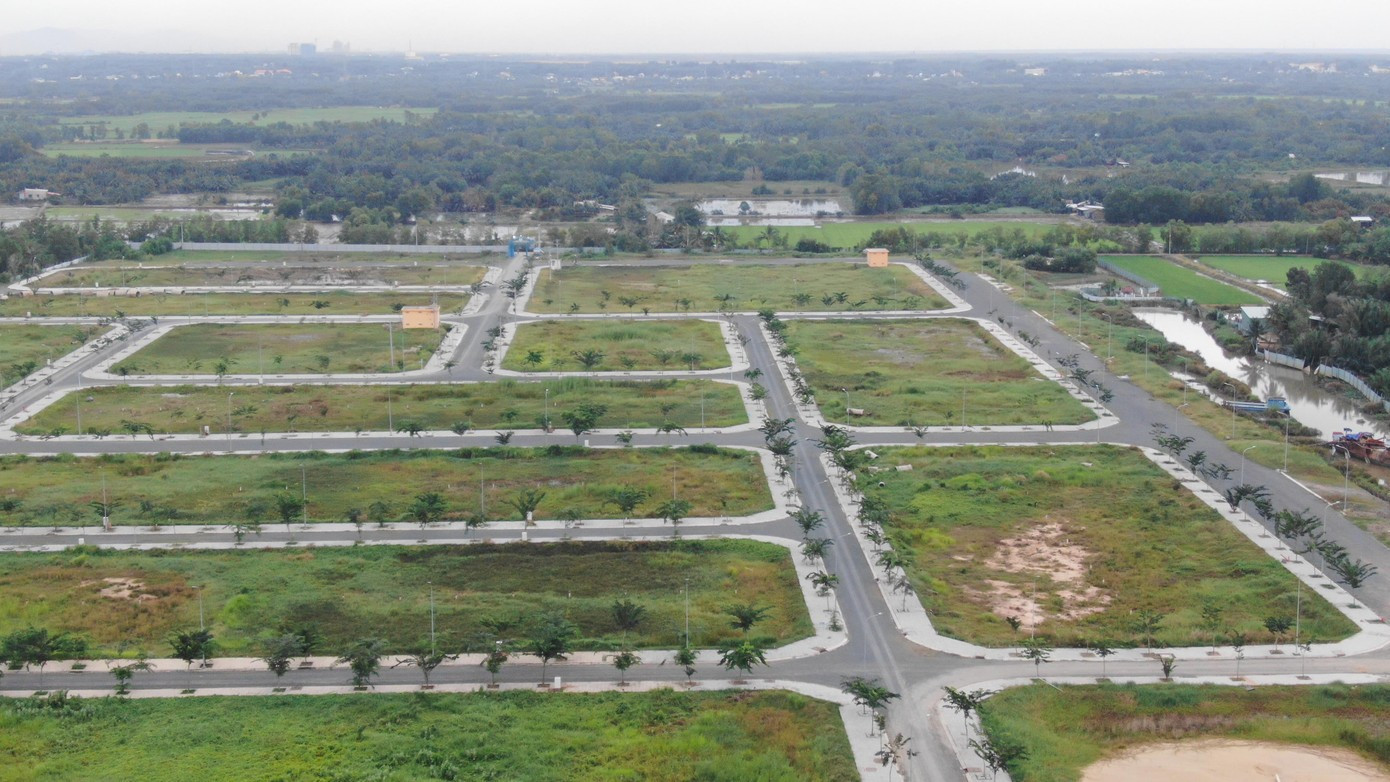
Land subdivision is the act of dividing a plot of land into many smaller plots according to legal regulations. (Source: Collected)
1.2. Conditions for Land Subdivision
To carry out land subdivision according to legal regulations, land users need to meet all conditions related to legal aspects and the current status of the land plot. This is an important factor that helps the process of subdivision, transfer, or renaming proceed more smoothly.
The basic conditions for subdivision include:
Having a Certificate of Land Use Rights, Ownership of Houses and Other Assets Attached to Land according to the provisions of law.
Land is not disputed and no claims arise regarding land use rights.
Land use rights are not seized to ensure enforcement of judgments or other financial obligations.
The land still has a valid term of use according to the information recorded on the land use rights certificate.
The parcel of land meets the conditions regarding minimum area, frontage width, or side dimension according to the regulations on minimum area for subdivision issued by the People's Committee of each province and city.
2. Current Regulations on Minimum Area for Subdivision
Currently, minimum land subdivision area regulations will vary depending on each province, city, and specific land type. Besides the minimum area, many localities also stipulate additional requirements regarding street frontage width, parcel depth, and infrastructure conditions to ensure compliance with urban planning and land management. Therefore, before carrying out land subdivision, people should carefully check the regulations in the locality where the land is located to avoid rejection of applications or legal complications.

Each province and city will have different regulations on the minimum area for subdivision. (Source: Collected)
Regarding Hanoi
In Hanoi, regulations on minimum land parcel division area are applied differently depending on the area to ensure compliance with urban planning and infrastructure. In addition to the minimum area, the land parcel after division must also meet the conditions regarding frontage width and depth according to current regulations.
| Area | Minimum depth | Minimum frontage width | Minimum land parcel division area |
Wards, towns
From 4 m and above
From 4 m and above
Not less than 50 m²
Plain area communes
From 4 m and above
From 5 m and above
Not less than 80 m²
Midland communes
From 4 m and above
From 5 m and above
Not less than 100 m²
Mountain communes
From 4 m and above
From 6 m and above
Not less than 150 m²
2.2. For Ho Chi Minh City
In Ho Chi Minh City, regulations on minimum plot division area are divided by area to suit population density and urban development orientation. Besides the minimum area, the plot after division must also meet the conditions for minimum frontage width and depth.
| Area |
| Scope of Application | Subdivision Conditions for Residential Land | |
| Area 1 | Districts 1, 3, 4, 5, 6, 8, 10, 11, Go Vap, Binh Thanh, Phu Nhuan, Tan Binh, Tan Phu | Minimum area 36 m², frontage width and depth not less than 3 m |
| Area 2 | District 7, 12, Binh Tan, Thu Duc City and town areas of districts | Minimum area 50 m², frontage width and depth not less than 4 m |
Area 3
Districts Binh Chanh, Cu Chi, Hoc Mon, Nha Be, Can Gio (excluding towns)
Minimum area 80 m², frontage width and depth not less than 5 m
For agricultural land, the minimum area for subdivision in Ho Chi Minh City also has specific regulations depending on the land type. Specifically, land for annual crops and other agricultural land must be from 500 m² upwards, while land for perennial crops, aquaculture, or salt production must be from 1,000 m² upwards to be eligible for subdivision.
2.3. For Da Nang
In Da Nang, regulations on minimum land parcel separation area are divided according to specific districts, wards, and areas. In addition to the minimum area, the land parcel after separation must also meet the condition regarding the width of the parcel's edge adjacent to the traffic road.
| Applicable Area | Minimum Area | Minimum Parcel Edge Width |
| Wards belonging to Hai Chau, Thanh Khe districts | 50 m² |
3.5 m
Wards of Son Tra District; My An, Khue My Wards of Ngu Hanh Son District; Khue Trung, Hoa Tho Dong Wards of Cam Le District; Hoa Minh, Hoa Khanh Nam Wards of Lien Chieu District
60 m²
4 m
Hoa An Ward of Cam Le District; remaining wards of Lien Chieu District
70 m²
4 m
Remaining wards of Ngu Hanh Son and Cam Le Districts; areas along the frontage of National Highway 1A, Truong Son, National Highway 14G, DT 602, DT 605 in Hoa Vang District
80 m²
4 m
Communes belonging to Hoa Vang district and Hoang Sa district
120 m²
5 m
In addition to the above conditions, the minimum area for subdivision will not include areas within road alignment plans, safety corridors for construction, or red line boundaries. Simultaneously, subdivision must ensure access to a transportation route for each newly formed plot of land.
For some special cases such as land subject to planning but not yet recovered or not yet converted for land use purposes according to the plan, Da Nang also applies specific regulations on minimum area for land subdivision to ensure the rights of landowners.
Note: Besides major cities like Hanoi, Ho Chi Minh City, or Da Nang, people can fully look up regulations on minimum area for land subdivision in their locality through the electronic information portal of the Provincial People's Committee or reputable legal websites. This is a way to quickly update the latest regulations related to land subdivision area, frontage conditions, and land use planning.
3. How much does land subdivision cost?
When carrying out the land subdivision procedure, land users may have to pay various fees depending on the intended use and the actual file status. Besides learning about regulations on minimum land subdivision area, people should also proactively budget for costs such as surveying fees, red-book issuance fees, registration fees, hồ sơ appraisal fees, or personal income tax if there is a transfer or gift of land use rights.

To subdivide land plots, people must pay fees according to regulations. (Source: Collected)
3.1. Land plot surveying fee
Survey fees are payments to the unit performing land survey services to serve land subdivision and land registration dossier preparation. This is a service fee, so there is no fixed collection rate but will depend on each surveying unit and the actual land area.
Usually, survey costs range from approximately 1.8 to 2.5 million VND for each land subdivision dossier. In some areas or cases of land with complex conditions, the actual fee may be higher.
3.2. Fee for issuing the red book
Sau khi hoàn tất thủ tục tách thửa, người sử dụng đất có thể phải nộp lệ phí cấp giấy chứng nhận quyền sử dụng đất mới đối với các thửa đất được hình thành sau tách thửa.
Mức lệ phí này do Hội đồng nhân dân từng tỉnh, thành phố quy định nên sẽ khác nhau tùy địa phương. Tuy nhiên, đa số các tỉnh thành hiện nay áp dụng mức thu khá thấp, thường dưới 100.000 đồng cho mỗi giấy chứng nhận.
3.3. Lệ phí trước bạ
Lệ phí trước bạ chỉ phát sinh trong trường hợp việc tách thửa đi kèm với hoạt động chuyển nhượng, tặng cho hoặc sang tên quyền sử dụng đất.
Cách tính lệ phí trước bạ thường được áp dụng như sau:
Registration fee = Price for calculating registration fee × Registration fee rate in %
The specific rate will depend on land prices issued by the locality and each actual transaction case.
3.4. File appraisal fee for issuing the red book
The file appraisal fee is a fee to serve the process of functional agencies checking files, verifying conditions for land subdivision, and issuing land use right certificates.
This fee is also stipulated by the People's Councils of provinces and cities, so the collection rate will vary between localities. Depending on the file and the value of the land use rights, the actual fee may fluctuate.
3.5. Personal Income Tax (PIT)
Personal income tax usually arises when land subdivision is associated with the transfer or gift of land use rights in accordance with the law.
The current common calculation method:
PIT payable = Taxable income × Tax rate
However, some cases of transfer or gift between family members may be exempt from personal income tax under current regulations.
Clearly understanding regulations on minimum land subdivision area will help people be more proactive in the process of buying, selling, transferring, or dividing land use rights. Because each locality will apply different regulations regarding area, frontage, depth, and infrastructure conditions, it is very necessary to carefully look up information before carrying out the procedure. In addition, landowners should also check further the planning status, legal status, and related costs to limit arising risks and ensure the land subdivision process goes more smoothly.