


Meaning of Feng Shui Wall Art to Attract Wealth and Prosperity
In modern home design, wall paintings not only bring aesthetic value but also affect overall feng shui. Understanding the correct meaning of feng shui-compliant wall paintings will help homeowners activate wealth, balance energy, and create a harmonious living space, attracting good fortune.

▲Table of Contents
1. Overview of the Meaning of Feng Shui Compliant Wall Paintings in Homes
1.1. Activating Living Space Energy
Wall paintings are considered a factor contributing to regulating energy flow in the home, especially in urban apartments today. According to a recent housing market survey, the majority of buyers in the mid-to-high-end segment prioritize spaces that have undergone professional feng shui consultation from the interior design stage. Understanding the meaning of feng shui compliant wall paintings helps optimize air circulation, limiting cramped and lifeless spaces in modern townhouse structures.
Furthermore, paintings also affect residents' psychology during daily life. Paintings with positive energy often help reduce stress, improve sleep quality, and enhance work-from-home productivity. The combination of aesthetic elements and feng shui is increasingly emphasized in interior design, especially in mid-range and high-end residential areas.
1.2. Meaning according to the Five Elements
The principle of the Five Elements, comprising Metal, Wood, Water, Fire, and Earth, plays an important role in choosing paintings suitable for living spaces. Each element represents a different form of energy and has clear mutual generation or mutual destruction cycles. For example, landscape paintings belonging to the Water element are often used to activate the flow of wealth in the home.
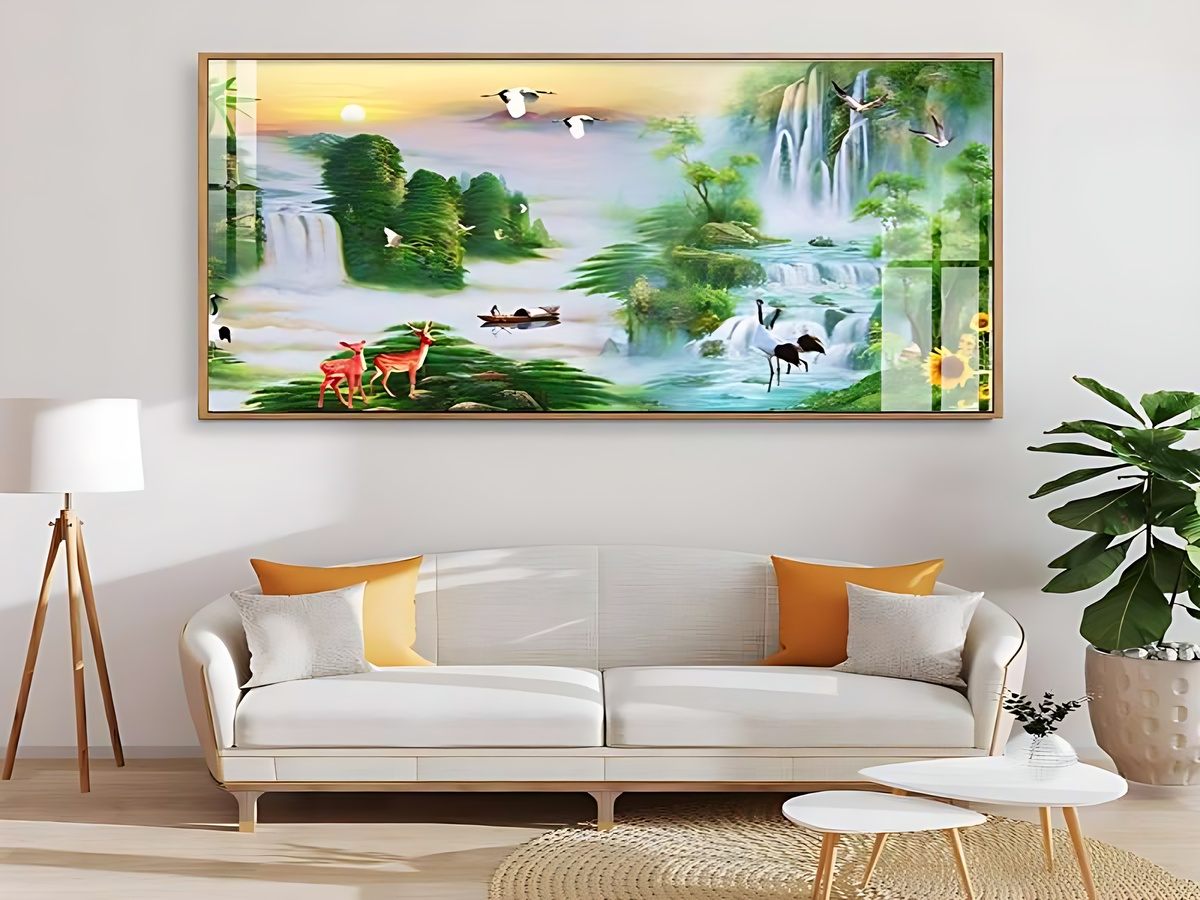
Balancing the Five Elements through paintings helps mitigate unfavorable house directions and stabilize finances. (Source: Collected)
Balancing the elements through paintings helps create a more harmonious space, especially in homes with unfavorable orientations. Users can adjust energy by choosing paintings that suit their personal destiny, thereby supporting mental stability and financial factors within the family.
1.3. Impact on real estate value
In the context of the real estate market in 2026, apartments furnished to feng shui and aesthetic standards often possess significantly better price appreciation margins and higher liquidity compared to the general market. Wall paintings are not just decorative items but also create artistic highlights, contributing to positioning class and enhancing the overall value of the property.
For homebuyers, the initial impression upon entering a space plays a crucial role in the transaction decision. Apartments with well-arranged paintings often bring a pleasant and balanced feeling, thereby increasing liquidity. This indicates that feng shui paintings are not only related to spirituality but also directly affect economic value.
2. Classification of Feng Shui Wall Painting Meanings by Theme
2.1. Landscape Paintings to Attract Wealth
Landscape paintings, especially mountain and water paintings, are often chosen for large apartments of 80m² or more. The image of mountains behind and water in front symbolizes the "leaning on mountains, facing water" posture, considered an element that brings stable wealth. This is a popular type of painting in high-end housing projects in Vietnam.
Additionally, images of waterfalls, lakes, or flowing rivers also symbolize the flow of money. When placed correctly, landscape paintings help make the space balanced and create a relaxing feeling for users. This is also a popular choice in living room design for many apartments in big cities.
2.2. Feng Shui Animal Symbols
Animal paintings are highly symbolic, often associated with messages of career and success. The "Ma Dao Thanh Cong" (horses arriving successfully) motif is often used in workspaces or living rooms, symbolizing growth and advancement. Meanwhile, carp transforming into dragons represent the process of effort and advancement.

Animal paintings symbolize advancement and prosperity in living spaces. (Source: Collected)
Peacocks are symbols of wealth and beauty, often chosen for highly decorative spaces such as the living room or common living area. The use of animal paintings needs to be compatible with the homeowner's destiny to avoid conflict, while ensuring aesthetic elements harmonize with the overall interior.
2.3. Flower and leaf paintings and balance
Flower and leaf paintings bring a gentle feeling, suitable for many spaces from bedrooms to living rooms. Peonies are often considered symbols of prosperity, while lotus flowers represent purity and balance. These elements help improve the quality of life in crowded urban environments.
Additionally, the image of bamboo also represents steadfastness and resilience. These types of paintings are often used in home offices or study rooms, helping to increase concentration. Choosing floral paintings requires attention to color and composition to suit the room's area.
2.4. Calligraphy paintings and spiritual value
Calligraphy paintings carry high spiritual value, often appearing in traditional spaces or combined with modern styles. Characters like Phuc, Loc, Tho are considered symbols of luck and stability in the family. This is a type of painting with high applicability in many types of housing.
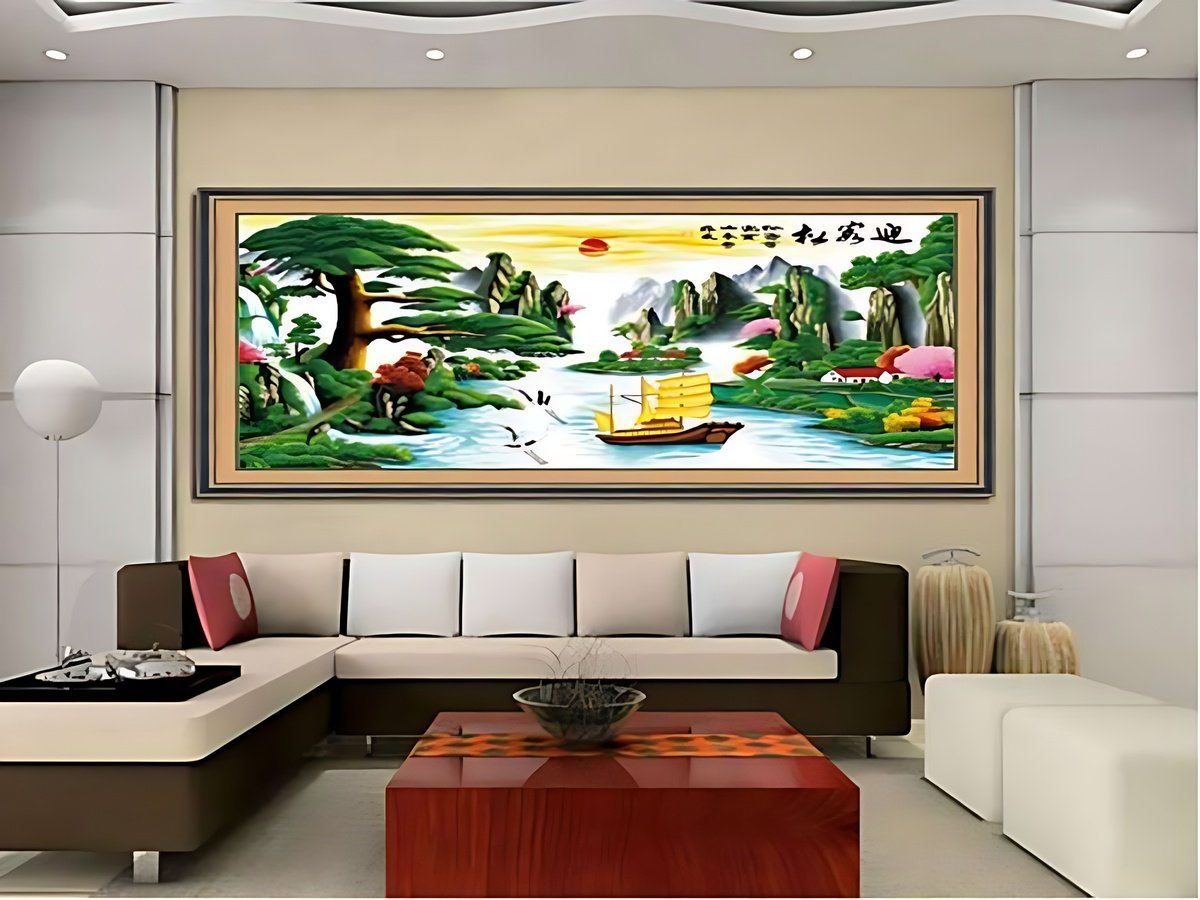
Calligraphy painting harmoniously combines traditional values and modern aesthetics. (Source: Collected)
Furthermore, the character 'An' is often used to create a sense of peace, especially in bedrooms or prayer rooms. The combination of calligraphy with modern design helps the space become balanced between tradition and modernity, while also increasing the overall aesthetic value.
3. How to choose feng shui compliant wall art according to the homeowner's element
3.1. Art suitable for the Metal element
People with the Metal element are usually suited to white, metallic gold, or light gray colors. Paintings with metal or light elements are often preferred to enhance positive energy in the space. In modern apartments, abstract paintings with bright tones are also commonly chosen. Conversely, people with the Metal element should limit the use of paintings with Fire elements, such as dark red or orange. Choosing the right artwork helps maintain stability in work and finances, especially for those working in business or finance.
3.2. Paintings for the Wood Element
People with the Wood element are often suited to green colors and nature themes. Paintings of forests, gardens, or natural landscapes help enhance growth and positive energy. This is a popular choice for small living spaces. It is necessary to avoid metallic elements in the paintings to limit conflict. When chosen correctly, feng shui paintings help people with the Wood element maintain balance in their lives and support personal development.
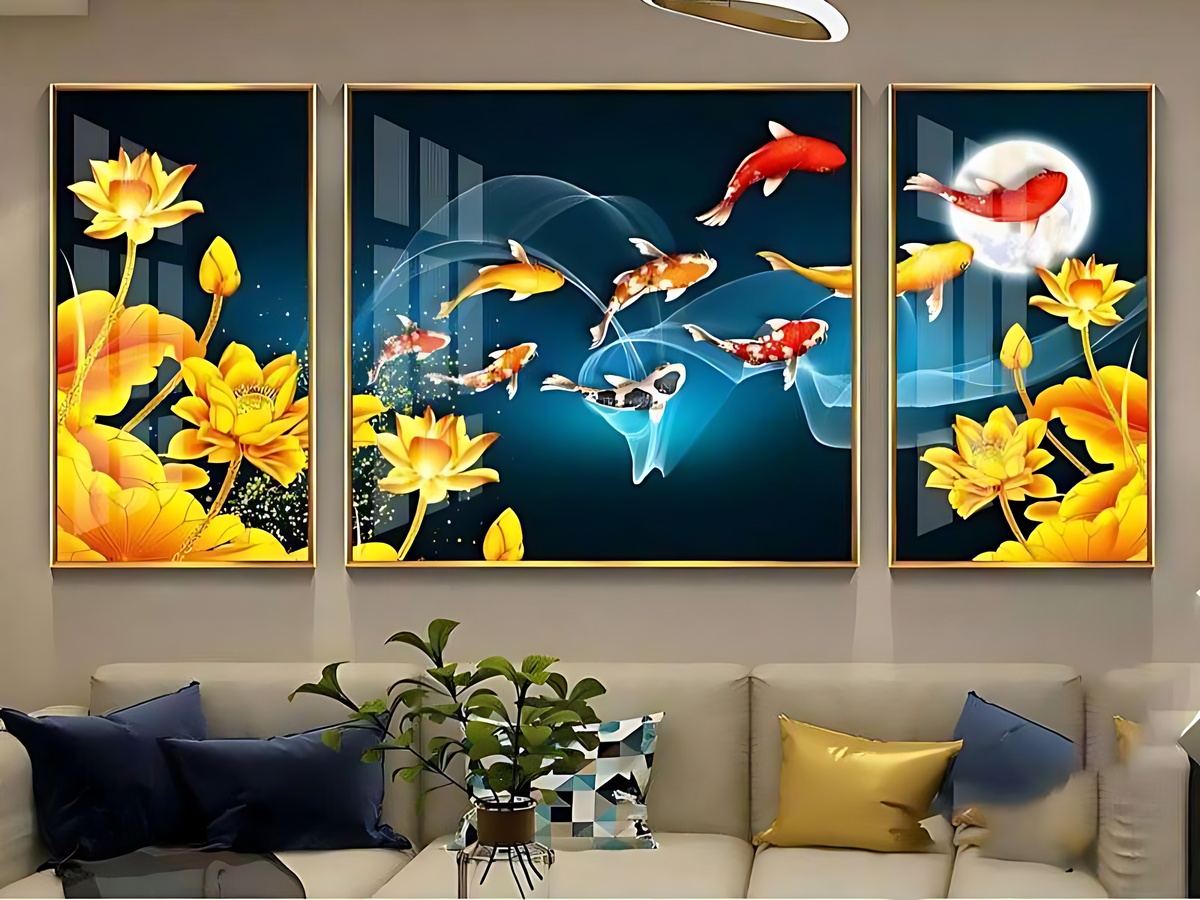
Nature paintings, forest paintings help increase positive energy and development for people of the Wood element. (Source: Collected)
3.3. Paintings suitable for the Water element
People of the Water element are often suited to blue or black colors, along with themes related to water such as the sea, rivers, or lakes. These images symbolize flexibility and the flow of fortune. In modern apartments, sea paintings are quite popular. Using paintings that match one's element helps support their career and creates a sense of relaxation in the living space. In particular, paintings with an open composition often help small spaces appear visually more spacious.
3.4. Paintings Suitable for the Fire Element
People of the Fire element are often suited to colors like red, orange, or purple, along with energetic imagery such as the sun or sunflowers. These paintings help enhance enthusiasm and dynamism in daily life. However, colors need to be balanced to avoid creating a feeling of being too hot or causing stress. When properly arranged, feng shui paintings help people of the Fire element maintain stability and development in their work.
3.5. Paintings suitable for the Earth element
People of the Earth element are usually suited to brown or earth yellow colors, along with themes such as mountains or natural landscapes. These images help create a sense of solidity and stability in living spaces. This is a popular choice in townhouses and villas. Using paintings that suit one's element helps balance energy and support financial factors. In the context of an increasingly competitive real estate market, interior feng shui elements are increasingly being paid attention to.
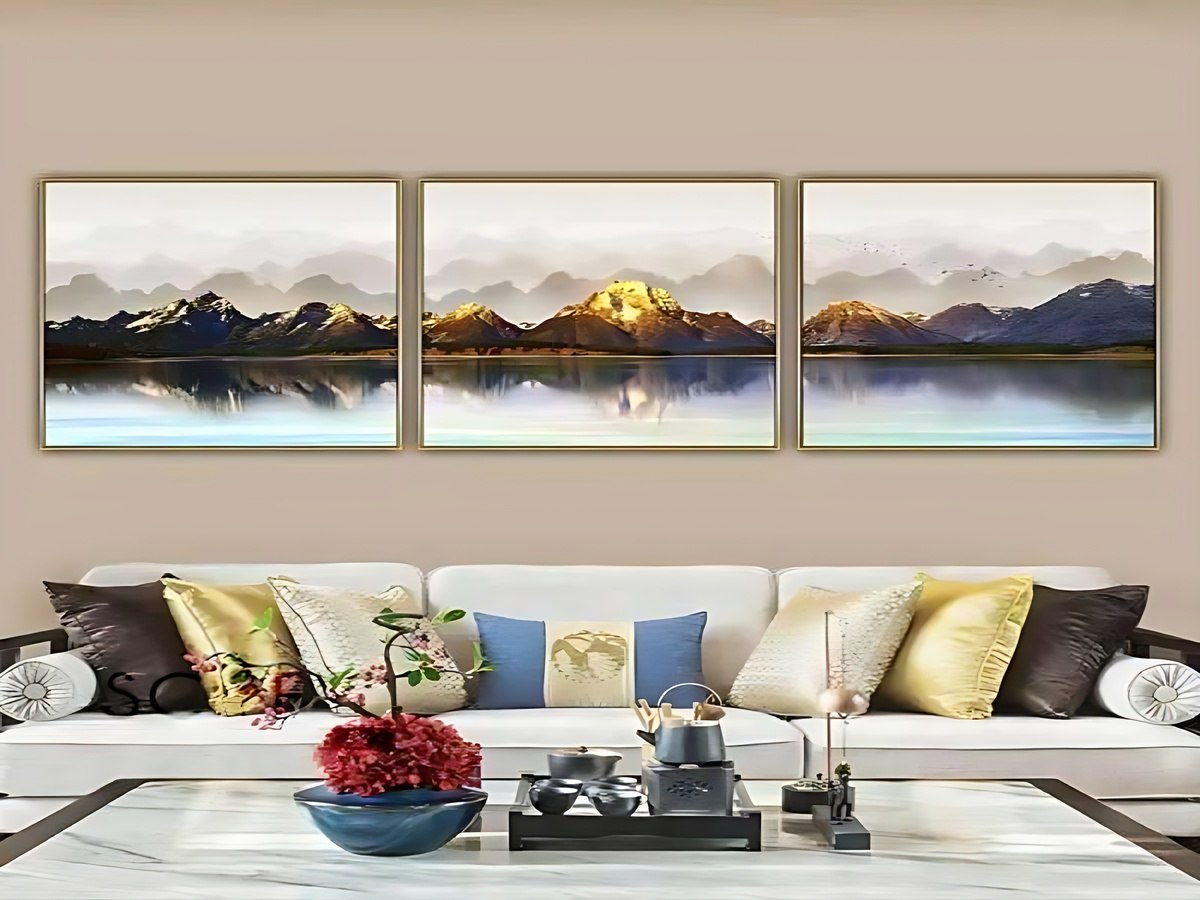
Mountain landscape paintings bring stability and prosperity for people of the Earth element. (Source: Compilation)
4. Feng Shui principles for hanging paintings in each space
4.1. Hanging paintings in the living room in suitable positions
The living room is the central space of the house, where energy is received and distributed. Hanging paintings in the central position helps activate wealth and creates a focal point for the space. Bright paintings with positive energy are usually preferred in this area. Conversely, paintings with gloomy colors or negative content should be avoided. Choosing the right paintings not only helps improve feng shui but also enhances the aesthetic value of the living space.
4.2. Harmonious Bedroom Paintings
The bedroom is a place for rest, so wall art should aim for gentleness and energy balance. Current design trends emphasize minimalist bedrooms combined with wall art in neutral tones or peaceful nature imagery. This not only helps create a relaxing feeling but is also considered a gold standard for green and sustainable living quality.
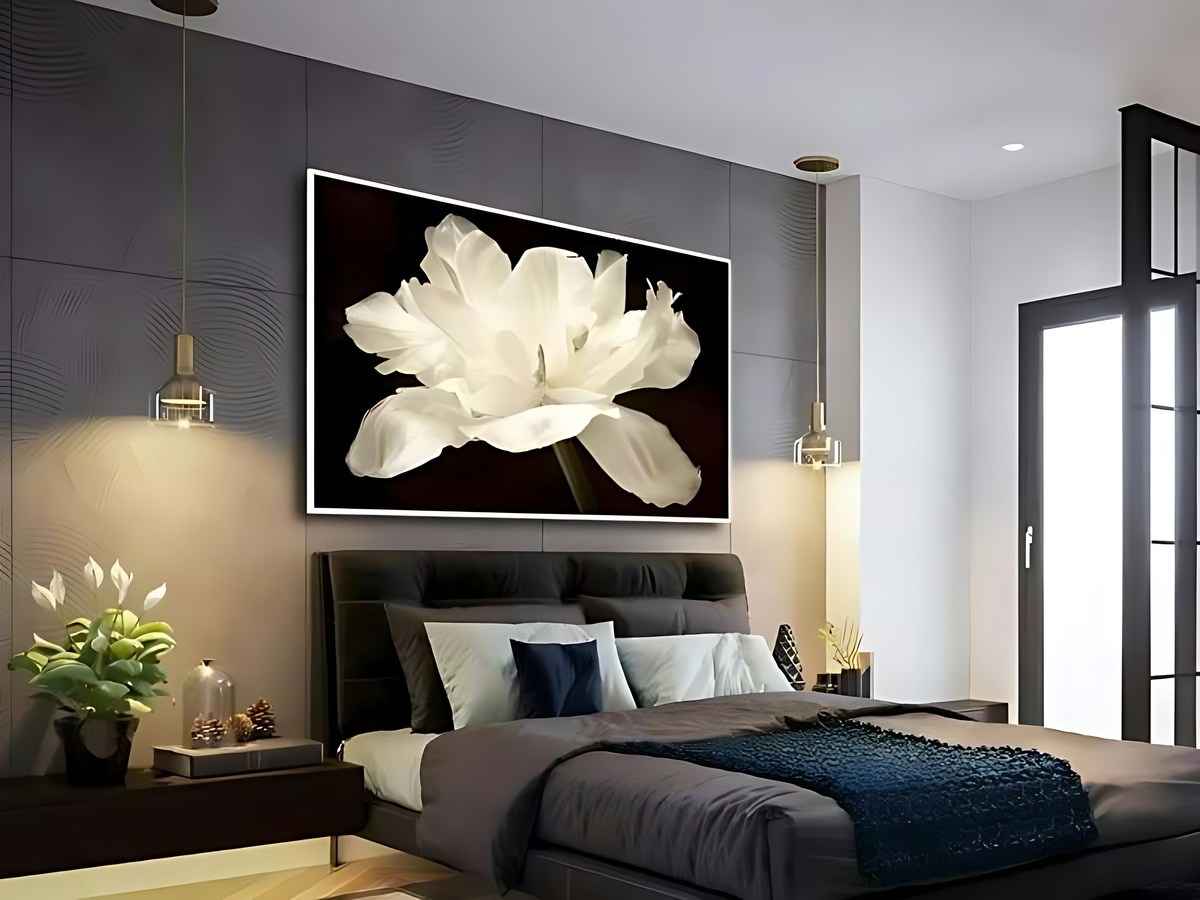
Minimalist paintings or nature create a peaceful and sustainable resting space. (Source: Collected)
Furthermore, one should avoid using conflicting images or overly strong colors, as they can affect sleep. Pair paintings or harmonious symbols are often used to increase family bonding. Proper placement of paintings helps the bedroom space become more pleasant and stable.
4.3. Paintings for the office
A home workspace requires focus and positive energy, so hanging paintings should have meanings that support career. Images such as "Smooth sailing, favorable winds" (Thuan buom xuoi gio) or "Horses arriving successfully" (Ma dao thanh cong) are often chosen because they symbolize progress and sustainable development. In reality, a workspace decorated with suitable feng shui paintings helps reduce mental pressure and stimulates more effective creative thinking.
4.4. Notes when hanging paintings at home
One of the important principles is not to hang paintings directly opposite the main door, as it can disperse the energy flow into the house. Additionally, negative or gloomy images should also be limited to avoid affecting daily psychology and activities. The choice of paintings needs to be suitable for the area and the overall layout of each room.
Besides, the size of the painting should be balanced with the wall space to avoid a sense of visual imbalance. Small spaces should prioritize moderately sized paintings, while large rooms can use wide-format paintings to create a focal point. Understanding these principles helps optimize the effectiveness of using paintings in interior design.
In living space design, the proper selection and arrangement of paintings not only bring aesthetic value but also contribute to harmonizing feng shui energy. Understanding the meaning of feng shui-compliant wall paintings will help homeowners optimize wealth, create a harmonious living environment, and sustainably enhance real estate value.