


Objective detailed comparison: buying from a developer vs. buying resale.
Before making a purchase, many people are undecided when comparing buying from a developer versus buying a resale property to find the optimal choice. Generally, each option has its own advantages and disadvantages regarding price, legalities, and future profitability. Here are detailed analyses for your reference.

▲Table of Contents
1. Understand the two forms of buying houses in the current market
1.1. What is buying a house directly from the investor
This is the form of buying directly from the investor, usually applied to newly launched or under-construction projects. Buyers sign contracts directly with the investor without going through individual intermediaries, helping to control product origin and clarify transaction terms.

Buying a house directly from the developer ensures transparent and clear transactions. (Source: Collected)
This form is often associated with future-forming projects, where buyers participate from the early stages and pay according to the construction progress. This allows access to initial prices but also comes with an element of waiting until the project is completed and handed over.
1.2. Buying a house transferred from an individual
Buying a resale home is a form of transaction with an individual who already owns the property, which could be a used house or an investment property. The buyer directly accesses an existing product and can usually inspect it in person before deciding. Resale transactions usually occur in the secondary market, where the selling price can be influenced by location, timing, and market demand. This makes the price potentially volatile and heavily dependent on the negotiation ability between the two parties.
1.3. Market context affecting the two purchase methods
In evaluating the comparison between buying from a developer and buying a resale, market context plays a crucial role in determining the advantages of each form. When primary supply is abundant, buyers have more choices from developers with more flexible policies.
Conversely, during periods of scarce supply or rising prices, the resale market becomes more active due to increased owner-occupier demand. This leads to differences in price and liquidity between the two purchasing methods at different times.
2. Comparison of buying from a developer vs. resale based on key criteria
2.1. Selling price and payment policy
When analyzing further about comparing buying from a developer versus buying on the secondary market , the selling price factor often clearly reflects the difference between the primary and secondary markets in each development stage. Homes purchased from developers, especially in the early stages, often have prices 10–20% lower than when the project is completed, providing better accessibility for buyers with limited budgets.

Buying from the developer offers better prices and more flexible payment compared to resale. (Source: Collected)
Besides the price, the payment policy is also a notable difference between the two current home buying methods. According to regulations in Article 25 of the 2023 Real Estate Business Law, payments in the purchase and sale of future-formed housing are tightened to protect buyers. If the house has not been handed over, the developer is not allowed to collect more than 70% of the contract value. In cases where the seller is a foreign-invested economic organization, this figure is no more than 50%. This helps buyers feel more secure about their cash flow and creates positive pressure, forcing developers to ensure construction progress to disburse subsequent installments.
Meanwhile, for transferred properties, the selling price usually reflects the market value at the time of transaction and is influenced by location, amenities, and actual demand. Due to the absence of a phased payment mechanism, buyers often have to pay quickly or according to specific agreements with the seller, leading to higher initial financial requirements.
2.2. Legal aspects and transaction safety
When evaluating in detail comparing buying from a developer versus buying resale , legal factors play an important role in determining the safety of real estate transactions. For homes from developers, according to the Land Law 2024 (No. 31/2024/QH15), buyers need to pay special attention to checking whether the developer has fulfilled their land financial obligations (land use fees, land rent). Currently, data on planning and project legal status has been made transparent through the national information system. Buyers should request the developer to provide a document from the provincial housing management agency stating that the housing is eligible for sale, to avoid the risk of the project being mortgaged at a bank without being unmortgaged.
According to the Law on Real Estate Business 2023 (Number 29/2023/QH15), future real estate projects are only allowed to collect a deposit not exceeding 5% of the selling price when the housing is eligible for business. The investor is only allowed to collect the first payment when the foundation has been completed and accepted (for apartments) or the corresponding technical infrastructure construction is completed according to the schedule (for low-rise housing). Specifically, bank guarantee is now a mandatory obligation of the investor to protect the buyer's rights if the house is not handed over on time, unless the customer voluntarily refuses.
2.3. Housing quality and actual verifiability
When comparing buying from a developer versus buying a resale property, the differences in quality and verifiability are easily noticeable factors. Homes from developers, especially unfinished projects, can usually only be assessed through blueprints and models. Conversely, completed resale properties allow for direct inspection of the structure, space, and surrounding amenities. This helps buyers get a more realistic view, reducing the element of prediction in the decision-making process.
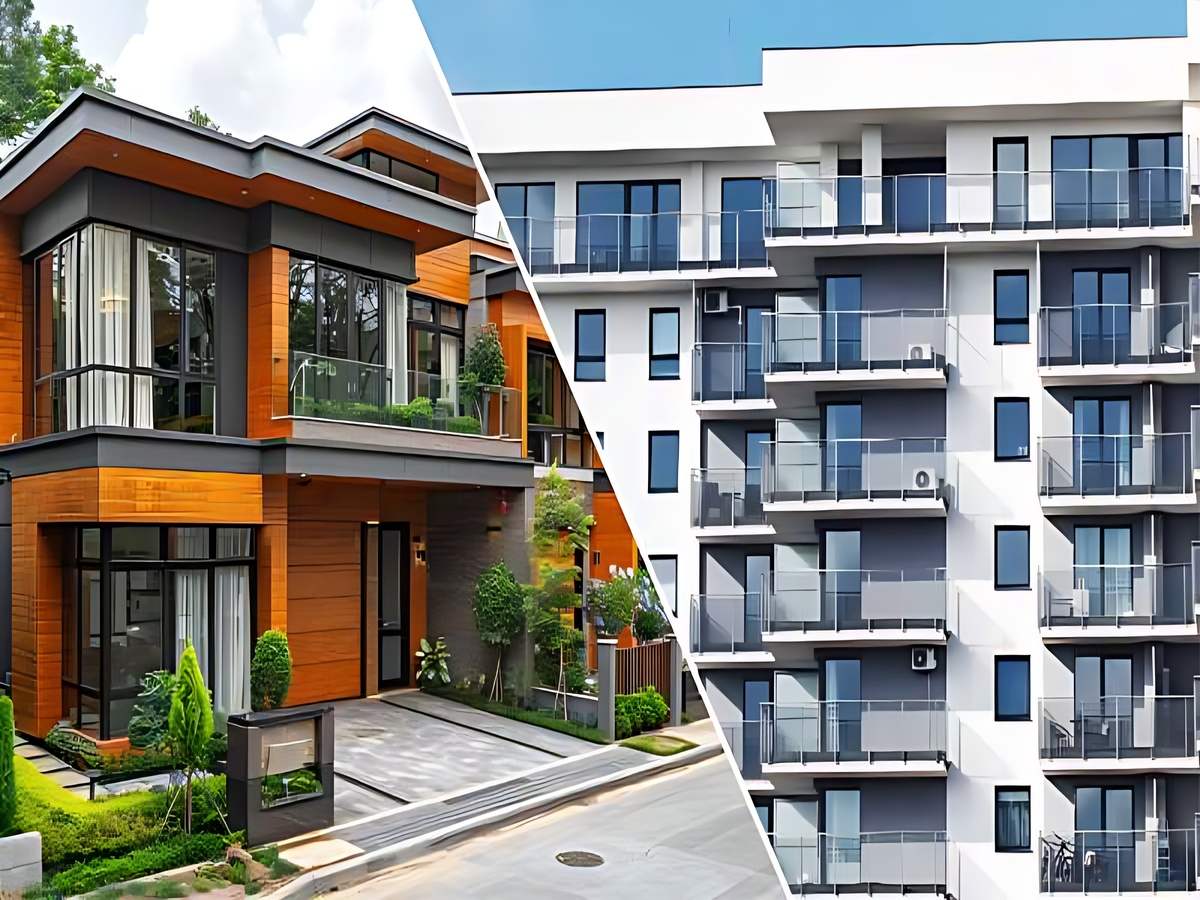
Resale properties are more easily verifiable than properties from the developer. (Source: Compilation)
3. Advantages and disadvantages of each home buying option
3.1. Benefits and limitations when buying a home from the developer
Buying directly from the developer offers advantages in early-stage pricing and access to new products. Buyers can choose suitable locations, floors, and designs before the project is completed. However, the limitations of this method are the waiting time and risks associated with construction progress. If the project is delayed, the buyer's usage or investment plans may be significantly affected.
3.2. Benefits and limitations of buying resale homes
Buying a resale house has the advantage of being usable immediately after the transaction is completed. Buyers do not need to wait for construction and can exploit its utility value or rent it out immediately. However, the price of a resale house is usually higher because it is already finished and has a clear market position. Additionally, repair or upgrade costs may also arise if the house has been used for a long time.

Resale property is ready for immediate use but has a high price and may require repairs. (Source: Collected)
3.3. Risks to note in each form
When comparing buying from a developer versus buying a resale, it can be seen that each form has its own risks that need to be considered. For properties from developers, risks usually relate to progress, construction quality, or design changes compared to the initial commitment. For resale properties, according to the provisions of the Land Law 2024, land price lists are now updated close to market prices annually, helping to limit the
However, risks still exist if the property is subject to planning or is undergoing enforcement seizure. Buyers need to carefully check the information on the Certificate (Red Book/Pink Book) and verify at the Land Registration Office to ensure the asset is not disputed and meets the conditions for transfer according to Article 45 of the 2024 Land Law.
4. Suggestions for choosing a home purchase method suitable for each need
4.1. Choosing based on purpose: actual living or investment
When considering comparing buying from a developer and buying resale , the purpose of use is an important guiding factor in the decision. If prioritizing living in it and needing to settle quickly, resale homes are often more suitable as they can be used immediately. Conversely, if the goal is long-term investment and expecting price appreciation over time, buying from a developer in the early stages can offer better potential for price increase. This depends on the development potential of the area and the project's progress.

Choose to buy based on purpose, whether for living or investment, to optimize effectiveness. (Source: Compiled)
4.2. Choosing based on personal financial capacity
In the process of comparing buying from a developer and buying a resale property, financial capability plays a decisive role in the appropriate choice. Buying from a developer usually allows for phased cash flow allocation, suitable for those with stable incomes. Meanwhile, buying a resale property requires greater available financial resources or a higher borrowing capacity. Balancing initial costs with long-term payment ability is a factor that needs careful consideration.
4.3. Experience to help conduct safe real estate transactions
When evaluating comparing buying from a developer versus buying resale , practical experience shows that checking legal aspects and contracts is a crucial step in any transaction. Buyers need to fully verify information about the project or property to minimize risks. Furthermore, choosing an experienced consulting unit or broker also helps enhance transparency in the transaction process. This supports buyers in making decisions based on complete information and suitability to actual conditions.

Legal checks and choosing a reputable unit help ensure safe real estate transactions. (Source: Collected)
Understanding the comparison between buying from a developer and buying a resale property will help buyers make more accurate decisions in each circumstance. By carefully considering practical factors, you will choose a suitable option to ensure long-term value and limit risks. Hopefully, buyers will soon make the most suitable choice for themselves.