


Personal Income Tax Regulations for New Project Transfers
Personal income tax on project transfer is a mandatory obligation in real estate transactions. The article helps you clearly understand how to calculate tax, the declaration process, and cases to note to avoid legal risks and optimize financial efficiency when transferring a project.

▲Table of Contents
1. Overview of personal income tax when transferring projects
1.1. Concept of personal income tax in real estate transfer
Personal income tax in real estate transfer activities is a financial obligation that individuals must pay when income arises from the sale, transfer, or assignment of land and property assets. In practice, this is a common tax in real estate transactions, aiming to ensure a fair distribution of financial obligations among market participants.
For transactions involving projects, this tax still applies similarly, based on the transfer value recorded in the contract or according to tax authority regulations in each specific case. Therefore, when researching personal income tax on project transfers, transaction participants need to understand the calculation method to be proactive in their costs.
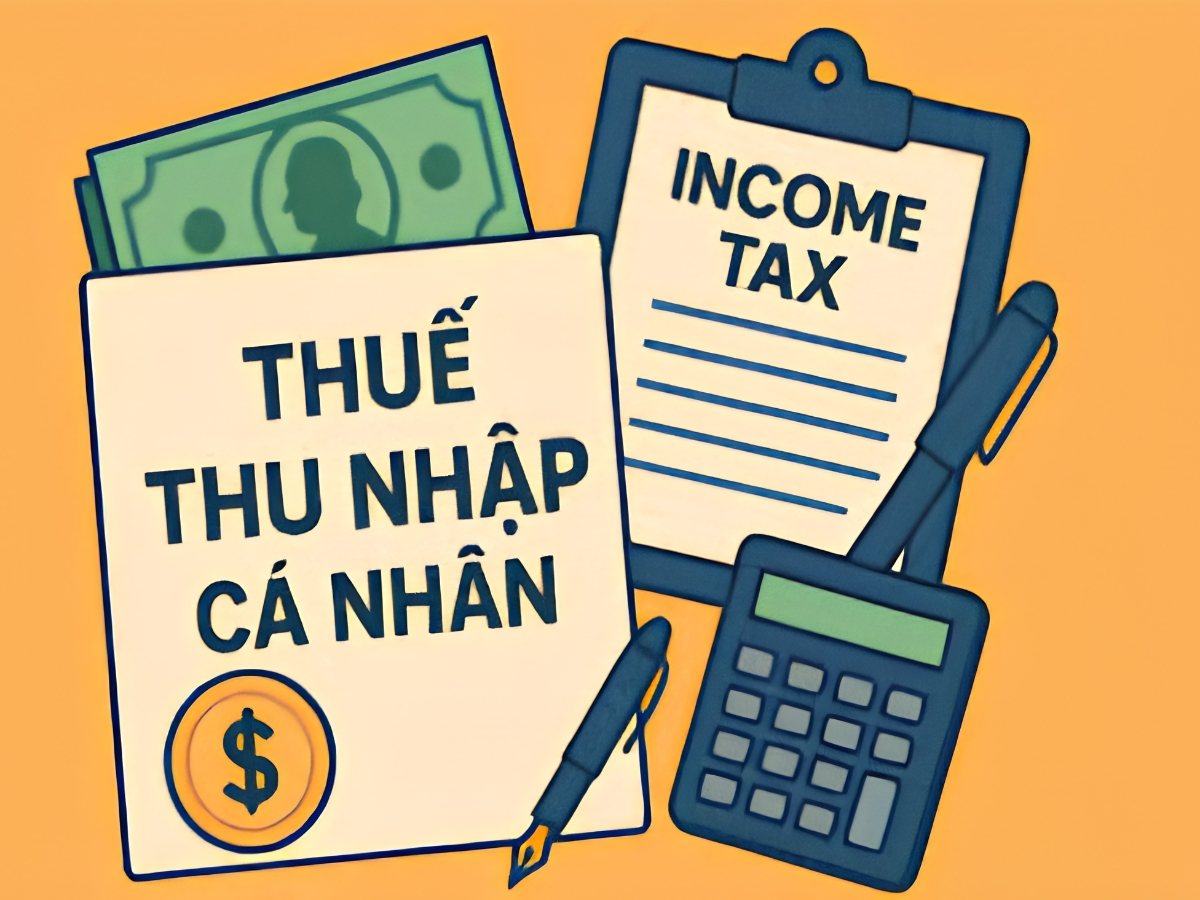
Personal income tax is the amount payable when income arises from the transfer or sale of real estate. (Source: Collected)
1.2. How is project transfer understood?
Project transfer is understood as the act of an individual or organization transferring ownership, usage rights, or exploitation rights related to a real estate project to another party through a sale or assignment contract. Projects here can include apartments, townhouses, land plots, or products under development.
In reality, transfers can occur at various stages, from when the project is under construction until it has been handed over. Each stage may entail different legal regulations and tax obligations, including personal income tax on project transfers which needs to be clearly determined before the transaction.
1.3. Individuals liable for personal income tax
Typically, individuals who generate income from the transfer of real estate or projects will be the ones liable for personal income tax. This is a general regulation aimed at ensuring financial obligations are fully met when there are profits from the transaction.
However, in actual transactions, parties may agree on who will bear this tax. Nevertheless, legally, the obligation is clearly defined for the person with income from the transfer, therefore understanding correctly personal income tax on project transfer is very important to avoid disputes and errors during the procedure.
2. How to calculate personal income tax on project transfer
Personal income tax on project transfer for resident individuals is usually determined by the formula:
Tax payable = Transfer price × 2%
Wherein, the transfer price is the amount recorded in the contract or the value determined by the tax authority in special cases.
The time for tax calculation is when the transfer contract takes effect or when the procedures for registering ownership rights, real estate usage rights are completed according to legal regulations. This means that as soon as the transaction is officially confirmed, the tax obligation will arise.
To make it easier to visualize, here's an example: an individual transfers an apartment in a project for 2 billion VND. In that case, the personal income tax payable will be 2 billion × 2% = 40 million VND. If the transfer price is 3.5 billion VND, the corresponding tax will be 70 million VND. Thus, the higher the transaction value, the larger the tax payable, so understanding personal income tax on project transfers helps buyers and sellers be more proactive in calculating actual costs and profits.

The calculation of personal income tax for project transfer is quite simple. (Source: Collected)
3. Dossier and procedures for declaring personal income tax on project transfer
3.1. Documents to prepare when transferring a project
When carrying out procedures related to personal income tax on project transfer, taxpayers need to prepare complete documentation to ensure the declaration and processing proceed smoothly and in accordance with regulations. Insufficient documentation may cause the procedure to be prolonged or require multiple supplements.
The basic list of documents includes:
Personal Income Tax Declaration Form No. 03/BĐS-TNCN issued with Circular 80/2021/TT-BTC
A copy of the Land Use Right Certificate, Ownership Certificate of houses or construction works on land, accompanied by the individual's commitment to take responsibility when signing and certifying the copy.
Real estate transfer contract; if there is an authorization, include the notarized authorization contract
Documents proving capital contribution according to legal regulations (applies to cases of transfer from capital contribution to an enterprise but not previously declared for tax)
Documents proving eligibility for tax exemption (if any), for example: transfer between spouses, parents and children, or cases where an individual owns only one house, one land use right
Preparing complete documentation not only helps the tax declaration process proceed quickly but also limits legal risks in transactions, especially for cases of transferring large-value projects.
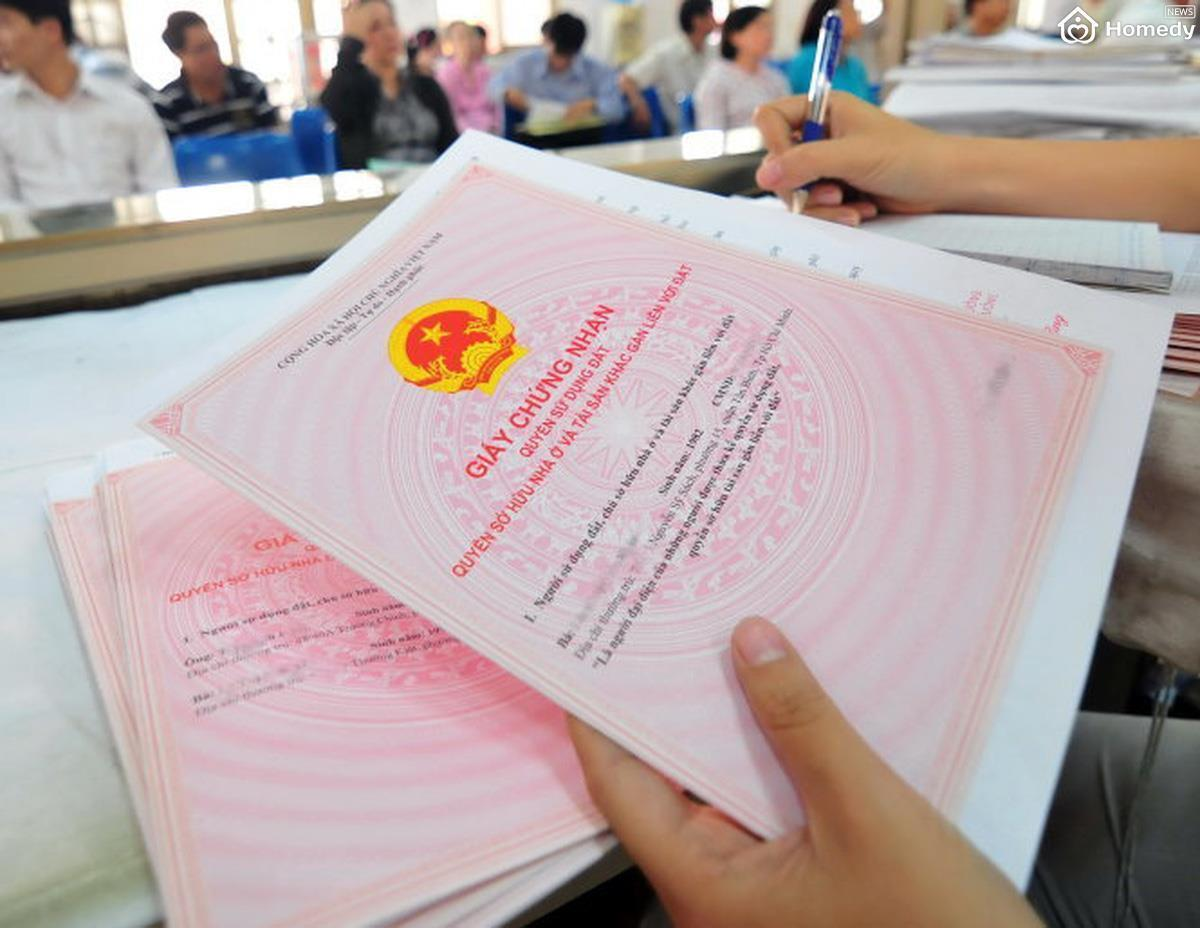
Taxpayers need to fully prepare personal income tax declaration documents for project transfer. (Source: Collected)
3.2. Place to submit personal income tax declaration documents for project transfer
When performing personal income tax on project transfer, taxpayers need to identify the correct receiving authority to ensure procedures are resolved quickly and according to regulations. Submitting to the wrong place may result in the file being returned or prolonged processing time.
Specifically, the place to submit the file is stipulated as follows:
In case of normal real estate transfer: Submit the file at the one-stop service department of the District-level People's Committee (district, town, provincial city) or the Tax Department where the transferred real estate is located.
In case of transfer of housing, apartments, or future-formed construction works: Submit hồ sơ at the Tax Department where the future-formed construction works are located.
Determining the correct place to submit hồ sơ not only helps shorten processing time but also ensures the declaration process for personal income tax on project transfers proceeds smoothly, limiting errors in administrative procedures.
3.3. Deadline for submitting tax declaration hồ sơ and personal income tax according to regulations
Regarding personal income tax on project transfers, the deadline for filing tax returns is clearly stipulated to ensure financial obligations are met at the time the transaction occurs. Accordingly, individuals must file tax returns no later than the 10th day from the date the tax liability arises, which is from the effective date of the transfer agreement. Adhering to this deadline helps avoid late submission and incurring unnecessary penalties.
After the application is received and processed, the tax payment deadline will be determined according to the notice from the managing tax authority. Taxpayers need to base their actions on the deadline stated on the notice to fulfill their obligation to pay money into the state budget. Closely monitoring these timeframes not only helps ensure compliance with regulations but also facilitates a smooth, transparent, and lawful transfer process.
4. Cases of exemption or non-payment of personal income tax on project transfer
In certain special cases, individuals conducting transactions related to real estate or projects will be exempt from the obligation of personal income tax on project transfer according to legal regulations. This is often applied to ensure humanity in family relationships and cases of owning a sole residence.
Specifically, cases eligible for tax exemption include:
Transfers between individuals with marital, blood, or adoptive relationships, such as spouses; biological parents and biological children; adoptive parents and adopted children; parents-in-law (husband's side) and daughter-in-law; parents-in-law (wife's side) and son-in-law; paternal grandparents, maternal grandparents with grandchildren; biological siblings.
An individual owns only one house or one land use right in Vietnam and has held this asset for at least 183 days as of the transfer date. The ownership determination date is calculated from the date of the first issuance of the land use right certificate or house ownership certificate.
Understanding tax exemption cases helps people be more proactive in their transaction plans, while avoiding confusion in the process of declaring financial obligations when transferring real estate or projects.
In summary, personal income tax on project transfers is a mandatory obligation in all real estate transactions, directly affecting investors' costs and profits. Understanding how to calculate taxes, the declaration process, as well as exemption and reduction cases will help you be more proactive in transactions, limit legal risks, and optimize financial efficiency. To ensure safety, investors should prepare complete documentation and regularly update the latest tax regulations before proceeding with the transfer.