


Procedure for extending land use for 50 years according to the latest regulations
The procedure for a 50-year land use extension is a matter of concern for many individuals and businesses as the land use term is nearing its expiration. Understanding the conditions, application file, and extension process will help land users ensure their rights and interests and avoid interruption in land use.

▲Table of Contents
1. What is land with a 50-year term of use?
1.1. Concept of land with a 50-year term of use
Land with a 50-year term of use is a type of land allocated or leased by the State for use within a maximum period of 50 years according to legal regulations. The land use term will be clearly stated on the Certificate of Land Use Rights, and the land user needs to monitor it to carry out the procedure for extending the 50-year land use term when it is nearing expiration.
This type of land is usually applied to commercial service land, business production land, agricultural land, or investment projects with a certain period of use. After the term expires, land users may be considered for extension if they still meet the conditions regarding planning, usage purposes, and comply with land law regulations.
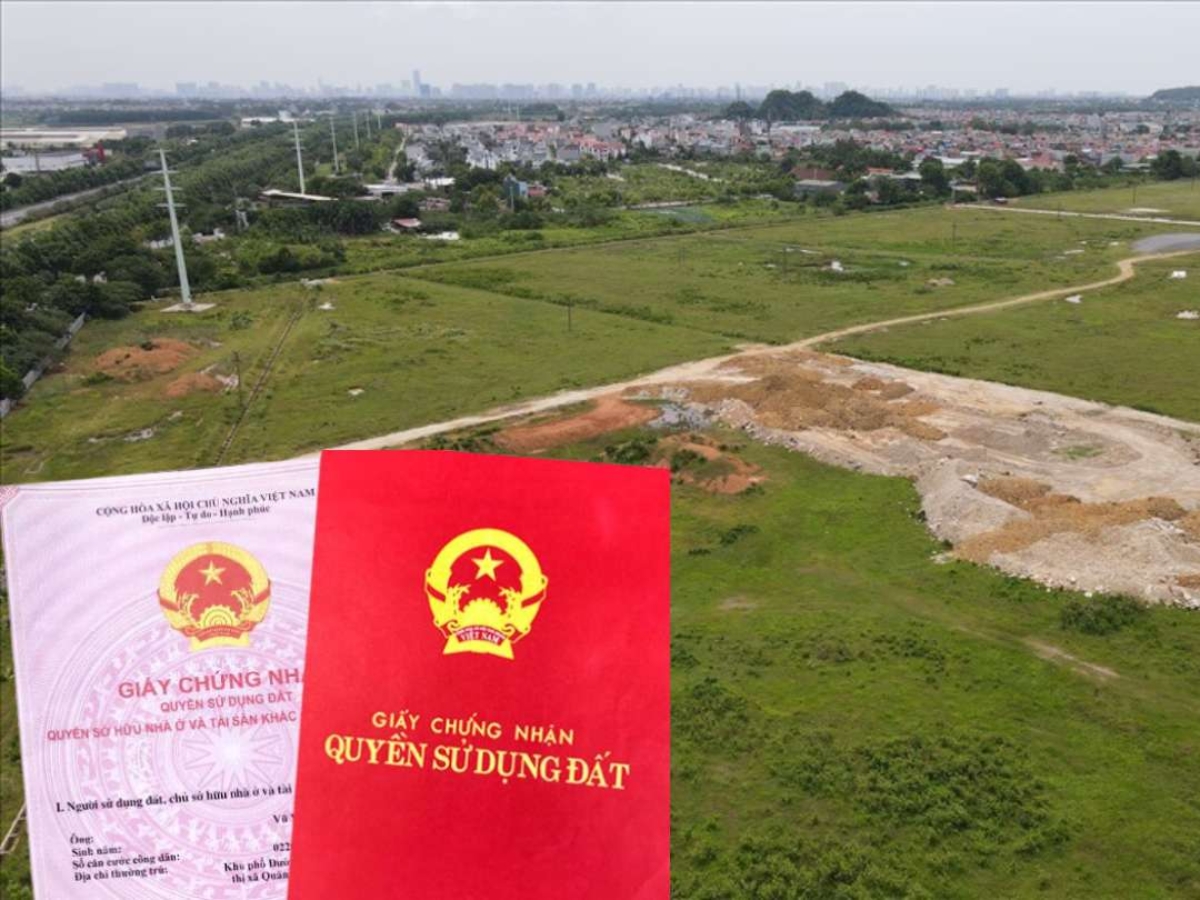
Land with a usage period is land that the State allocates or leases for a certain period of time. (Source: Collected)
1.2. Types of land typically with a 50-year term
According to current regulations, many types of land allocated or leased by the State will have a maximum usage period of 50 years depending on the purpose of use and the land user. This is also the group of land that often requires the procedure for extending the land use for 50 years when the term stated on the land use rights certificate is nearing its end.
Some common types of land with a 50-year usage period include:
Agricultural land allocated to individuals for direct production, such as annual crop land, aquaculture land, salt production land, perennial crop land, or forest land for production, which is planted forest.
Agricultural land is leased by the State to households and individuals for a term not exceeding 50 years.
Land allocated or leased for project implementation, commercial and service land, or business production land of organizations and enterprises, with a project operation term not exceeding 50 years.
Land allocated or leased by the State to organizations not falling under project investment cases but having land use needs within a specified period according to legal regulations.
2. Land for 50 years: can it be extended?
For individuals directly engaged in agricultural production who are allocated or recognized with agricultural land use rights such as land for annual crops, aquaculture land, salt production land, perennial crop land, or forest land for production (planted forest) within the limit, the land use term is 50 years. When the term expires, if there is still a need for use, the land user is entitled to continue using the land for another 50-year term without having to go through an extension procedure.
Meanwhile, for households and individuals renting agricultural land from the State, organizations that are allocated or leased land to implement investment projects, or organizations that are allocated or leased land not for investment projects, when their land use term expires, they will be considered by the State for continued land allocation or lease if they still have the need to use it and meet the prescribed conditions. The extension consideration period is usually no more than 50 years.
Depending on the land type, people can extend the usage period or not. (Source: Compilation)
What do the 50-year land use extension documents include?
When carrying out the procedure for extending land use for 50 years, the land user needs to prepare a complete dossier according to regulations for the competent authorities to review and resolve. Proper preparation of documents will help the dossier processing proceed quickly and limit requests for additional information.
The land use extension dossier usually includes the following documents:
Application for land use extension according to Form No. 02a under current regulations.
One of the types of Certificates related to land use rights and assets attached to the land, such as:
Certificate of Land Use Rights, Ownership of Assets Attached to Land.
Certificate of Land Use Rights, Housing Ownership, and Other Assets Attached to Land.
Certificate of Land Use Rights.
Certificate of Housing Ownership and Residential Land Use Rights.
Certificate of Housing Ownership.
Certificate of Ownership of Construction Works.
Types of Certificates issued before August 1, 2024, remain legally valid and are not required to be changed to the new mẫu.
Decision on land allocation, land lease, or decision to permit land use conversion by competent state agencies through periods.
Document permitting the extension of the operating period of an investment project, or documents evidencing the project's operating period, for cases involving land use for the implementation of an investment project.
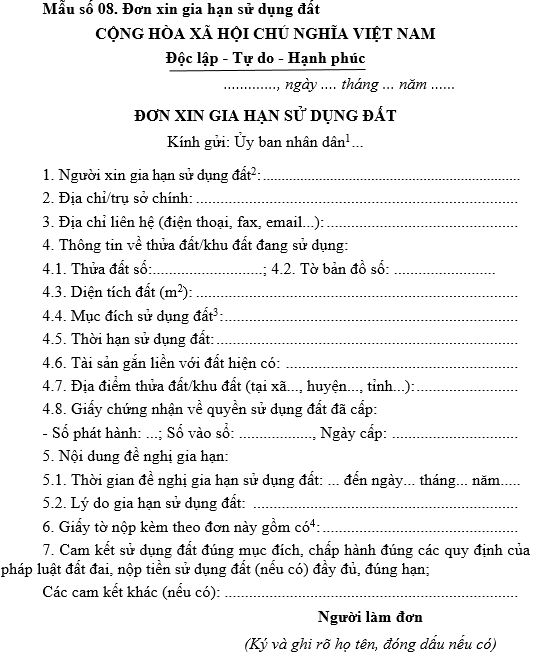
Application form for extension of land use period. (Source: Collected)
4. Procedure for extending land use for 50 years
After preparing all the necessary documents, land users need to follow the prescribed steps to have the State agency consider the extension of land use rights. Understanding the procedures for extending land use rights for 50 years will help the application processing proceed smoothly and minimize errors.
4.1. Submitting the application to the competent authority
Land users need to prepare a complete extension application and submit it at the Land Registration Office, a branch of the Land Registration Office, or the one-stop shop department in the locality where the land is located. For some cases, the application may also be received through the Department of Natural Resources and Environment according to the management hierarchy in each locality.
After receiving the application, the competent authorities will check its completeness and validity. If the application is incomplete or not in accordance with regulations, the applicant will be guided to supplement it to complete before proceeding to the next processing step.
4.2. Check the current status and land use needs
After the application is validly received, the land management agency will proceed to inspect the actual land use status to determine whether the land is being used for its intended purpose. At the same time, the competent authority will also cross-reference the information with local land use plans and schemes to consider the conditions for extension.
In addition to planning factors, the competent authority will also assess the need for continued land use by individuals, households, or organizations. This is an important basis to determine if the land user is eligible to continue to be allocated or lease land for a new term in accordance with current legal regulations.

Authorities conduct land status inspection. (Source: Collected)
Appraisal and extension decision
After the process of checking and reviewing the application, the specialized agency will proceed to appraise all information related to the land parcel, land use purpose, and legal conditions of the land user. If all conditions according to regulations are met, the application will be submitted to the competent authority to issue a decision on land use extension.
The extension period will be considered based on each type of land, land use purpose, and local planning, but usually does not exceed 50 years for many cases of land lease or land use with a limited term. In cases where the application does not meet the conditions for extension, the relevant agency will clearly notify the reasons for the individuals or organizations to know and handle according to regulations.
4.4. Update of Usage Term on the Land Use Certificate
After the extension is approved, the land management agency will update the new land usage term on the Land Use Certificate or related land records. This is the final step to confirm the legal land use rights of the people within the subsequent extended period.
Updating the information on the land use certificate completely helps land users continue to exercise rights such as transfer, lease, mortgage, or utilization of assets on the land according to legal regulations. Therefore, after completing the procedures, people should carefully check the new usage period information recorded on the certificate to avoid future errors.
5. Land use extension period and costs
When carrying out the procedure for extending land use for 50 years, in addition to preparing complete documents, land users should also inquire in advance about the document processing time and potential costs. This helps to be more proactive in the procedure and prepare a suitable financial plan.
5.1. Document processing time
According to current regulations, the processing time for land use extension procedures will be stipulated by the Provincial People's Committee depending on the actual conditions in each locality. However, the usual processing period is not more than 07 working days from the date of receiving complete and valid documents.
During the processing, the competent authorities will conduct a review of the application, cross-reference land use plans, verify the current land use status, and perform necessary appraisal steps before issuing the extension decision. For complex cases or those requiring additional documents, the actual processing time may be extended.
The processing time for applications is usually no more than 07 working days from the date of receiving complete and valid hồ sơ. (Source: Collected)
5.2. Fees and Financial Obligations
When extending the land use period, the land user may have to fulfill certain financial obligations in accordance with current legal regulations.
One of the important costs is land rent for cases where the State leases land. This amount is calculated for the extended land lease period and may apply the form of annual land rent payment or a lump sum payment for the entire lease period depending on the specific case.
Additionally, land users may also have to pay a fee for appraising the application for a Certificate of Land Use Rights. This is a fee for appraising the application file, checking the conditions for issuance, or confirming changes related to land use rights and assets attached to the land. The fee level will depend on the land area, the nature of the application file, the purpose of land use, and specific regulations of each locality issued by the Provincial People's Council.
Besides that, people may also have to pay a fee for issuing a Certificate or a fee for confirming land changes when competent authorities update the new land use term on the red book. This fee is usually no more than 100,000 VND, depending on the regulations in each province and city.
Understanding the procedure for extending land use for 50 years will help land users be more proactive when nearing the end of their land use period and limit arising legal risks. From preparing documents, submitting applications, appraisal, to updating the new term on the land use certificate, all must be carried out according to regulations to ensure land use rights are legally maintained. Therefore, citizens and businesses should regularly check the land use period on their certificates, monitor planning, and prepare extension documents early for a smoother processing.