


Resolving inherited land disputes without a land use right certificate
How to handle inherited land without a land use right certificate (red book) is an issue many families encounter when dividing assets. Clearly understanding legal regulations, conditions for issuing the certificate, and inheritance procedures will help limit disputes and ensure the rights of the heirs.

▲Table of Contents
1. Can inherited land without a land use certificate (sổ đỏ) be inherited?
Regarding the question of how to handle inherited land without a land use certificate (sổ đỏ), it must first be understood that not having a Land Use Certificate (sổ đỏ) does not mean one cannot receive inheritance. In practice, the heir can still receive the inheritance if they can prove that the person who left the property had legal land use rights, even if a land use certificate (sổ đỏ) has not yet been issued.
According to civil and land law regulations, land use rights can still be considered an inheritance if the land has a legal origin, is used stably, and is not in dispute. The heir needs to provide documents such as sale documents, land allocation documents, local confirmation, or evidence of the land use process to establish the inheritance rights.
After the inheritance rights are recognized, the heir will carry out the procedures for declaring or dividing the inheritance and proceed to apply for a Land Use Rights Certificate in their name. Therefore, even without a red book (land title deed), land can still be inherited if it meets sufficient legal conditions and the legal right of use can be proven.

Inherited land without a land use right certificate can still be inherited if the right to use the land can be proven. (Source: Collected)
2. Types of inherited land disputes without a land use right certificate
2.1. Disputes among co-heirs regarding land use rights
This is the most common type of dispute when a situation arises with inherited land without a land use rights certificate (So Do), as the lack of clear legal documents makes it difficult to determine ownership. When there is no Land Use Rights Certificate, co-heirs often cannot agree on whether the land plot is truly a legal inheritance, or disagree on the proportion of benefits to be divided.
In practice, disputes often arise in many different aspects. Some cases argue that the land is the separate property of the deceased, while others identify it as common property of the household or formed through many generations of joint use. Besides, there are also disputes related to the actual land area being used compared to the area confirmed by the local authorities, leading to conflicts during the division process. Furthermore, parties may also disagree on the inheritance division method, such as dividing by physical assets (land partitioning) or converting it into monetary value, especially when the land parcel does not meet the legal conditions for separate registration.
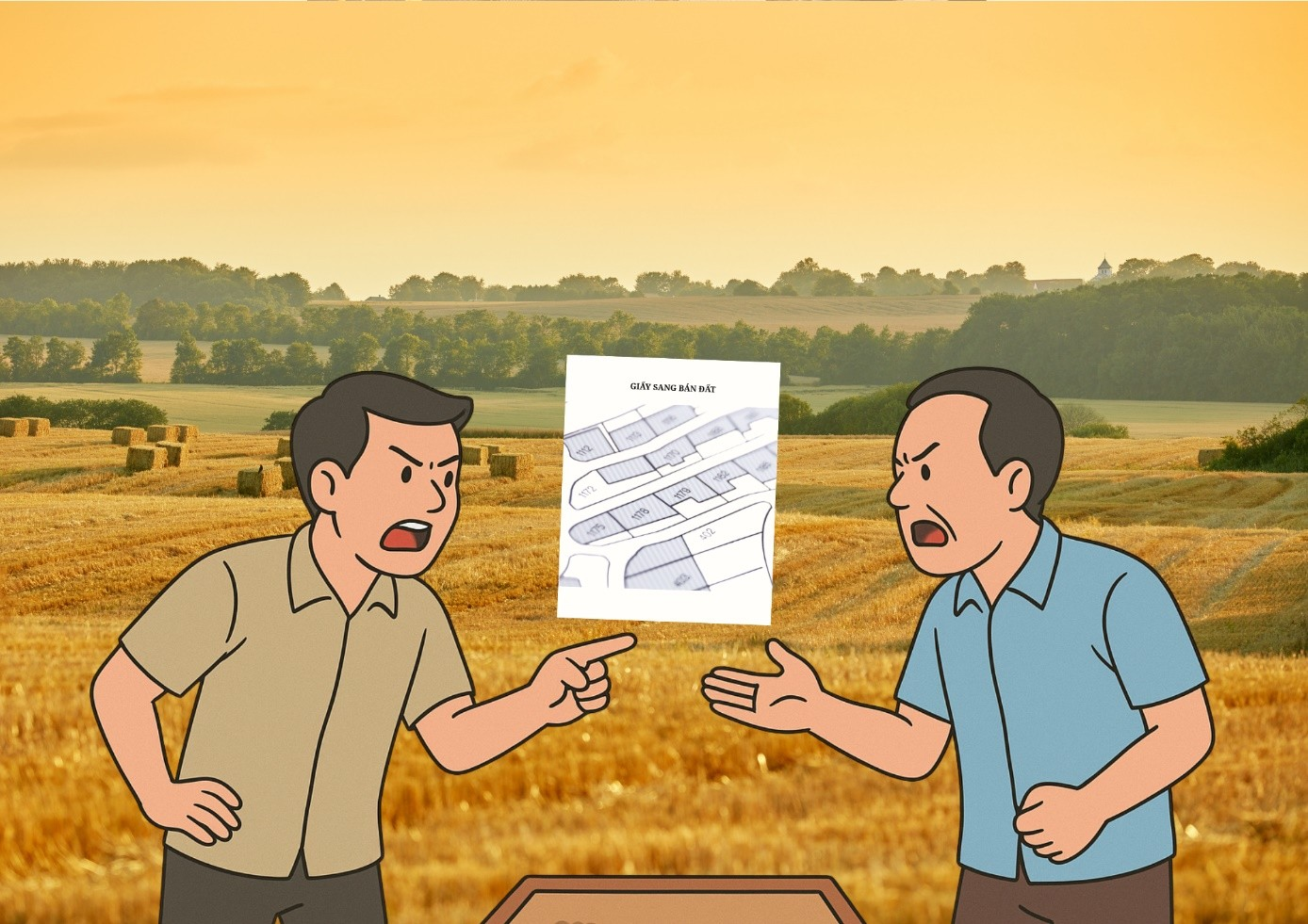
Dispute between co-heirs regarding land use rights. (Source: Collected)
2.2. Dispute between the person managing/using the land and other co-heirs
Another common type of dispute in cases of inherited land without a land use rights certificate is the conflict between the person directly managing and using the land and the other co-heirs. After the person who left the inheritance passes away, there will often be one person who takes care of, lives on, or cultivates the land parcel, while other members request their share of the inheritance according to regulations.
The person managing the land often presents arguments such as having used the land stably for a long time, having invested effort and cost in renovating, building, or maintaining assets on the land, thereby claiming priority rights or a larger share of the inheritance. However, other co-heirs argue that this management is only temporary to protect the common property and does not forfeit their legal inheritance rights. Therefore, determining whether this is "legal management" or "private possession" requires specific evidence such as the origin of land use, agreements between parties, and relevant legal documents, to ensure fair dispute resolution.
2.3. Disputes Related to Encroachment or Long-Term Land Use
When dealing with inherited land without a land use certificate, a rather complex type of dispute often arises: encroachment or long-term land use without clear legal documentation. Because the land has not yet been granted a Land Use Rights Certificate, the boundaries, area, and actual usage rights are easily changed over time, leading to many conflicts among the involved parties.
In reality, situations can occur such as land left by parents but children have divided and used it beforehand without establishing a written agreement; or one person arbitrarily expands the usage area, constructing works beyond the original boundaries. Furthermore, there are also cases where neighbors or relatives encroach on land due to unclear boundaries or inaccurate measurements. When inheritance disputes arise, determining which part of the land truly belongs to the inheritance becomes difficult, forcing the Court to rely on various sources of evidence such as witness testimonies, confirmations from local authorities, and land management records over different periods to make a suitable judgment.
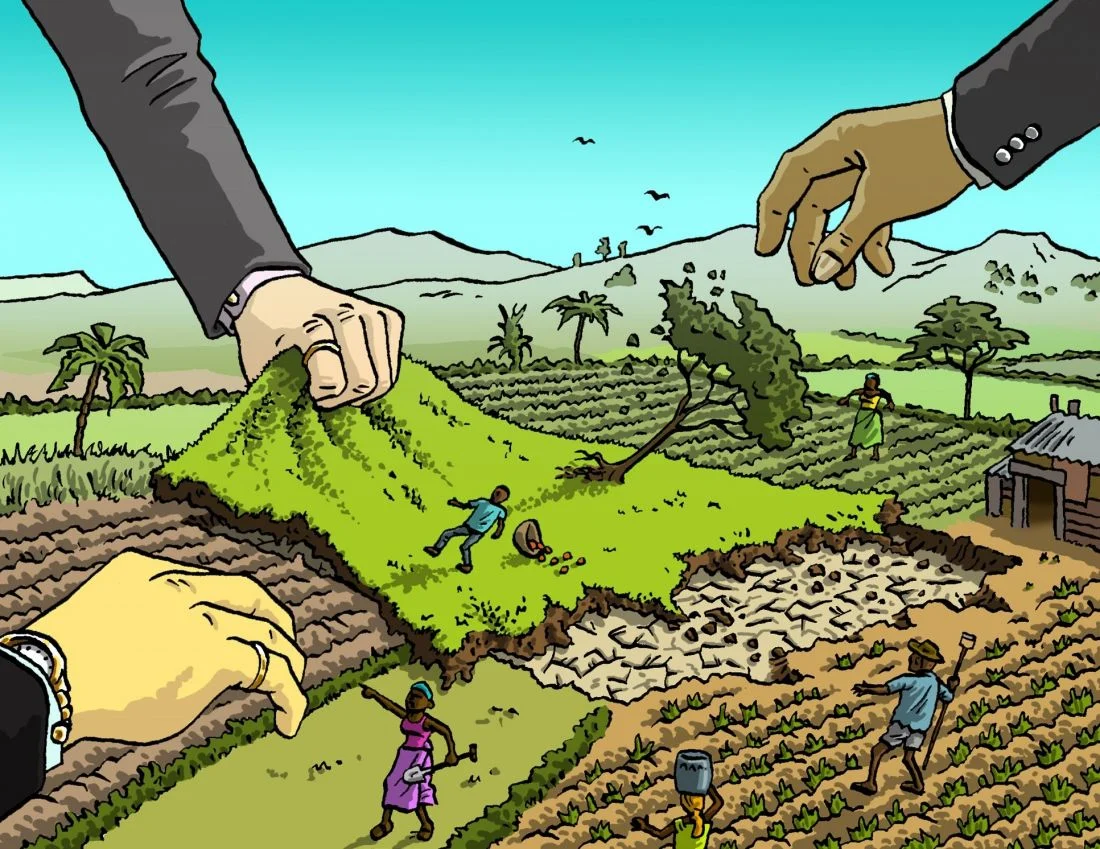
Disputes related to encroachment or long-term land use. (Source: Collected)
2.4. Disputes when land has no red book but has been transferred by handwritten agreement
In practice, many cases of inherited land without a land use right certificate become more complicated when the land parcel was previously transferred by handwritten agreement or verbal agreement before the time the deceased passed away. Due to the lack of a land use right certificate, these transactions often do not meet full legal conditions, leading to disputes upon inheritance.
Upon inheritance, co-heirs may not recognize previous transfer transactions and request a redetermination of the entire land use rights belonging to the estate. This gives rise to many conflicts, such as disputes over the legality of handwritten agreements, determining whether the buyer has the right to continue using the land or must return the land to the estate, as well as how to handle the legal consequences for transactions that do not meet the form requirements under land law regulations. In these cases, the Court will consider a multitude of factors, including the time of the transaction, the payment of money, the actual land use process, and the legal regulations applicable at the time the transaction arose, to issue a suitable judgment and ensure the parties' rights.
3. How to handle inherited land without a red book?
3.1. Resolution through mediation
3.1.1. Submit a request for mediation
Current land law encourages parties in disputes over inherited land without a red book to negotiate and mediate first to limit prolonged disputes. Accordingly, parties can mediate themselves or mediate at the grassroots level, but for land disputes, it is mandatory to mediate at the commune-level People's Committee where the land is located before requesting the competent authority to resolve according to Article 236 of the Land Law 2024.
One party or the involved parties shall submit a request for dispute mediation at the Commune/Ward/Town People's Committee. This is the first step to record the incident and activate the resolution process in accordance with legal regulations.
3.1.2. Commune/Ward People's Committee inspects and verifies the dispute
After receiving the application, the Commune/Ward People's Committee is responsible for investigating and verifying the cause of the dispute between the parties. The competent authority will collect relevant documents such as papers on land origin, usage process, land status, and evidence provided by the parties as a basis for resolution.
Concurrently, the Commune-level People's Committee will establish a Land Dispute Mediation Council to review the case. This is an important step to ensure information is objectively verified before proceeding with formal mediation between the parties.
3.1.3. Organization of Land Dispute Mediation
The Commune-level People's Committee organizes a mediation meeting with the participation of the disputing parties, members of the Mediation Council, and those with related rights and obligations. At the meeting, the parties will present their opinions, viewpoints, and propose solutions to the dispute.
If one of the parties is absent for the second time, mediation is considered unsuccessful. This is the basis for proceeding to the next steps of resolution according to legal regulations.
3.1.4. Recording the land dispute mediation
The mediation results must be recorded in minutes with full content such as the time and place of mediation, the origin and time of use of the disputed land, the cause of the dispute, the participants, and the opinions of the Mediation Council. In addition, the minutes should clearly state the points agreed upon and disagreed upon by the parties.
In case of additional opinions after the minutes are made, the commune-level People's Committee may reconvene a meeting for consideration. The mediation period shall not exceed 45 days from the date of receiving the application, and within 10 days from the date of making the minutes, the confirmation of the mediation result as successful or unsuccessful must be completed.
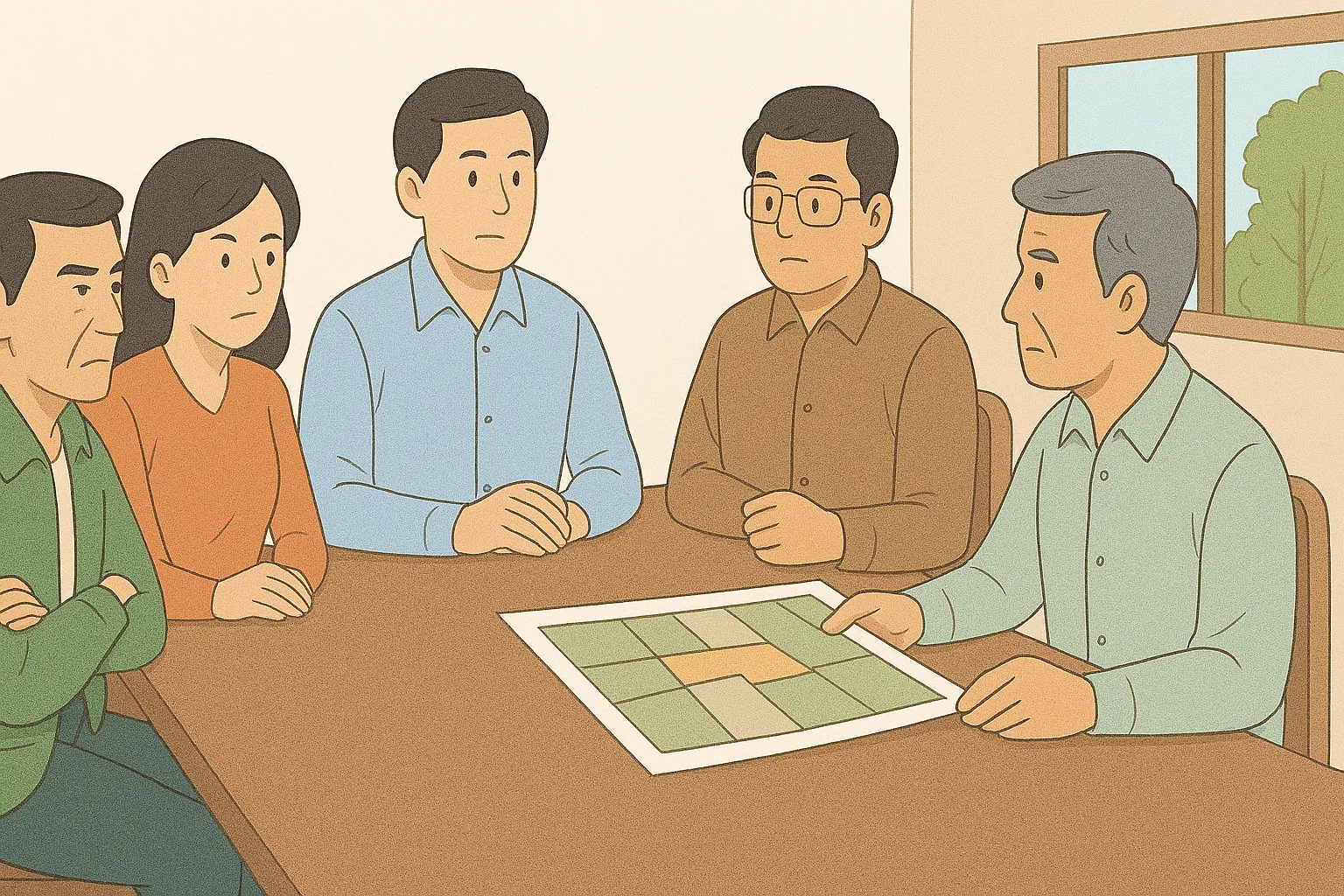
The law encourages parties to resolve inherited land without a red book through mediation. (Source: Compiled)
3.2. Dispute Resolution
3.2.1. Preparation of Litigation Documents
When mediation fails, parties can proceed to file a lawsuit to resolve disputes over inherited land without a land use right certificate (sổ đỏ) at the Court. The plaintiff needs to prepare complete documents as per regulations to ensure the case is accepted according to legal procedures.
A lawsuit file typically includes: a petition for land use rights inheritance dispute, documents proving the origin and usage process of the land, mediation minutes at the Commune-level People's Committee (if any), a copy of the claimant's Citizen Identity Card/ID Card, and other relevant documents proving legal rights and interests in the land plot.
3.2.2. Submitting the lawsuit petition
After preparing a complete dossier, the claimant submits the petition to the district-level People's Court where the disputed land is located, in accordance with the Civil Procedure Code 2015. The submission can be made in various forms to facilitate citizens.
Specifically, citizens can submit directly at the Court, send via postal mail, or submit online via the Court's Electronic Portal (if supported). This is the official step to initiate the dispute resolution process at the judicial authority.
3.2.3. Court reviews and accepts the case
After receiving the application, the Court will review the file and notify the plaintiff about the payment of provisional court fees. Within 07 days from the date of notification, the plaintiff must complete the obligation to pay the provisional court fees and submit the receipt to the Court for the case to be accepted.
If the file is incomplete, the Judge will request the plaintiff to supplement or amend it as stipulated. After meeting the conditions, the Court will officially accept the case to proceed to the next stage of resolution.
3.2.4. Preparation for trial
During the preparation for trial phase, the Court will conduct mediation between the parties. If the parties reach an agreement themselves and there are no changes within 07 days, the Court will issue a decision recognizing the agreement and this decision will take legal effect immediately, without appeal or objection.
In case mediation is unsuccessful, the Court will draw up a record of unsuccessful mediation and issue a decision to bring the case to trial as stipulated.
3.2.5. First-instance trial of the case
The Court will open a first-instance trial to resolve the inheritance dispute regarding the land plot. At the trial, the parties have the right to present their views, provide evidence, and defend their lawful rights and interests.
After the first-instance judgment is issued, the parties have the right to appeal within 15 days from the date of the verdict. In cases of lawful absence, the appeal period is calculated from the date of receiving the judgment or the date the judgment is posted according to legal regulations.
In summary, how to handle inherited land without a land use certificate will depend on determining the land's origin and the level of agreement among co-heirs. Although there is no Land Use Certificate yet, heirs can still have their rights recognized if they can prove lawful land use and follow the correct procedures such as mediation, declaration of inheritance, or filing a lawsuit in court when there is a dispute. Proper handling according to regulations not only helps ensure the legal rights of the parties but also serves as a basis for completing the procedures for issuing the land use certificate later, limiting legal risks during land use and transfer.