


The Easiest Way to Understand the State Land Auction Process
The state land auction process is a topic of interest for many investors and land buyers, thanks to its transparency and the opportunity to own good-value real estate. This article will help you clearly understand the steps to participate in the auction and important notes to limit risks.

▲Table of Contents
1. Overview of State Land Auction
1.1. Concept of Land Use Rights Auction
A land use rights auction is a form where the State publicly sells the right to use a parcel of land to individuals or organizations in need through a price competition mechanism. Participants will offer an appropriate price, and the highest bidder who meets all regulatory conditions will be recognized as the winner of the auction.
In the state land auction process , this is an important step to ensure transparency, openness, and fairness in the allocation of land resources owned by the entire people, managed by the State.

Land use rights auction is a form where the State publicly auctions land use rights to individuals or organizations with demand. (Source: Collected)
1.2. Cases where the State organizes land auctions
The State organizes land use rights auctions in cases such as: land allocation with land use fees, land lease, or when public land funds are recovered for more effective exploitation and use. Additionally, cleared land parcels that meet legal requirements are also often put up for auction.
Auctions help select investors or land users with good financial capacity, while optimizing land use value in the economy.
1.3. The role of land auctions in the real estate market
Land auctions play an important role in forming transparent land price levels in the real estate market. Through auctions, the real value of land use rights is determined by market mechanisms instead of relying solely on administrative price frameworks.
Besides, the state land auction process also helps increase budget revenue, limits the loss of public assets, and creates momentum for the development of real estate projects in a more systematic, transparent, and sustainable direction.
2. Forms of state land auction
In the state land auction process , the selection of an appropriate auction method plays a crucial role in ensuring transparency, openness, and fair competition among participants. Depending on the nature of each auction session and the regulations of the organizing agency, various auction methods can be applied.
Common state land auction methods include:
Oral direct land auction method : Auction participants directly bid prices at the public auction, competing in increments.
Direct Voting Land Auction Method at the Auction : Participants write their proposed price on a ballot and submit it immediately at the auction session for the organizing body to compile and determine the winning bidder.
Indirect One-Round Sealed Bid Land Auction Method : Participants submit sealed bids, without publicizing the prices of the parties, ensuring confidentiality and limiting psychological impact during the auction process.
Online Land Auction Method : The auction is conducted on a digital platform, allowing participants to bid online in real-time, increasing transparency and expanding participation.

The highest bidder will win the right to use the land. (Source: Collected)
3. Regulations on the auction of state land use rights
3.1. Principles of land use rights auction
According to Article 117 of the 2013 Land Law, the state land auction process must adhere to principles to ensure transparency, fairness, and legality during its implementation. This is an important basis for protecting the rights and interests of participants as well as ensuring effective land management.
Specifically, the principles of land use rights auction include:
The auction of land use rights must be conducted publicly, continuously, objectively, honestly, and equally, while ensuring the legal rights and interests of all parties participating in the auction.
The organization of auctions must comply with the correct procedures and formalities according to the provisions of land law and asset auction law, avoiding violations or lack of transparency during the implementation process.
Full compliance with these principles helps ensure the state land auction process takes place transparently, limits negativity, and enhances the effective use of land resources.
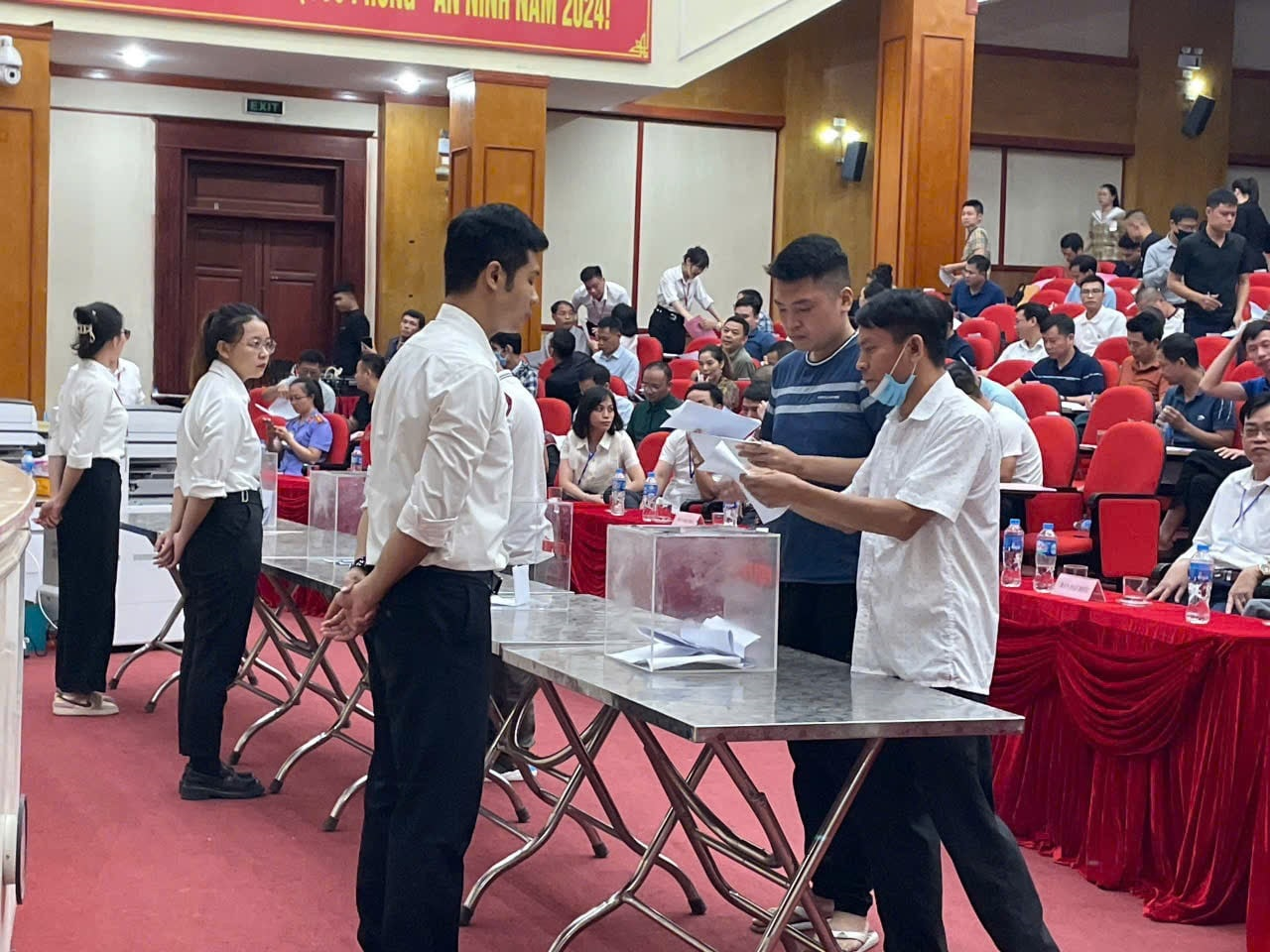
The state land auction process is conducted publicly, ensuring transparency. (Source: Collected)
3.2. Conditions for land use rights auction
According to the provisions of Article 119 of the 2013 Land Law, to implement the state land auction process, the land parcel to be auctioned must meet all legal and technical conditions to ensure transparency, legality, and feasibility in exploitation and use.
Specifically, the land offered for auction must meet the following conditions:
The land for auction must be "clean land", meaning it has been cleared, is not encroached upon, is not currently leased, and has no arising disputes.
The land must be approved by the Department of Planning and Architecture, ensuring consistency with land use planning and general urban development planning.
The starting auction price must be approved by the Department of Finance according to regulations, ensuring reasonableness and closeness to market value.
The land for auction needs to have complete basic technical infrastructure, including roads, electricity supply, water supply and drainage systems, and related infrastructure.
Competent state agencies must fully approve the land use rights auction plan before organizing the implementation.
Meeting these conditions fully helps ensure the auction process is conducted legally, limits risks, and enhances land use efficiency.
3.3. Participants in land use rights auctions
In the state land auction process , correctly identifying participants is a crucial factor to ensure transparency, proper land use purposes, and compliance with current legal regulations. Each group of participants will have different rights and scopes of land use after winning the auction.
Specifically, the entities permitted to participate in land use rights auctions include:
Individuals or households : This is a common group of subjects. After winning the auction, they will be recognized by the State for land use rights and have full rights to use it according to the approved purpose, such as building houses or legal use according to the plan.
Economic organizations, foreign-invested enterprises, and overseas Vietnamese : This group of subjects, when winning the auction, is usually permitted to implement investment projects according to the plan, mainly building houses for sale or for sale and rent, ensuring compliance with the land use purpose approved by the state agency.
3.4. Starting price of auctioned land
According to Circular 02/2015/TT-BTC, the state land auction process clearly stipulates that the Chairman of the Provincial People's Committee is the competent authority to decide the starting price of the land parcel to be auctioned. The determination of the starting price shall be based on the form of land allocation with collection of land use fees or land lease, ensuring compliance with each specific land fund.
The starting price is determined in accordance with current legal procedures and must ensure the principle of closely following market prices at the time of auction. At the same time, this price must not be lower than the land price list issued by the Provincial People's Committee. Thanks to this, the auction process is transparent, limits unreasonable price differences, and helps participants feel more secure about the fairness of the auction.
4. Documents for participating in state land auctions
Pursuant to the Law on Asset Auction 2016, individuals and organizations eligible to participate in the state land auction process must prepare complete dossiers as required by the auction organizing unit. Proper and complete preparation of documents helps ensure the right to participate in a valid auction and avoid disqualification due to errors.
The list of documents for land auction participation includes:
Application for Auction Participation : The applicant needs to fill in all information according to the prescribed form, then put it in an envelope, seal it, and sign to seal the edges of the envelope according to the instructions.
Project Investment Profile : Applies to land auction cases to select investors to implement projects according to the plan.
Power of Attorney (if any) : In case of authorizing another person to participate in the auction, a valid power of attorney and a copy of the authorized person's identification documents must be attached.
Documents proving eligibility to participate in the auction : Includes documents as stipulated by law depending on the specific case.
For individuals and households : Copy of ID card/Citizen ID card and household registration book.
For organizations : Copy of business registration certificate, documents proving legal representative, and identification documents of the representative.
Participants can submit a notarized/certified copy or a copy accompanied by the original for verification as per regulations.
Preparing complete documentation is an important step to help the auction participation process proceed smoothly and in accordance with legal regulations.

Bidders need to prepare all necessary documents and records. (Source: Collected)
5. Detailed State Land Auction Process
Implementing the state land auction process must comply with the correct procedures and regulations according to the law, ensuring publicity, transparency, and proper authority. Below are the basic steps stipulated in Joint Circular 14/2015/TT-BTNMT-BTP:
5.1. Developing the Land Auction Plan
After receiving directives from the relevant People's Committee, the unit assigned to manage the land fund proceeds to develop a plan for auctioning land use rights. This plan includes the land use purpose, auction format, implementation timeline, and related contents to ensure compliance with planning and legal regulations.
5.2. Preparation of Auction Dossier
The auction organizing unit submits the land parcel dossier to the natural resources and environment agency for appraisal. After appraisal, the dossier will be submitted to the competent People's Committee for consideration and decision on bringing the land parcel to auction in accordance with regulations.
5.3. Decision on Land Use Rights Auction
The competent authorities shall issue an official decision on the organization of land use rights auctions. This is an important legal basis for implementing the next steps in the state land auction process .
5.4. Determine and approve the starting price
The Department of Natural Resources and Environment shall determine the starting price of the land parcel, including the land price, technical infrastructure, and attached assets (if any). Subsequently, the price plan shall be submitted to the Provincial People's Committee for approval as a basis for organizing the auction.
5.5. Select and sign a contract with the auction unit
The organizing unit for the auction selects a qualified asset auction organization and proceeds to sign a service contract. This ensures the auction is conducted by a professional unit, in accordance with legal regulations.
5.6. Organizing the auction of land use rights
The auction unit proceeds to organize the auction session according to the approved format. At the same time, state agencies appoint supervisory representatives to ensure the process takes place openly, transparently, and in accordance with regulations.
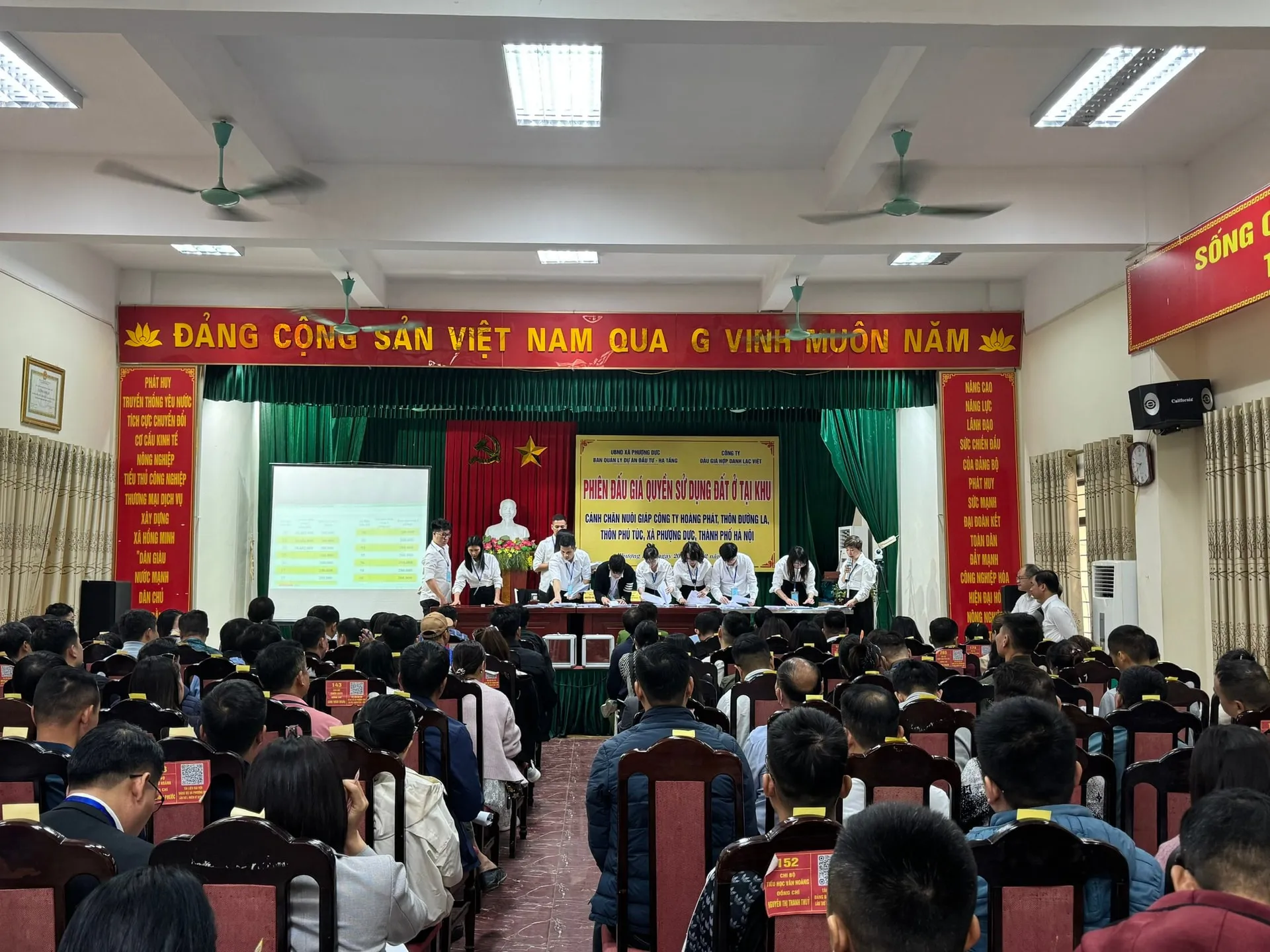
The competent authority organizes the auction according to the approved form. (Source: Collected)
5.7. Approval of Auction Results
After the auction session concludes, the organizing unit hands over the documents and the results minutes. Within the prescribed period, the competent authority will review and issue a decision recognizing the results of the land use rights auction.
5.8. Payment of Land Use Fees and Completion of Procedures
The winning bidder receives a payment notice from the tax authority and fulfills financial obligations at the State Treasury. After completion, the winning bidder submits the proof to complete the procedures for signing a land lease contract or the issuance of a Land Use Rights Certificate according to legal regulations.
In summary, the state land auction process is a series of strict steps, designed to ensure the public, transparent, and legally compliant allocation of public land. By fully adhering from the stage of developing the plan, organizing the auction, to approving the results and completing financial obligations, the auction process not only helps optimize land use value but also contributes to limiting negativity and creating a fair competitive environment for participants.