


What is the easiest way to understand the detailed differences between a homestay and a villa?
In the field of accommodation and resort real estate, many people still do not clearly understand how homestays differ from villas when choosing to invest or experience. Each type has its own characteristics regarding space, services, and customer segments, thereby directly affecting operational efficiency.

▲Table of Contents
1. General Overview of Homestays and Villas in Real Estate
1.1. Definition and Basic Characteristics of the Homestay Model
Homestay is a lodging model at local residents' homes, where tourists live with the host and experience local life intimately, clearly reflecting the indigenous culture. This model has developed in many tourist destinations such as Sa Pa, Lao Cai or Da Lat, Lam Dong due to advantages in landscape and local community. The characteristic of a homestay is the combination of lodging and cultural experience, creating a distinction from traditional lodging types.

The homestay space is personalized and intimate with guests. (Source: Collected)
According to regulations on accommodation business services, Homestay owners must register their business and meet full conditions regarding security, order, and fire prevention and fighting. Specifically, according to the Tourism Law, Homestays must ensure standards for facilities and services to be ranked. Currently, the management of Homestays in residential areas and apartment buildings has been tightened to avoid affecting the surrounding community, requiring higher professionalism in operations rather than just individual spontaneous initiatives.
1.2. Overview of the concept and nature of the villa product
Villa is a type of resort villa built on a large area, with a design separate from the surrounding space and integrated with full living amenities. Villas usually include many functional rooms such as living rooms, bedrooms, kitchens, and common living areas. The space is planned synchronously to create comfort and privacy for users.
Villas are characterized as a high-end accommodation type with luxurious architecture, emphasizing privacy and resort experiences in a secluded space. Resort villas are now more clearly protected by law regarding ownership rights. According to Land Law No. 31/2024/QH15 and its guiding decrees, types of resort villas built on commercial service land have been guided for issuance of certificates of ownership of assets attached to land if they meet the conditions. This creates peace of mind for investors compared to the previous period. Villas in 2026 are often located within integrated "All-in-one" complexes with synchronized and modern planning.
Villas are aimed at groups of guests who need to vacation in a private space with a higher level of comfort than homestays. The typical users are families or large groups of people who need comfort and privacy. This creates a clear difference in the lodging experience between the two models.
2. Details of differences between homestays and villas by criteria
2.1. Differences in spatial structure and design style
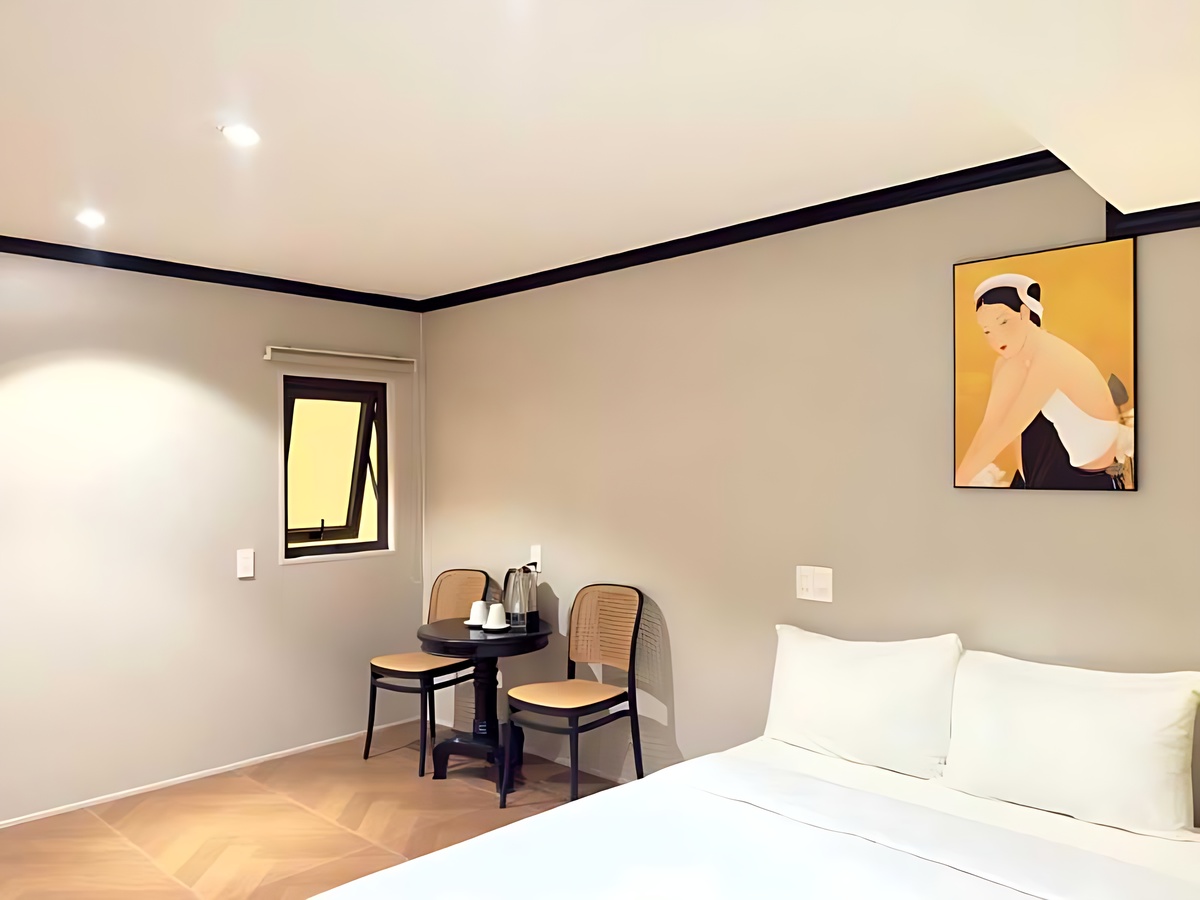
Homestays are usually small in scale, renovated from residential homes, and feature personalized design styles according to the owner's preferences. The space can be flexible, ranging from apartments, townhouses to mountain or coastal houses. This creates a diversity of experiences for guests staying in different localities.

Homestay with a compact design and flexible personalized style. (Source: Collected)
Considering the criteria of how homestay differs from villa, it is easy to see that the experience at a homestay is intimate and flexible, while a villa offers a separate and quiet resort space. This difference directly affects the guest's perception during their stay. This also reflects the positioning of each model in the resort real estate market.
2.2. Comparison of utility systems and accompanying service levels
Homestays usually offer basic amenities such as bedrooms, a kitchen area, and common living spaces suitable for short-term stays. Services at homestays primarily depend on the scale and operation of the host. This leads to differences in amenity quality among homestays.
In contrast, villas are equipped with a full range of amenities like private swimming pools, gardens, BBQ areas, and various functional spaces for leisure. Some villas also come with management services, housekeeping, or assistance in organizing activities for guests. These factors contribute to an enhanced overall experience.
When evaluating how homestays compare to villas, it is observed that the level of amenities and services at villas is usually higher and aims for a more complete resort experience. Homestays are suitable for basic needs and cultural experiences. This difference is clearly shown in the way of operation and customer service.
2.3. Target customer segments of each type
Homestays target young travelers, independent travelers, or guests who want to experience local life during their stay. These customers often prioritize reasonable costs and authentic experiences over luxury amenities. Villas cater to family groups, large groups, or guests who need to relax in a private space with full amenities.
2.4. Cost Differences and Actual Rental Price Levels
Rental prices clearly reflect the difference in experience between homestays and villas. (Source: Compiled)
Homestays have lower rental prices, suitable for many customer segments and easily accessible for short trips. Costs can be flexible depending on the location, size, and amenities of each establishment. Villas have higher rental costs due to their larger area, full amenities, and private space catering to vacation needs. Rental prices are usually calculated per unit and are suitable for large groups.
When comparing how homestays differ from villas, it can be seen that rental costs clearly reflect the differences in space quality and amenities. Homestays are suitable for limited budgets while villas are suitable for higher experience needs. This is a factor that directly influences customer choices.
3. Evaluating the investment efficiency between homestay and villa
3.1. Business exploitation potential and cash flow
Utilizing existing housing for Homestays currently requires legal caution. Investors need to convert the purpose of use or register the accommodation business sector in accordance with the Law on Real Estate Business No. 29/2023/QH15. Although the initial investment cost is lower than a Villa, Homestays in 2026 will face significant pressure regarding the cost of complying with new fire prevention and fighting (PCCC) regulations, which have become a mandatory condition for obtaining an operating license.
Additionally, villas have the potential to generate higher revenue due to higher rental prices and a clientele with high spending power. However, operating a villa often requires a professional management team to ensure business efficiency. This increases operational costs compared to homestays.
Regarding how homestays differ from villas, each model has different business exploitation methods depending on scale and customer segment. Homestays are suitable for small-scale models, while villas are geared towards more systematic investment. This difference directly affects investment strategy.
3.2. Capital safety level and risk volatility
Homestays are highly flexible and easily adaptable for different uses, helping to reduce risks in case of market fluctuations. However, the level of competition among homestays at tourist destinations is increasing. This can affect occupancy rates.

Stability varies between flexible homestays and luxury villas. (Source: Collected)
Villas depend heavily on location and the premium clientele, thus tourism market fluctuations can impact business performance. Furthermore, high operating and maintenance costs are also factors to consider. This increases the level of risk if not operated effectively.
The stability of Villas has been improved thanks to a clear legal framework from the Land Law 2024, improving the liquidity of this product line during economic cycles. Conversely, the current risks of Homestays lie in urban management. If local planning is not well understood, investors are prone to trouble when residential areas are restricted from short-term accommodation business to ensure security. Price competition is also fiercer as the market sees many smart-stay models optimizing costs.
3.3. Initial capital required
Homestays have lower initial investment costs because existing housing can be utilized or small spaces can be renovated for business. This helps investors easily enter the market. The investment scale is also flexible according to financial capacity. Villas require large capital due to higher costs for land, construction, and facility completion compared to homestays.
Especially in developed tourist areas, land prices and construction costs often increase significantly. This makes investing in villas require strong financial resources. When considering how homestays differ from villas, the difference in investment costs clearly reflects the investor's participation level in each market segment. Homestays are suitable for small capital while villas are suitable for long-term investment. This is an important factor in deciding which model to choose.
4. Suggestions for choosing a model that suits usage needs
4.1. Cases where prioritizing the homestay model is recommended
Homestays are suitable for investors with limited budgets or who want to test a small-scale accommodation business model. Simple operation makes it easy to control business activities. This is suitable for individuals new to the market. This model is also suitable when targeting the mass market or young tourists who love local cultural experiences.
The needs of this customer group often focus on reasonable costs and authentic experiences. This helps homestays maintain a stable customer base. Additionally, homestays offer flexibility and the ability to adapt quickly to market trends. This is a suitable choice for short-term investment or testing strategies. This factor helps reduce initial financial pressure.
4.2. Suitable situations for investing or using a villa
Villa is the optimal choice for long-term asset accumulation goals, especially when Land Law No. 31/2024/QH15 officially allows land valuation close to market prices, helping to affirm the real value of prime location resort real estate. With the participation of international management units, Villa is not only a place for relaxation but also an asset capable of generating stable cash flow from the high-end customer segment, despite short-term market fluctuations.

Villa requires large capital and professional management to be effective. (Source: Collected)
Spaciousness and full amenities are also attractive factors for guests. This helps villas maintain higher rental prices. When analyzing how homestays differ from villas, it is easy to see that villas are often associated with higher profit expectations but require professional management and large capital. This is a suitable choice for experienced investors. This difference clearly reflects the positioning of villas in the market.
4.3. Current trend of flexible combination between homestays and villas
The market records a trend of homestays being upgraded in design and amenities to meet the increasingly diverse needs of tourists. Many homestays are targeting a higher segment with meticulously invested spaces. This helps increase competitiveness.
In parallel, villas also have their experiences personalized through unique designs and flexible services to attract various customer groups. This trend helps villas not only serve the high-end segment but also expand their customer base. This reflects the market's changes.
It can be affirmed that understanding how homestay differs from villa will help you choose the right model that suits your usage or investment goals. Whether it's the budget or high-end segment, a firm grasp of the characteristics of each type is always the deciding factor for long-term operational efficiency.