


593 Social Housing Project: Nearly 60% Completed or Started
After more than two years of implementing the project to build 1 million social housing units by 2030, progress nationwide is showing remarkable results. As of the end of July 2025, the number of completed, under construction, and approved investment projects has reached nearly 60% of the target, demonstrating the significant efforts of ministries, sectors, and localities in the context of increasing demand for social housing.

In the context of increasing pressure on urban welfare, especially in densely populated cities and industrial zones, the Project to build 1 million social housing units by 2030 is considered one of the Government's key programs. After an initial phase with many obstacles, the project's implementation is making significant progress, reflecting the decisive involvement of the entire political system.
Nationwide progress reaches nearly 60% of the project's target.
According to a summary as of the end of July 2025, the whole country has implemented 692 social housing projects, corresponding to approximately 633,559 units. Of these, 146 projects have been completed, providing more than 103,700 units to the market; 124 projects are under construction with a scale of over 111,600 units; And 422 projects have received investment approval, with an expected addition of over 418,000 units in the near future.
Compared to the target of approximately 1.06 million units set for 2030, the volume of work completed, underway, and prepared for implementation currently reaches about 59.6%. This is considered a positive result, especially given the prolonged difficulties many social housing projects previously faced regarding land availability, legal procedures, and funding.
Specifically for 2025, the target for completion is 100,275 apartments. However, by mid-July, only nearly 37,000 units had been handed over, equivalent to about 37% of the plan. Nevertheless, with the current progress, the projected completion for the whole year is approximately 74,000 units, equivalent to 74% of the target, significantly higher than in previous years. Notably, the number of new apartment projects started this year is almost equal to the total number started in all of 2024, showing a clear acceleration.
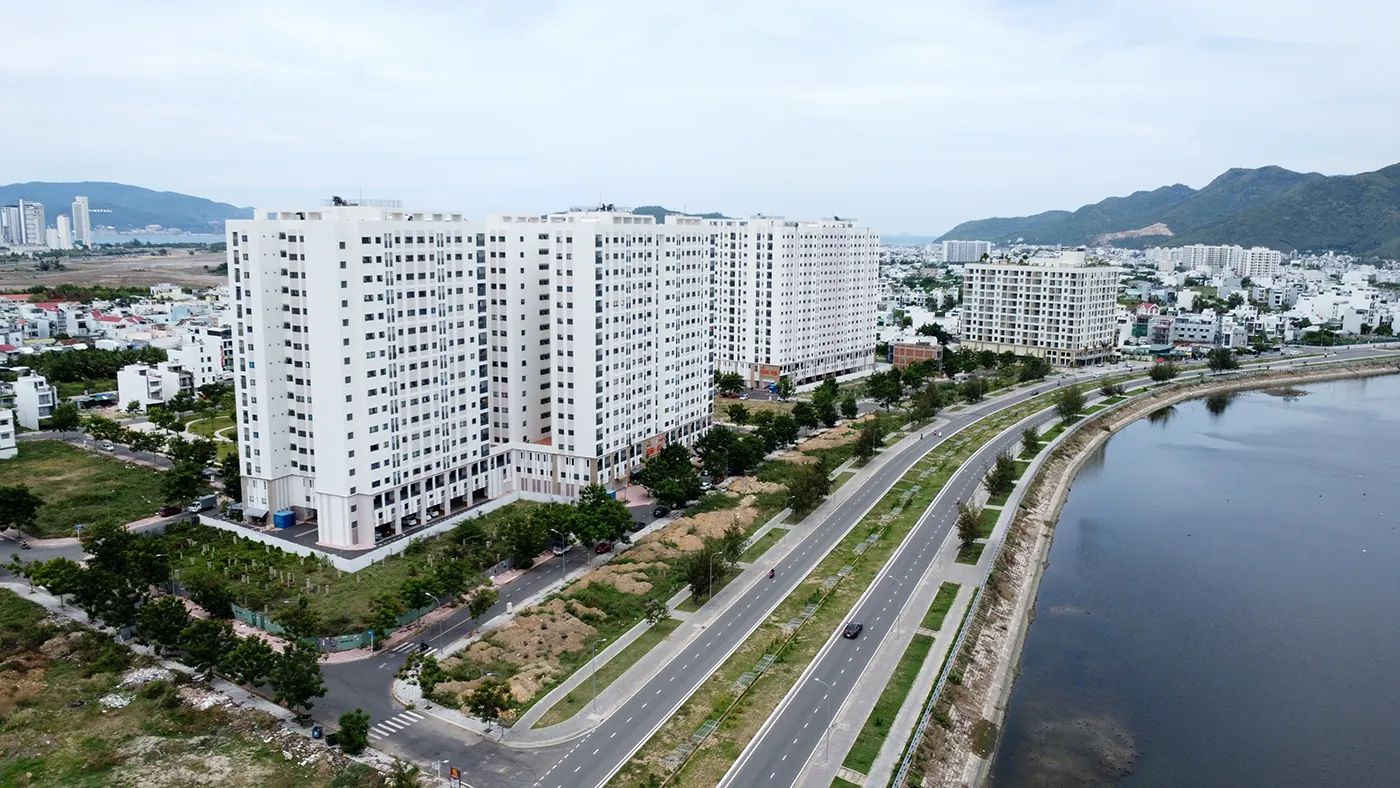
Projects entering the completion phase (Source: Collected.)
Hanoi and Ho Chi Minh City face significant pressure regarding targets
In the two largest cities in the country, the progress of social housing projects is still facing many challenges. Hanoi was assigned a target of 4,670 units in 2025. To date, the city has completed more than 2,000 units and is currently developing nearly 3,000 more. It is expected that by the end of the year, approximately 78% of the plan may be achieved, but there will still be a shortfall of about 1,000 units compared to the set target.
Meanwhile, Ho Chi Minh City was assigned a much higher target, with 13,040 units. Despite the large number of ongoing projects, the completion rate by the end of the year is only around 6,900 units, equivalent to 53% of the plan. Pressure regarding land availability, investment procedures, and development costs remain major bottlenecks, preventing progress in these two cities from meeting expectations.
In reality, although the demand for social housing in Hanoi and Ho Chi Minh City is very high, project implementation in these special urban areas still faces many obstacles, requiring more decisive and flexible solutions in the future.
Many localities exceed targets, but there are still dark spots.
Besides the major cities, several localities have emerged as bright spots in the implementation of social housing. Many provinces and cities have recorded results far exceeding their assigned targets, thanks to proactive land planning, simplified procedures, and effective participation from businesses.
Conversely, many localities are still progressing slowly, achieving only over 50% or even less than 50% of their targets. More worryingly, some mountainous provinces and disadvantaged localities have yet to have any social housing projects started. This significant disparity between localities highlights the need for stronger coordination and support mechanisms from the central government.
The Ministry of Construction is accelerating the removal of obstacles in the final period of the year.
To ensure the completion of the 2025 targets and to lay the foundation for the 2026-2030 period, the Ministry of Construction is implementing many solutions simultaneously. The focus is on guiding the implementation of new resolutions and decrees, aiming to remove legal, financial, and procedural barriers to investment in social housing.
The Ministry is also strengthening inspections and monitoring progress in localities, while requiring a review of land funds, assigning investors, and approving investments on schedule. Simplifying administrative procedures and shortening project preparation time are considered key factors in accelerating construction progress and handover.
In addition, the development of social housing for the armed forces is also a priority, contributing to expanding supply and diversifying the beneficiaries of the policy.
Social housing – a stable pillar of the real estate market
Under pressure from the actual needs of low-income people and workers, social housing is gradually asserting its role as a pillar segment, helping to balance the real estate market. The fact that nearly 60% of the target of the 1 million apartment project has been completed or started construction by mid-2025 is evidence of the positive movement of the market towards sustainability and inclusiveness.
With increasingly clear policies, a more complete legal framework, and stronger business participation, the social housing market is expected to continue accelerating in the coming years, making a significant contribution to the goal of harmonious urban development and ensuring social welfare for all segments of the population.