


Bien Hoa – Vung Tau Expressway (Ho Chi Minh City section) Ready for Operation by September 2025
The Bien Hoa – Vung Tau Expressway, one of the key transportation infrastructure projects in the Southeast region, is entering its final stages. The section passing through the expanded Ho Chi Minh City area has been largely completed, with technical opening in April 2025, and final items are being finalized to be ready for operation in September 2025. Once operational, this expressway will not only solve inter-regional transportation problems but also open new doors for Vung Tau's development – transforming it from a weekend seaside city into a strategic link in the expanded Ho Chi Minh City metropolitan area.

Vung Tau in the context of a connected megacity
After officially becoming part of the expanded Ho Chi Minh City metropolitan area, Vung Tau is facing a crucial turning point in its development. This coastal city is no longer simply positioned as a tourist resort destination, but is gradually establishing itself as a logistics center, a coastal urban area, and a marine economic service hub for the entire Southeast region.
In this context, the Bien Hoa – Vung Tau expressway is considered the new "backbone," significantly shortening the spatial and temporal distance between Vung Tau and Ho Chi Minh City – the country's largest economic and financial center. This expressway helps Vung Tau participate more deeply in the regional value chain, instead of remaining on the periphery as before.
Notably, component project 3 – the section connecting the Dong Nai area to Ba Ria – Vung Tau (now part of the expanded Ho Chi Minh City) – is one of the sections with the most positive progress. The 19.5 km section, with a total investment of over 4,963 billion VND, is designed to meet the standards of a 4-lane expressway with a maximum speed of 100 km/h. The technical opening on April 19, 2025, demonstrates the strong determination of the investors and construction units to ensure the project is completed on schedule.
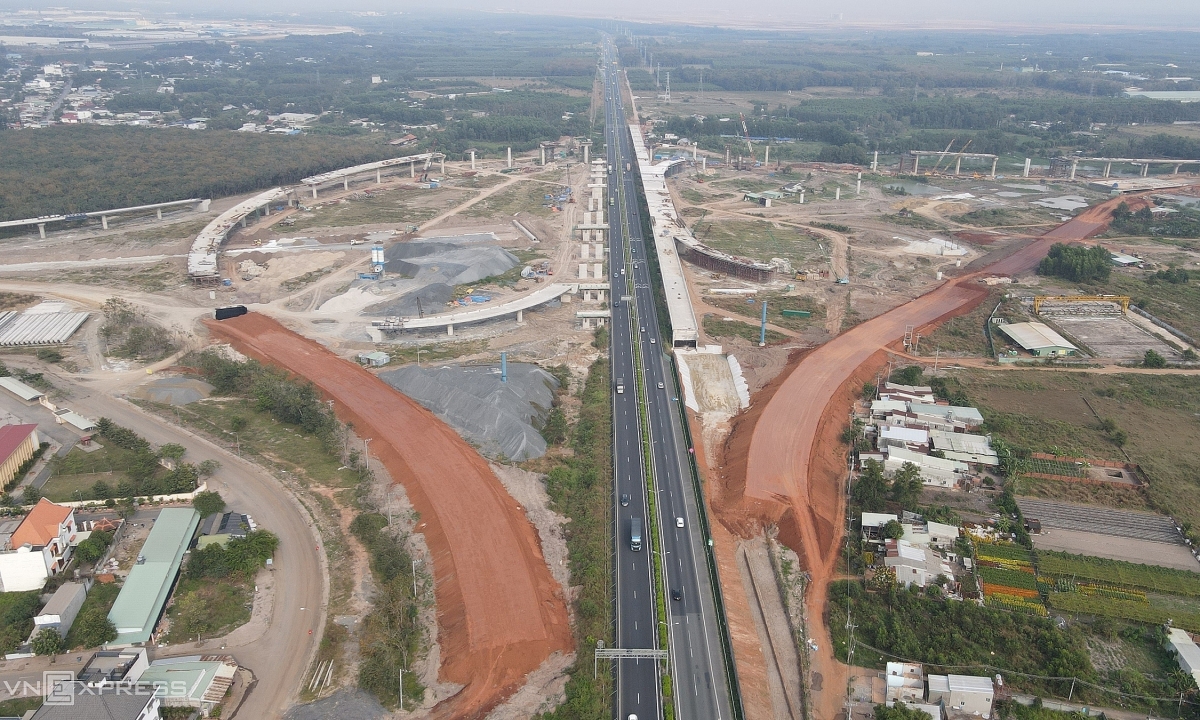
Expressway connecting to Vung Tau (Source: Collected.)
Infrastructure acceleration unlocks development potential
For many years, National Highway 51 has been the only vital road connecting Ho Chi Minh City with Vung Tau and major seaports and industrial zones. However, prolonged congestion and overcrowding have become a "bottleneck" for the socio-economic development of the entire region. The upcoming opening of the Bien Hoa – Vung Tau expressway will directly address this bottleneck.
From a transportation perspective, the expressway shortens travel time from Ho Chi Minh City to Vung Tau, reduces pressure on National Highway 51, and increases the safety and stability of freight traffic. From a regional development perspective, it is a crucial connecting route between the Long Thanh – Dau Giay expressway system, National Highway 56, the coastal route DT.994, and other strategic transportation axes, forming a complete network linking the central urban area, industrial zones, seaports, and coastal tourist destinations.
As a result, Vung Tau is no longer just the "end point" of transportation routes, but is gradually becoming an important transit hub in the infrastructure network of the Southeast region.
New impetus for Vung Tau real estate and logistics
Transportation infrastructure always precedes the shaping of urban and real estate development. The accelerated completion of the Bien Hoa – Vung Tau expressway is creating a clear wave of investment shifting to this area.
In Vung Tau, many large-scale urban and resort projects have been and are being implemented, especially in areas along the expressway and strategic intersections such as Hoi Bai – Chau Pha, National Highway 56, and the DT.994 road connecting to the sea. Besides resort real estate, investment capital is also flowing strongly into logistics, warehousing, port services, and urban areas serving experts and high-skilled workers.
Compared to Thu Duc or Binh Duong – areas that have seen significant price increases after joining the expanded Ho Chi Minh City area – Vung Tau is still considered a relatively "low-price zone". With continuously improving infrastructure, many experts believe the period from 2025 to 2027 will be a "window of opportunity" for medium and long-term investors to capitalize on a new growth cycle in Vung Tau's real estate market.
Vung Tau Deepwater Port Supports the Economy (Source: Collected.)
From a Transportation Route to a Symbol of Regional Connectivity
More than just a purely transportation project, the Bien Hoa – Vung Tau expressway reflects a shift in regional development thinking: from localized development to integrated development, from administrative linkages to functional and economic linkages.
When this expressway officially opens in September 2025, Vung Tau will enter a new phase – not just a familiar tourist destination, but a strategic gateway to the East Sea for the expanding Ho Chi Minh City metropolitan area. With its advantages in seaports, coastal areas, and an increasingly complete infrastructure network, the city is fully equipped to become a major logistics, tourism, and maritime economic center in the near future.
The Bien Hoa – Vung Tau expressway, therefore, not only connects places on the map but also opens up a new development space for the entire Southeast region – where Vung Tau is ready to "take off" as a new growth pole of the Ho Chi Minh City megacity.