


Vung Tau: From a Small Coastal City to a Tourism and Logistics Hub
The merger of Ho Chi Minh City, Binh Duong, and Vung Tau not only expanded administrative boundaries but is also reshaping the entire development structure of the Southeast region. In this new megacity landscape, Vung Tau – with its advantages of islands, deep-water ports, and strategic location – is emerging as a new growth pole for tourism, logistics, and the marine economy, rather than merely a coastal resort city as before.

Vung Tau is no longer a "satellite"
When Ho Chi Minh City officially operates as a megacity with a population of over 13.7 million people and an area of nearly 6,800 km², the surrounding cities also enter a completely different development cycle. In this new structure, Vung Tau is no longer a supporting destination but is becoming an important functional hub, taking on the role of a maritime hub for the entire Southern key economic region.
From a planning perspective, the expanded Ho Chi Minh City megacity is shaped according to a multi-centered, multi-functional model. If Binh Duong is the industrial and manufacturing center, and Ho Chi Minh City plays the role of finance and technology, then Vung Tau is the pillar of the maritime economy, logistics, and international tourism. This clear division of roles allows each city to leverage its own strengths while complementing each other in the regional value chain.
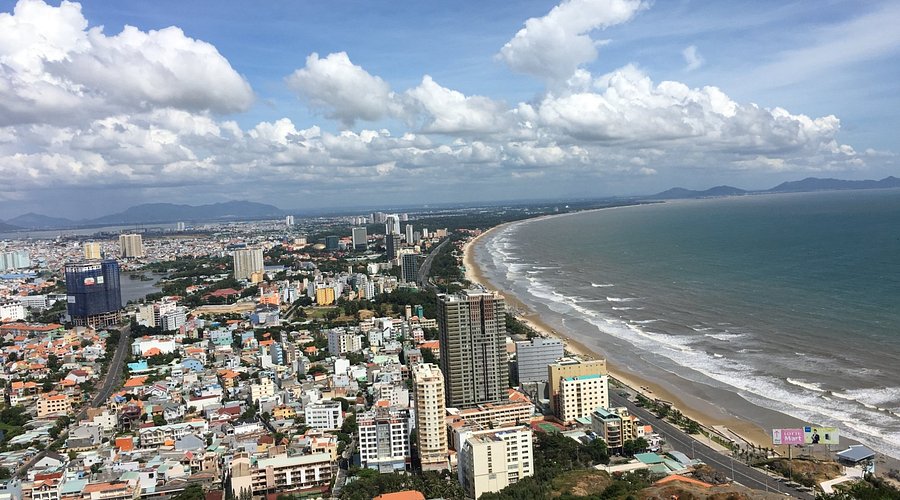
The new face of Vung Tau city (Source: Collected.)
The gateway to the East Sea for Ho Chi Minh City
Located in the Southeast, Vung Tau is considered the natural gateway to the East Sea for Ho Chi Minh City. It serves as both the end point of inter-regional transportation routes and the starting point of international shipping routes. The heavily invested infrastructure system is strengthening this role.
Expressways such as Bien Hoa – Vung Tau, Ho Chi Minh City – Long Thanh – Dau Giay, along with Ring Road 3, Ring Road 4, and National Highway 51, are gradually completing a backbone transportation network seamlessly connecting the center of Ho Chi Minh City with the eastern port area. Simultaneously, the airport system, including Tan Son Nhat and Long Thanh, forms a dual air corridor, helping to shorten the travel time for goods and passengers between the urban core and the coastal area.
On the international logistics map, the Cai Mep – Thi Vai deep-water port complex holds a special position, capable of receiving large cargo ships and directly connecting to transcontinental shipping routes. When this complex connects with the Can Gio international port in the future, a regional-scale port ecosystem will form, making Vung Tau an important transit point in Southeast Asia amidst the restructuring of global supply chains.
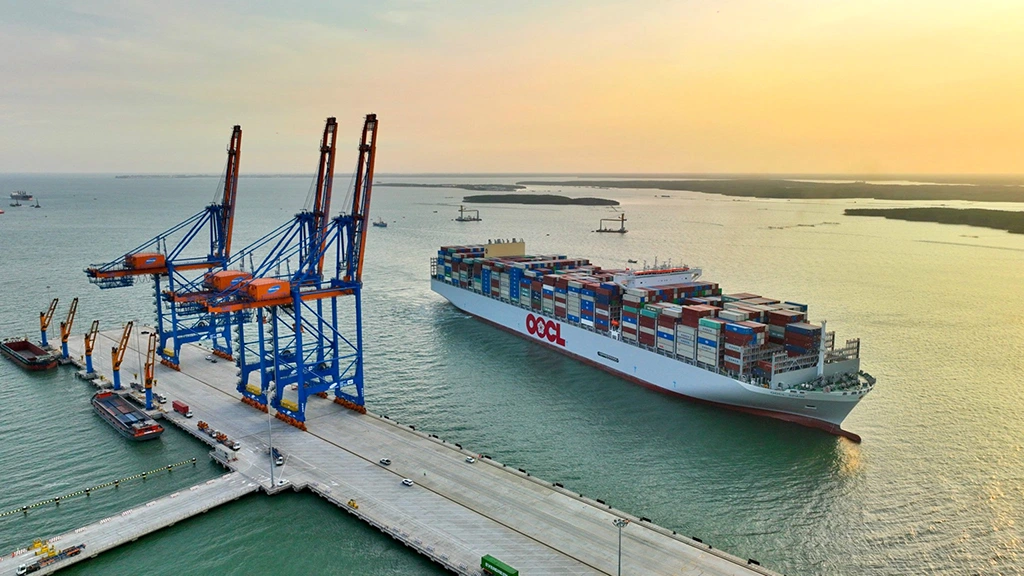
Vung Tau deep-water port - Source: Collected.)
Expanding Functions: From Resorts to Logistics and Marine Technology
Vung Tau's peninsula topography, bordered by the sea on three sides, and its unique combination of mountains, sea, and forest, provides a rare natural foundation. However, the difference in this new phase lies not only in the landscape but also in the expansion of urban functions.
From a traditional resort city, Vung Tau is transforming into a center for marine logistics, service industries, and technologies related to the ocean economy. The emergence of Long Thanh Airport, along with plans to upgrade aviation and maritime infrastructure, significantly enhances the city's international accessibility, not only for tourism but also for manufacturing, trade, and marine research.
A boost for tourism real estate and new urban areas
The infrastructure and new role are quickly reflected in the real estate market. Investment capital is clearly shifting towards coastal urban projects, high-end resorts, and multi-functional complexes. Vung Tau is entering a new cycle where real estate value is measured not only by its coastal location but also by its role in the expanding Ho Chi Minh City metropolitan area.
One of the typical projects is the large-scale coastal urban areas in Bai Sau – the city's central area. These projects are developed on an "all-in-one" model, integrating housing, resorts, commercial spaces, entertainment, and public areas, aiming to meet the living, working, and leisure needs of modern urban residents and international professionals.
Simultaneously, international high-end hotel, resort, and service brands are actively exploring the market, demonstrating their confidence in Vung Tau's long-term potential as a new tourism and logistics hub.
A Piece of the Global City
In its long-term strategy, Ho Chi Minh City is envisioned to become an Asian-level financial, technology, and logistics supercity. To realize this goal, a sufficiently large coastal city is essential, capable of both managing the maritime economy and providing high-quality living spaces for global professionals and residents. Vung Tau is being positioned in that role.
Development plans for an international convention center, a high-tech zone linked to renewable energy, a marine research center, and a logistics startup ecosystem are gradually taking shape. These are not just individual projects, but represent a modern urban development vision for the coastal city, where Vung Tau is expected to become an integrated living, working, and leisure space.
From a coastal town, Vung Tau is transforming into a strategic center for tourism, logistics, and the marine economy within the Southeast Vietnam megacity structure. The merger not only expands its boundaries but also opens up a new future for this coastal city – the future of a crucial piece in Vietnam's journey towards becoming a global city.