


Vung Tau real estate after the merger: A new development hub on the coast of Ho Chi Minh City.
The official merger of Ba Ria – Vung Tau into Ho Chi Minh City not only marks an administrative milestone but also opens up entirely new development opportunities for the southern economic region. Within the expanding metropolitan area, Vung Tau is emerging as a strategic development hub facing the sea, playing a connecting role between Ho Chi Minh City's financial and industrial center and the maritime economy, logistics, and international tourism. Along with this, the Vung Tau real estate market after the merger is considered to be entering the initial phase of a long-term growth cycle.

Vung Tau – A Strategic Piece in the Expanding Ho Chi Minh City Megacity
After the merger, Ho Chi Minh City is no longer a single city but has become a multi-centered megacity, integrating industry, finance, logistics, aviation, and maritime economy. In this picture, Vung Tau plays a special role, possessing a long coastline, a gateway to the East Sea, and the Cai Mep – Thi Vai deep-water port complex – one of the very few ports in Asia capable of receiving ships with a tonnage of over 200,000 tons.
From a weekend tourist destination, Vung Tau is transforming into an international logistics and seaport center, acting as an "extension" of Ho Chi Minh City to the ocean. This is also an important foundation attracting investment capital, especially in urban real estate, industrial, and coastal resort sectors.
Trillion-Dollar Transportation Infrastructure Eliminates Connectivity Bottlenecks
One of Vung Tau's biggest obstacles in the past was its dependence on, particularly, National Highway 51 – a frequently overloaded route. Following the merger, this problem is being addressed comprehensively through a series of prioritized strategic infrastructure projects.
Notably, the Bien Hoa – Vung Tau expressway, nearly 78 km long and with a total investment of over 22,000 billion VND, will shorten travel time from Ho Chi Minh City to Vung Tau to less than one hour upon completion, creating a major turning point for urban, tourism, and logistics connectivity.
In addition, the Can Gio bridge project and the coastal road connecting directly from Ho Chi Minh City to Vung Tau, with a total investment of tens of trillions of VND, will open up a new route without needing to pass through Dong Nai. The Ho Chi Minh City Ring Road 4, a strategic transportation route over 150 km long, is also being accelerated to form a continuous link between satellite cities, with Vung Tau as a key coastal highlight.
In addition, projects such as the Phuoc An Bridge, the Long Thanh – Ho Tram Expressway, and the DT.994 coastal road are being implemented simultaneously, creating a closed inter-regional transportation network connecting seaports, airports, industrial zones, and tourist centers.
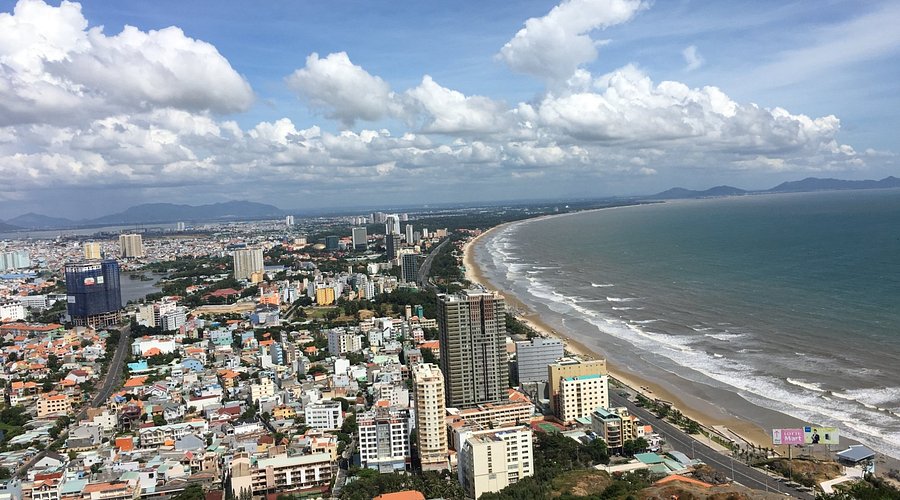
Vung Tau urban area (Source: Collected.)
Vung Tau real estate benefits from a “double driving force”
The breakthrough infrastructure not only improves connectivity but also strongly expands the development space of coastal urban areas. After the merger, experts predict that Vung Tau real estate will grow simultaneously in three pillars: urban – resort – industrial.
In the urban segment, improved transportation has fostered a "coastal living – working in Ho Chi Minh City" trend. This has boosted demand for housing, apartments, and mixed-use urban complexes in central areas of Ba Ria, Phu My, and along major transportation routes.
In the resort segment, Vung Tau is being repositioned from a short-term getaway destination to become Ho Chi Minh City's "coastal backyard." Areas like Long Hai, Ho Tram, and Binh Chau are attracting significant investment in high-end resorts, beachfront villas, and wellness and wellness complexes, targeting the middle class and long-term investors.
In the industrial real estate sector, the Cai Mep-Thi Vai port complex and the Phu My industrial park system play a central role. Once infrastructure is completed, this area will continue to attract investment in logistics, warehousing, and high-tech manufacturing, leading to a large demand for housing for professionals, industrial urban areas, and supporting services.
Vung Tau – A New Destination on the Southern Investment Map
While property prices in Ho Chi Minh City and Binh Duong remain high, Vung Tau emerges as a balanced option between value and potential. Real estate prices here still have room for growth, while the potential for practical development is becoming increasingly clear thanks to infrastructure and the influx of people.
The merger not only expands the geographical boundaries but also restructures the entire development space of the Southern economic region. Vung Tau, with its advantages of the sea, port, and scarce coastal land, possesses all the elements to become a new growth pole for the marine economy, coastal urban areas, and industrial real estate.
Currently, as the market enters the early stages of its growth cycle, Vung Tau is considered an attractive "entry point" for medium- and long-term investors, before prices are established at higher levels in the next 5-10 years.